
If you’ve been paying attention to automotive lighting over the past few years, you’ve noticed something shifting. The humble fog light—once a simple halogen bulb in a housing—is undergoing a transformation that rivals anything happening in headlight technology. By 2032, the global automotive fog lights market is projected to reach USD 1.36 billion, with LED technology driving the majority of that growth. But here’s what the market reports don’t tell you: the real story isn’t about market size. It’s about how fog lights are becoming smarter, more adaptive, and more integrated with the vehicle’s overall safety systems than ever before.
Based on our years of engineering and manufacturing experience in automotive LED lighting, we’ve watched this evolution up close. The fog light you buy today isn’t just a bulb—it’s a piece of technology that interacts with your vehicle’s electrical architecture, thermal management systems, and even its safety sensors. This guide looks forward, not backward. We’ll explore where fog light technology is headed, what innovations are actually worth your attention, and how GTR Lighting is positioning itself at the forefront of this shift.
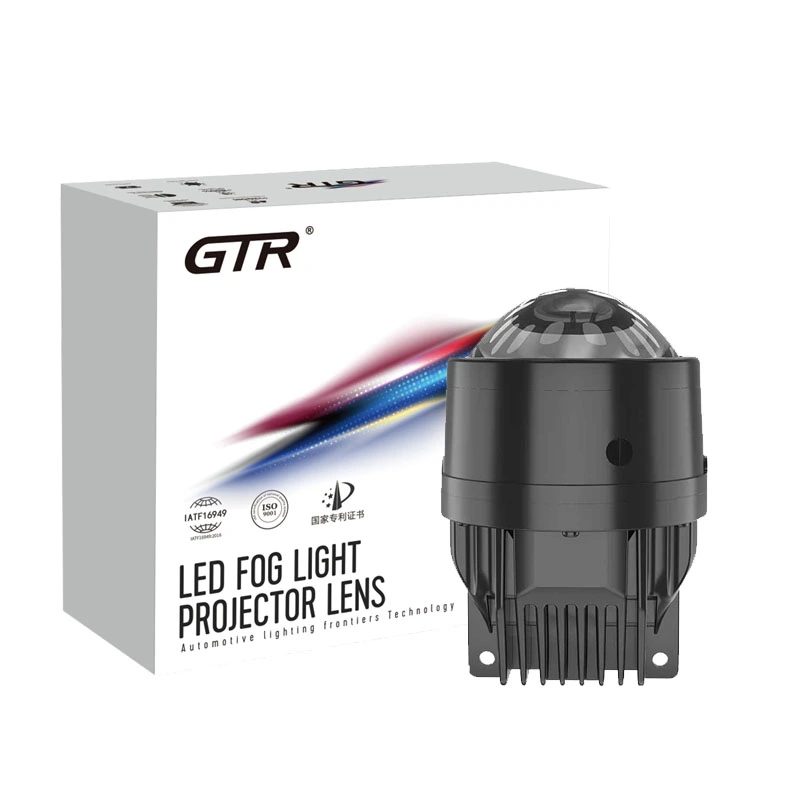
The Evolution of Fog Light Technology: From Halogen to Intelligent Systems
Fog lights have evolved from simple halogen bulbs producing 1,000–1,500 lumens to intelligent LED systems that deliver 4,700 lumens with adaptive beam control and thermal management that extends lifespan to 50,000+ hours.
The trajectory is clear. Halogen fog lights dominated for decades—they were cheap, widely available, and “good enough.” But “good enough” isn’t good enough anymore. Today’s drivers expect more: better visibility, longer lifespan, and technology that actually adapts to conditions rather than just blasting light in a general direction.
Here’s what that evolution looks like in practice:
| Era | Technology | Key Characteristics | Limitations |
|---|---|---|---|
| Pre-2010 | Halogen | 1,000–1,500 lumens, warm light, simple construction | Short lifespan (500–2,000 hrs), high energy consumption, gradual dimming |
| 2010–2020 | HID / Early LED | 3,000+ lumens, wider color range, improved efficiency | HID required ballasts, early LEDs had poor beam control and heat issues |
| 2020–Present | Advanced LED | 4,000+ lumens, precise beam patterns, advanced thermal management | Higher upfront cost (offset by longevity) |
| Emerging | Adaptive / Smart LED | Sensor-integrated, dynamic beam adjustment, AI-enabled response | Still emerging in mass-market applications |
The adaptive fog lights market alone was valued at USD 1.25 billion in 2025 and is projected to reach USD 2.10 billion by 2032, growing at a CAGR of 7.62%. This isn’t niche technology anymore—it’s becoming the standard.
What “Adaptive” Actually Means for Fog Lights
The term “adaptive” gets thrown around a lot in automotive lighting. But what does it actually mean for a fog light?
In practical terms, adaptive fog lights can adjust their beam pattern, intensity, and sometimes even direction based on real-time conditions. This isn’t science fiction—it’s happening now. Some systems use forward-facing cameras and sensors to detect fog density, rain intensity, and oncoming traffic, then dynamically adjust the light output to maximize visibility without creating glare.
Here’s why this matters: a fog light that’s perfect for light mist might be completely wrong for dense fog. A static beam can’t adapt. An adaptive system can.
For aftermarket buyers, the implications are significant. While fully adaptive systems are still largely confined to OEM applications, the underlying technologies—precise beam control, thermal management, and multi-voltage compatibility—are already available in premium aftermarket products like GTR’s Ultra Series.
GTR’s Role in the Fog Light Revolution
GTR Lighting entered the automotive lighting market in 2009 with a simple philosophy: quality over cheapness. At a time when the market was flooded with the cheapest possible products, GTR focused on engineering excellence. That philosophy hasn’t changed, but the technology certainly has.
Custom TST 7045 Chipset Technology
One of the most significant innovations in GTR’s current lineup is the custom TST 7045 LED chipset. Rather than using off-the-shelf chips from suppliers like CREE or Philips—which many competitors do—GTR engineered its own chipset for specific performance characteristics.
Why does this matter? A custom chipset allows for precise optimization of beam pattern, thermal performance, and longevity. The TST 7045 chips in the Ultra 3.0 series deliver 4,700 lumens of raw output per bulb at 43 watts of power. That’s more than three times the brightness of a standard halogen fog light, with a fraction of the energy consumption.
The “TST” stands for Thermal Separation Technology. This isn’t marketing jargon—it’s a genuine engineering solution to one of the biggest problems in LED lighting: heat management. LEDs generate heat, and heat degrades performance and lifespan. TST ensures the 43-watt LEDs stay cool, sustaining high-lumen output without degrading over time.
Precision Beam Placement
Brightness alone doesn’t make a good fog light. Beam pattern matters just as much—if not more. A 4,700-lumen bulb with a scattered beam is worse than a 2,000-lumen bulb with a focused beam.
GTR addresses this through digitally optimized LED placement that mimics the factory filament position. When the LED chips sit in exactly the right position relative to the reflector, the beam goes where it’s supposed to go—low, wide, and flat, cutting under the fog layer rather than bouncing off it. This is what separates a quality fog light upgrade from a dangerous downgrade.
As one installer noted, “The GTR Lighting CSP Mini bulbs have the ability to be 2-3 times brighter than your old light bulbs, in most applications they will also mimic the OEM beam pattern to protect other drivers’ vision at night”.
Thermal Management That Actually Works
Heat is the silent killer of LEDs. When LEDs overheat, they dim. When they dim, you lose visibility. When you lose visibility, safety is compromised.
GTR’s approach to thermal management is multi-layered. The Ultra Series 2.0 uses a die-cast, fully potted housing with a bearing-less fan that actively cools the heatsink. The CSP Mini series takes a different approach—using high-efficiency Philips Z ES chips that produce 2,500 lumens at only 16 watts, eliminating the need for active cooling altogether.
Both approaches work. The key is that GTR has engineered solutions for different applications rather than using a one-size-fits-all approach.
Lifetime Warranty: Confidence in Engineering
When a company offers a lifetime limited warranty on its products, it’s either incredibly confident or incredibly reckless. In GTR’s case, the confidence is backed by engineering. The thermal management, chip selection, and build quality all contribute to a product that’s designed to outlast the vehicle it’s installed in.
Market Trends Driving Fog Light Innovation
Understanding where fog light technology is headed requires understanding the forces shaping the market.
1. The LED Tipping Point
The global LED fog lamp market was valued at USD 1.37 billion in 2025 and is expected to reach USD 1.62 billion by 2033. Some projections are even more aggressive, forecasting growth to USD 4.94 billion by 2033 at a CAGR of 15.2%. The majority of new vehicles now feature LED fog lights, prized for their longevity, low power consumption, and crisp, focused light output.
This isn’t a trend that’s going to reverse. LED technology has reached the point where it’s superior to halogen in every meaningful metric except upfront cost—and even that gap is narrowing.
2. Integration with Vehicle Safety Systems
Fog lights are no longer standalone components. They’re increasingly integrated with forward-looking sensors, vehicle networks, and advanced driver assistance systems. This integration enables dynamic responses to weather, road geometry, and oncoming traffic.
For aftermarket buyers, this means compatibility matters more than ever. A fog light that doesn’t play nicely with your vehicle’s electrical system isn’t just an inconvenience—it could be a safety issue.
3. The Amber vs. White Debate
Amber (3000K) light penetrates fog, rain, and snow more effectively because longer wavelengths scatter less in moisture-laden air. White (6000K) light provides better color recognition and a modern aesthetic.
Both have their place. GTR offers both options, including the Ultra 3.0 in yellow, which delivers 4,100 lumens of focused, glare-free light with a rich yellow hue that’s easier on the eyes in inclement weather. The choice isn’t about which is “better”—it’s about which is better for your specific driving conditions.
What the Industry Is Saying
Market analysts and industry observers are paying close attention to the fog light segment. Here’s what they’re seeing:
“The fog lights segment of the automotive lighting landscape is experiencing a convergence of technological innovation, regulatory scrutiny, and evolving consumer expectations”.
“As automotive design and technology evolve, fog lights are being reimagined with adaptive features, energy-efficient LEDs, and smart sensors, making them indispensable in modern driving arsenals”.
The message is consistent: fog lights are becoming more important, more sophisticated, and more integrated with vehicle systems. The days of treating fog lights as an afterthought are over.
Frequently Asked Questions About Fog Light Technology
What is the fog light symbol on my dashboard?
The front fog light symbol shows a lamp with three wavy lines pointing down, typically green or white. The rear fog light symbol points in the opposite direction and glows amber or red. If you switch them on and nothing happens, check for a blown fuse, faulty relay, or sensor issue.
Are LED fog lights better than halogen?
Yes, for nearly every metric that matters. LEDs deliver 3–4 times the brightness of halogen, last 25–50 times longer, use one-third the power, and offer precise beam control. The only advantage halogen retains is lower upfront cost.
What color fog light is best for fog?
Amber (3000K) light penetrates fog, rain, and snow more effectively because longer wavelengths scatter less in moisture. White (6000K) offers better color recognition but can reflect more in dense fog. Choose based on your typical driving conditions.
How long do LED fog lights last?
Quality LED fog lights can last 50,000 hours or more. This is significantly longer than halogen bulbs, which typically last 500–2,000 hours. GTR’s Ultra Series bulbs are engineered to outlast your vehicle.
What is the difference between front and rear fog lights?
Front fog lights help you see the road ahead by casting a wide, low beam under the fog layer. Rear fog lights are bright red lamps that help other drivers see you in heavy mist or rain. Rear fog lights are more common on European vehicles.
When should I use fog lights?
Only use fog lights when visibility drops below 100 meters (approximately 328 feet). Using them in clear conditions is illegal in many areas and can dazzle other drivers. They should never be used as a substitute for headlights.
Are LED fog lights legal?
LED fog lights are legal if they meet SAE/DOT compliance standards. There’s no federal regulation specifically for fog lamps, but state regulations generally reference the SAE J583 standard. Always check that your fog lights carry appropriate SAE markings.
The Future of Fog Lighting: What’s Next?
Looking ahead, several trends are likely to shape the next generation of fog lights:
- AI-powered lighting adjustments that automatically optimize beam patterns based on real-time conditions
- Integration with autonomous driving systems, where fog lights become active participants in situational awareness rather than passive illumination devices
- Software-defined features and over-the-air updates that allow fog lights to improve over time without hardware changes
- Further miniaturization that allows more flexible mounting positions and integration with other lighting functions
For aftermarket buyers, the takeaway is clear: the technology you choose today should be capable of meeting not just today’s needs but tomorrow’s expectations. That means prioritizing quality, thermal management, and beam precision over the cheapest option on the shelf.
Making the Right Choice for Your Vehicle
The fog light market is more sophisticated than ever. With options ranging from basic halogen replacements to advanced LED systems with adaptive capabilities, the choice can feel overwhelming.
Here’s our advice: focus on the fundamentals that actually matter. Beam pattern accuracy, thermal management, build quality, and certification (SAE/DOT compliance) should be non-negotiable. Brightness matters, but only when it’s paired with a beam that puts the light where it belongs.
GTR’s approach—custom chipsets, precision beam placement, advanced thermal management, and lifetime warranty—represents what happens when engineering expertise meets a genuine commitment to quality. It’s not the cheapest option on the shelf. It’s not meant to be. It’s meant to be the last fog light upgrade you’ll ever need.
Explore GTR’s full range of fog light solutions at www.rhgtr.in. Because the future of driving visibility isn’t coming—it’s already here.