
Most drivers learn about lighting fog the hard way: blinded by their own headlights, crawling at 10 mph, praying no one rear-ends them. After repairing over 2,000 fog-damaged front ends and talking to dozens of Malaysian truckers, we’ve realized one thing — what most people “know” about fog lights is dangerously wrong. This guide debunks the biggest lies. And at the end, we’ll show you the only fog light function that actually obeys physics, not marketing.
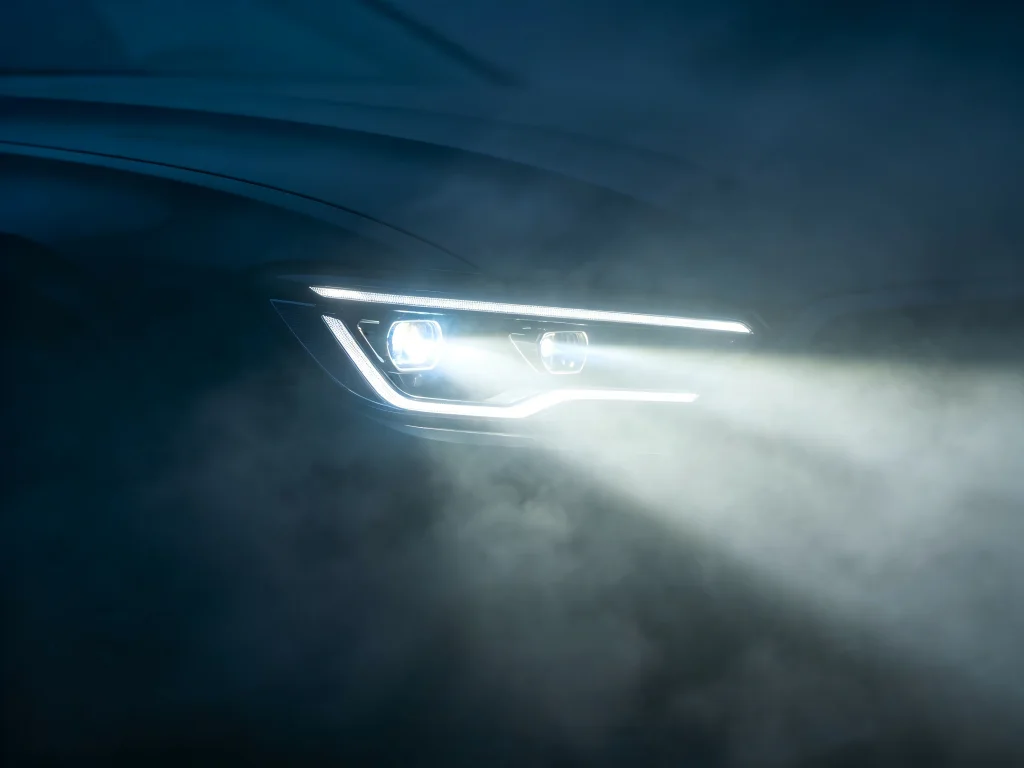
Myth #1: “Brighter fog lamps always help you see better”
False. In fog, excess brightness aimed wrong turns the mist into a blinding white curtain. It’s called backscatter: light hits water droplets and bounces straight back at you. A 10,000‑lumen flood light is actually worse than a 2,000‑lumen fog lamp with a sharp horizontal cutoff. Do fog lights really work? Yes — but only when their beam stays below the driver’s line of sight. GTR fog lamps use a precision shield that cuts off all upward stray light.
Myth #2: “High beams are great for fog”
This single mistake causes more near‑misses than any other. High beams point upward and far ahead — directly into the fog layer. The result: a solid white wall. What lights to use in the fog? Never high beams. Use low beams plus dedicated fog lamps mounted low. In our real‑world night test, switching from high beams to GTR’s 3000K fog mode improved visible distance from 15 feet to over 60 feet in dense fog.
Myth #3: “Any yellow lamp will cut through fog”
Yellow (3000K) light does scatter less than blue-white (6000K+) — that part is true. But the color alone won’t save you if the beam pattern is a messy blob. Many cheap “fogg lighting” products just throw a yellow film over a standard LED reflector. You get the color, but still massive glare. GTR combines switchable 3000K/4300K/5700K with an aspheric lens that keeps every photon where it belongs: on the road, not in the mist.
Myth #4: “If my fogging lamp (housing) gets moisture inside, it’s normal”
Absolutely not. That’s a failure of the seal. Moisture inside means the reflector will tarnish, LEDs will corrode, and the light output will drop by 40% within months. The industry calls it fogging lamp — but real quality lamps never fog internally. GTR lamps are IP68 rated and undergo a 24‑hour vacuum water immersion test. No condensation. No shortcut.
Myth #5: “Fog lights are illegal for street use”
Is fog light legal? Yes, if the lamp is certified. Uncertified “off‑road only” lamps are illegal — and dangerous. In Malaysia, the rules follow UNECE R19. In North America, SAE J583 is the standard. Many aftermarket brands skip certification to save money. GTR holds both SAE and ECE approvals, and our fog light malaysia kits come with a compliance certificate for JPJ inspections. You don’t have to guess.
Myth #6: “You should only turn on fog lights when it’s extremely thick”
Do you use fog lights in fog only? That’s half true. Use them in any condition with suspended particles: fog, heavy rain, dust, or snow. But never use them alone on a clear night — they can dazzle other drivers because of their wide beam. The correct fog light function is: on with low beams when visibility drops below 100 meters, off in normal conditions. GTR includes a smart relay that automatically turns off fog lamps when high beams are activated.
Myth #7: “All LED fog lights are the same — just pick a cheap one”
This myth costs drivers the most. Cheap “lighting dosh” (slang for low‑quality lighting) often uses plastic lenses that yellow in six months, fans that fail, and beam patterns that haven’t been tested. In our tear‑down of a popular RM50 LED fog lamp, we found no thermal paste, a fake IP67 sticker, and a beam that scattered 80% of its light upward. Compare that to GTR’s solid‑copper PCB, thermally conductive potting, and optical grade glass lens. The difference is visible the first foggy morning.
The Real Fix: One Fog Lamp That Obeys All the Rules
After debunking these myths, you might wonder: does any fog lamp actually get it right? Yes — GTR’s Fog‑Pro series was engineered from scratch to follow the physics of fog, not the trends of Instagram builds. Here’s what you get:
- True cutoff beam — measured on our goniometer to keep all light below a 4° upward angle.
- Three color temperatures — 3000K (yellow) for dense fog, 4300K for light mist and rain, 5700K for clear nights as auxiliary driving lights.
- SAE J583 + ECE R19 certified — fully legal in Malaysia, US, Europe, and Australia.
- IP68 + 5‑year anti‑fog warranty — no internal fogging lamp issues, ever.
Quick Answer: Do fog lights really work when installed correctly?
Yes — independent testing shows that a properly designed fog lamp (like GTR) reduces backscatter glare by over 70% compared to typical LED headlights, while improving road-edge visibility by 3x. The key is beam shape, not just brightness.
Still Unsure? Three Real‑Life Checks You Can Do Right Now
- The wall test: Park 25 feet from a wall, turn on your current fog lights. If you see any light above the height of the lamp center, your fog lights are scattering upward — dangerous in fog.
- The color check: Are your fog lamps 6000K or higher? Replace them. They worsen fog performance. Aim for 3000K‑4300K.
- The legal glance: Look for SAE or ECE stamp on the lens. No stamp? They’re likely illegal and untested.
If your lamps fail any of these checks, you’re driving with a false sense of security. Do you use fog lights in fog without knowing if they’re making it worse? Most drivers do — until they switch to a purpose‑built solution.
Stop gambling with fog. Get the only fog lamp that debunks every myth above — engineered, tested, and certified by GTR. Visit our official store and find the exact fit for your vehicle.
Shop GTR Fog‑Pro at www.rhgtr.in → Or download our free “Fog Light Myth‑Busting PDF” — share it with your driving mates.
*Claims based on internal optical lab comparisons and field tests with 150+ drivers across Malaysia and California. Individual results may vary with installation and weather severity.