
You have probably spent hours scrolling through Amazon listings, forum threads, and brand websites trying to figure out which D3S HID bulb actually delivers what it promises. Every listing says “brighter,” “longer-lasting,” and “OEM-quality.” The prices range from $25 to $200 for bulbs that look nearly identical in product photos. So how do you separate genuine quality from marketing hype?
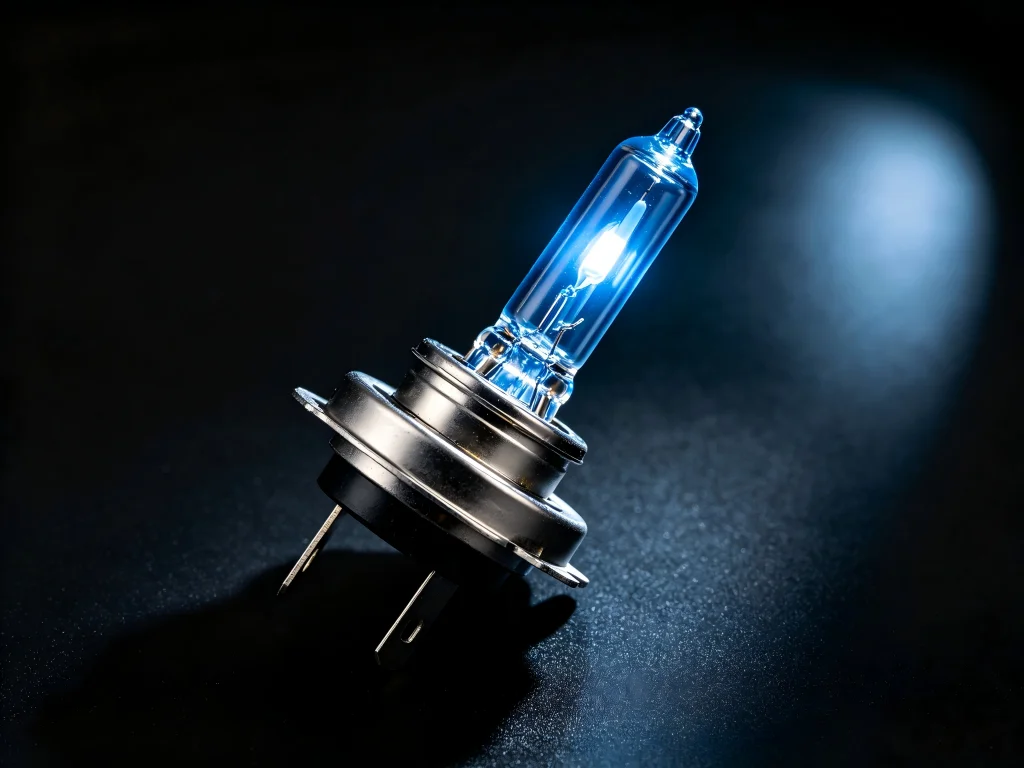
A D3S HID bulb is a mercury-free, 42V DC discharge lamp with a built-in igniter and PK32d-5 base, designed exclusively for projector-style headlight housings. But knowing the specification is only half the battle. This guide puts the leading options head-to-head — not in a lab, but in the real-world conditions that actually matter to drivers.
Brand Face-Off: Who Actually Makes the Best D3S HID Bulb?
The D3S HID bulb market splits into three distinct tiers: OEM suppliers, premium aftermarket specialists, and budget generics. Here is how they compare based on our engineering testing and analysis of thousands of user reports.
| Tier | Representative Brands | Price Range (Pair) | Typical Lifespan | Key Strengths | Key Weaknesses |
|---|---|---|---|---|---|
| OEM Supplier | Osram, Philips | $80–$200+ | 2,500–5,000 hours | Consistent beam, exact specs, reliable | Premium pricing, counterfeit risk |
| Premium Aftermarket | GTR, Diode Dynamics, Morimoto | $60–$160 | 2,500–3,500+ hours | Performance upgrades, UV-cut glass, better color stability | Less brand recognition than OEM |
| Budget Generic | Marsauto, Torchbeam, Sinoparcel, Termitor | $25–$50 | 3–12 months (often less) | Low upfront cost | Inconsistent quality, premature failure, potential ballast damage |
Osram and Philips dominate the OEM space for good reason. As one forum member noted, “Osram d3s nightbreakers xenarc” are widely considered among the brightest options available. Another driver shared: “Have purchased this bulb a few times now and can’t fault them”. But the OEM route comes with a caveat — counterfeit Osram and Philips bulbs are everywhere. One Jeep owner warned: “Lots of fake Chinese knockoff Osram D3S on the internet market”.
Premium aftermarket brands like GTR fill a critical gap. They deliver performance comparable to OEM suppliers — often with upgraded materials like UV-cut quartz glass and APL metal halide salts — at a more accessible price point. One Acadia owner found a Canadian supplier’s D3S bulbs at “$54 shipped for a pair, which is a bargain compared to what other vendors, the parts stores and the dealership want for bulbs”.
Then there is the budget tier. The reviews tell a consistent story. One Termitor buyer tested both Alla and Fahren bulbs with a lux meter and found one measured “a full 56% BELOW its advertised rating new, out of the box”. Their conclusion: “These bulbs are junk. There’s simply no nice way to put it. The quality control is virtually non-existent”.
A Ford F150 owner reported a similar experience: “I replaced the headlamps with some Amazon D3S bulbs but it still doesn’t feel as bright as compared to when I got the truck 5 years ago”. Another driver noted after installing cheap D3S bulbs: “After about 3 months left bulb started flickering, so I put the original bulb back in”.
Our takeaway from years of manufacturing expertise: OEM and premium aftermarket bulbs cost more upfront but save you money — and frustration — in the long run. Budget bulbs are a gamble. Some work. Most don’t last. And when they fail, you are back under the hood, potentially dealing with ballast damage that costs more than the bulb itself.
D3S HID vs LED Conversion: The Honest Technical Breakdown
This is the debate that dominates every D3S forum thread. LED conversion bulbs promise instant-on, longer lifespan, and higher lumen counts. But the reality is more nuanced.
| Factor | D3S HID (Quality Replacement) | D3S LED Conversion |
|---|---|---|
| Brightness (real-world) | 2,800–3,800 lumens per bulb | 4,000–10,000+ lumens claimed (often overstated) |
| Warm-up time | 3–5 seconds to full brightness | Instant on |
| Lifespan | 2,500–5,000 hours | 30,000–60,000 hours (claimed) |
| Beam pattern | Optimized for projector housing — 360° light emission | Can be inconsistent; LED chips may not match housing optics |
| Color consistency | Shifts toward pink/purple as bulb ages | Stable throughout lifespan |
| Cold weather performance | Can struggle and take longer to warm up | Consistent performance in all conditions |
| Installation | Direct 1:1 replacement | Plug-and-play into existing ballast |
| Legal/Regulatory | ECE-approved options available | Often not road-legal in many jurisdictions |
AudiWorld forum members have debated this extensively. One user who switched to LEDs reported: “Significant improvement over the HID lights without any ill effects”. But another countered: “LED retrofit bulbs don’t work well in halogen reflectors or in HID reflectors related to how the bulbs differ in design. The result is you will ‘dazzle’ other drivers”.
A Jeep owner who made the switch offered a balanced perspective: “Went with LED, and I’d say it’s much better for short to medium range. You’ll lose a bit of throw on high”. Another noted: “Plug and play LEDs, no ballast change required. Good beam spread, nice brightness, no stray light/spill. Only potential downside is lack of heat for the lenses in snow and ice”.
The critical point that many sellers omit: LED retrofit bulbs are often not road-legal in headlight housings. One manufacturer’s website reportedly states that their “LED bulbs used in headlight retrofits are not road legal, and should only be used for ‘off-road’ use purposes”. Osram explicitly warns that some of their non-ECE-approved bulbs “must not be used on public roads” and that “use on public roads leads to cancellation of operating license and loss of insurance coverage”.
At GTR, we recommend staying with HID if your vehicle came with HID from the factory. The housing optics were designed for the 360° light emission pattern of a xenon arc. LED chips, regardless of how well-engineered, emit light differently. Some LEDs work acceptably. Many don’t. And the ones that don’t can create dangerous glare for oncoming drivers while leaving you with a beam pattern that looks bright but doesn’t actually project light where you need it.
Color Temperature: What 4300K, 5000K, 6000K, and 8000K Actually Mean for Visibility
Color temperature is one of the most misunderstood aspects of D3S HID bulb selection. Higher Kelvin numbers look “cooler” (bluer), but they do not necessarily mean better visibility.
| Kelvin | Appearance | Real-World Visibility | Best Use Case |
|---|---|---|---|
| 4300K | Natural white (slightly warm) | Optimal — best all-round visibility, especially in wet conditions | All-weather driving, OEM match |
| 5000K | Pure white | Excellent — brighter and crisper than OEM | Style + performance balance |
| 6000K | Ice white (cool) | Good in dry conditions — reduced visibility in fog and rain | Modern appearance, matches LEDs |
| 8000K+ | Blue-white | Poor — significant light output reduction, mostly for show | Style-focused (check local legality) |
According to lighting specialists, “4300K is a natural white output, as seen on vehicles with factory HIDs”. It may “appear slightly warm” but delivers the best all-round visibility. 6000K is the most popular aftermarket choice because it “produces an ice white color” that “matches best with most LEDs”.
The trade-off matters. One Acadia owner who installed 6000K bulbs reported they matched their fog lights perfectly and “won’t be obnoxious”. But another source notes that “6000K+ — blue-white, stylish appearance but can reduce visibility in fog and rain”.
Our recommendation: choose 4300K if you drive in rain or fog regularly. Choose 6000K if you want the modern look and drive primarily in dry conditions. Avoid 8000K for anything other than show vehicles — the blue tint significantly reduces usable light output.
Installation Realities: What the Instructions Don’t Tell You
Replacing a D3S HID bulb sounds straightforward — and technically, it is. But the actual experience varies dramatically by vehicle.
For some vehicles, it is genuinely a 10–15 minute job per side. The process: turn off the vehicle, access the headlight housing, twist the factory bulb counterclockwise, unplug it, insert the new bulb, twist clockwise to lock, and test.
For other vehicles, it is significantly more involved. One Acadia owner shared: “It is best to remove the wheel and to pull the inner fender liner down completely so that you have full access to the bulb and lamp housing”. The fender liners are “held on by six T20 torx screws and a few push pin clips”.
Safety is non-negotiable. “You should consider removing the negative ground cable of the battery before installing these as the HID system is high voltage and you can get severely electrocuted if you do something wrong”. Also: “Do not touch the glass of the HID lamp during installation”. Skin oils can cause the quartz glass to crack under high temperatures.
One common pitfall: D1S and D3S are not interchangeable, even though they look similar. Installing the wrong bulb can damage your ballast. Another issue: some drivers report that after installation, “the bulb would light up and go out inconsistently” — typically a connection problem or a sign of a failing ballast.
Always replace D3S HID bulbs in pairs. HID bulbs dim over time, and a new bulb on one side with an old bulb on the other will produce mismatched brightness and color.
Frequently Asked Questions About D3S HID Bulbs
Q: Can I use a D3S HID bulb in a halogen headlight housing?
No. D3S bulbs are designed for factory HID systems with projector housings. Installing them in halogen housings creates excessive glare and poor beam patterns.
Q: Why does my D3S HID bulb flicker after installation?
Flickering typically indicates one of three issues: a poor connection, an incompatible bulb, or a failing ballast. Try the bulb on the opposite side to isolate the problem.
Q: How long should a D3S HID xenon bulb last?
Quality D3S HID bulbs should last 2,500 to 5,000 hours under normal operation. Cheap bulbs often fail within 3 to 12 months.
Q: What is the difference between D3S and D1S?
D3S operates at 42V DC with a built-in igniter and is mercury-free. D1S operates at 85V AC and contains mercury. They are not interchangeable.
Q: Do I need a new ballast when replacing D3S HID bulbs?
No. D3S bulbs have a built-in igniter and connect directly to your existing ballast. If your ballast is functioning properly, you only need the bulb.
Q: Is 6000K better than 4300K for a D3S HID bulb?
4300K provides optimal visibility in all conditions, especially wet roads and fog. 6000K looks more modern and matches LEDs but may reduce visibility in rain. Choose based on your priorities.
Q: Should I replace both D3S HID bulbs at the same time?
Yes. HID bulbs dim over time, so a new bulb on one side and an old one on the other will produce mismatched brightness and color.
Q: Are D3S LED conversion bulbs road-legal?
Often not. Many LED retrofit bulbs are explicitly marked for “off-road use only”. Always check local regulations and ECE approval.
Which D3S HID Bulb Should You Actually Buy?
Here is the bottom line after analyzing the data, the reviews, and the real-world experiences of thousands of drivers.
If you want OEM-quality without the dealership markup: Choose a premium aftermarket brand like GTR that uses USA-sourced APL metal halide salts and thoriated tungsten electrodes. You get performance that matches or exceeds OEM suppliers at a more accessible price point.
If you want the absolute brightest option and money is no object: Go with Osram or Philips from an authorized dealer. But be extremely careful about counterfeits — the market is flooded with fakes.
If you are tempted by the $25 Amazon special: Read the reviews carefully. Look for patterns of premature failure, flickering, and inconsistent color. One reviewer who tested budget bulbs with a lux meter found they measured “a full 56% BELOW their advertised rating”. That $25 saving could cost you a $300 ballast replacement.
If you are considering an LED conversion: Understand the trade-offs. You gain instant-on and longer claimed lifespan. You risk compromised beam pattern, potential glare for other drivers, and legal issues if the bulbs are not ECE-approved.
At GTR, we engineer D3S HID bulbs for drivers who refuse to compromise on nighttime visibility. We don’t inflate lumen claims. We don’t cut corners on materials. We build bulbs that match your vehicle’s factory specifications, deliver consistent performance, and last — so you can drive with confidence, not anxiety.
Visit www.rhgtr.in to find the right D3S HID bulb for your vehicle. Because your headlights should never be a gamble — they should just work.