
Walk into any auto parts store or scroll through any marketplace, and you will see dozens of LED projector headlights claiming to be the best. Most listings look identical. Most descriptions copy each other. And most buyers end up confused, overpaying, or buying the wrong kit entirely. In our years of building and testing headlight systems, we have noticed something strange: the most important information is almost never mentioned. This article changes that. No fluff. No sales pitch disguised as advice. Just the honest, technical, and practical truths that industry insiders know but rarely share.
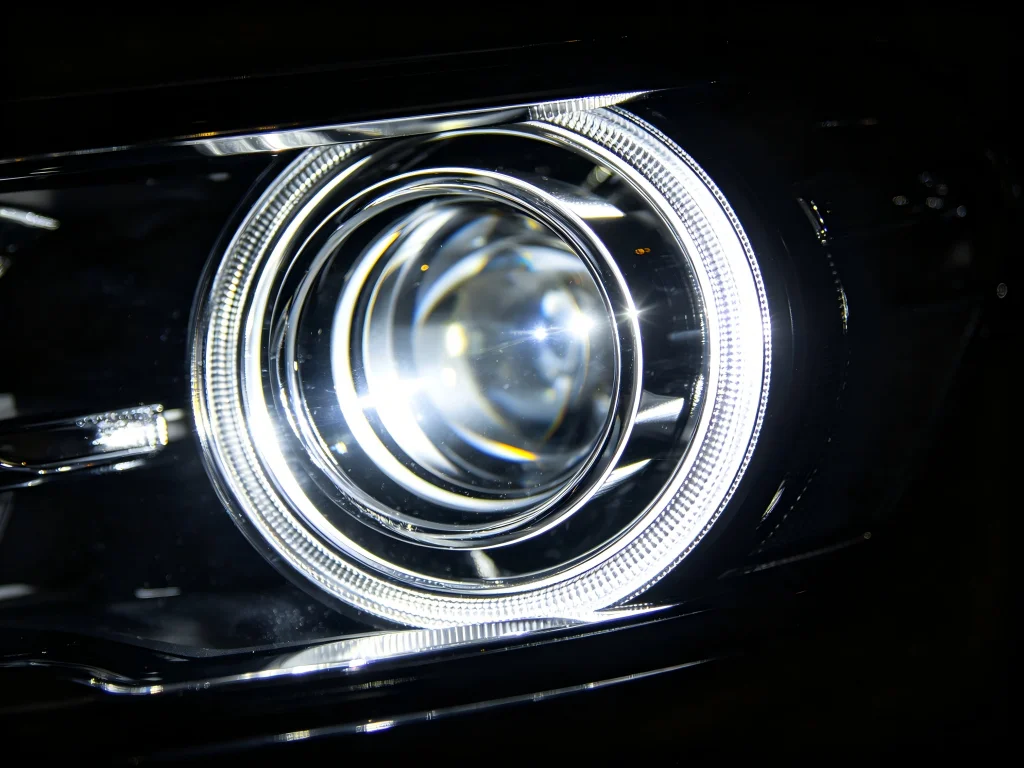
The One Spec That Matters More Than Lumens
The single most important specification in any LED projector headlight is beam pattern accuracy, not brightness. A well-designed projector places light exactly where you need it on the road, while a poor one scatters light uselessly and creates dangerous glare.
Here is a truth the marketing departments avoid: you can measure lumens with a cheap meter, but you cannot fake a clean beam pattern. Beam pattern requires precision optics, careful engineering, and real testing. That is why a 4,000-lumen projector from a serious manufacturer will outperform a 12,000-lumen generic kit every single time.
Think of it this way. A flashlight with no reflector shines everywhere and illuminates nothing well. A laser pointer with a tiny beam is useless for driving. A proper projector is the middle ground: controlled, focused, and purposeful. When you evaluate LED projector headlights, ask for beam pattern photos against a wall. If the seller cannot provide them, walk away.
Why Cheap Kits Fail (And It Is Not What You Think)
Most buyers assume cheap LED kits fail because of poor chips. That is only partly true. The real killer is heat.
LED chips are semiconductors. They have a narrow temperature range where they perform optimally. Push them beyond that range, and three things happen:
- Light output drops gradually, so you barely notice the decline.
- Color temperature shifts toward blue, which performs worse in rain.
- Lifespan shrinks dramatically, sometimes from 30,000 hours to 5,000.
Cheap kits skimp on thermal design. They use thin aluminum plates instead of proper heat sinks. They skip copper heat pipes. They omit fans or use noisy, unreliable ones. The result is a headlight that looks bright on day one and disappointing on day 300.
When evaluating any kit, look for these thermal features:
- Copper heat pipes that move heat away from the chip quickly.
- Finned aluminum heat sinks with enough surface area to dissipate heat.
- Active cooling (fans) in high-output systems, with sealed bearings to keep dust out.
- Thermal throttling protection that reduces power instead of cooking the chip.
If a product page does not mention thermal design at all, assume it has none.
Vehicle-Specific Fitment: The Hidden Cost of “Universal” Kits
Universal fitment sounds convenient. In reality, it means the kit fits nothing perfectly.
Every vehicle has a unique headlight housing shape, depth, and mounting geometry. A universal kit may physically fit inside the housing, but the projector may sit at the wrong angle, the beam may be misaligned, or the dust cover may not seal properly. Each of these issues causes problems:
- Wrong angle means the beam points too high or too low, blinding others or lighting the ground.
- Misalignment cannot always be corrected with adjustment screws.
- Poor sealing lets moisture in, which fogs the lens and corrodes electronics.
Vehicle-specific kits solve these problems before they start. They include brackets designed for your exact housing, connectors that match your factory wiring, and dust covers that seal correctly. For popular models like the Grand Vitara, Brezza, Baleno, i20, and Wagon R, vehicle-specific options are widely available and always worth the small extra cost.
For bike owners, fitment is even more critical. Bikes have limited space, high vibration, and direct exposure to weather. A kit designed for a car will not survive on a bike. LED projector headlights for bikes must be specifically engineered for vibration resistance and waterproofing.
The Color Temperature Trap
Blue headlights look aggressive and modern. They also perform poorly in real-world conditions.
Human eyes are most sensitive to light in the 5500K to 6000K range. This is why 6000K LED projector headlights feel brighter and more comfortable than 8000K or 10000K options. Higher color temperatures shift toward blue, which:
- Scatters more in rain, fog, and dust.
- Causes eye fatigue on long drives.
- Attracts unwanted attention from law enforcement in some regions.
Our recommendation is simple: choose 6000K for the best balance of visibility, comfort, and legal compliance. Choose 5000K if you want slightly warmer light and drive often in fog. Avoid anything above 6500K unless you prioritize appearance over performance.
What the Spec Sheets Do Not Tell You
Spec sheets are marketing documents. They highlight strengths and hide weaknesses. Here is what they often leave out:
| Spec Sheet Claim | What It Often Means |
|---|---|
| “20,000 lumens” | Measured at the chip, not at the road. Real output may be 40% lower. |
| “50,000-hour lifespan” | Measured in ideal lab conditions, not in a hot engine bay. |
| “Plug and play” | May require canbus modules, adapters, or bracket modification. |
| “Waterproof” | May only mean IP65, which is not enough for pressure washing or heavy rain. |
| “Universal fit” | Fits some vehicles well, most vehicles poorly, and none perfectly. |
Do not trust spec sheets alone. Look for independent reviews, beam pattern photos, and real customer feedback. If a manufacturer is confident in their product, they will provide evidence, not just numbers.
The Installation Reality Check
Many buyers underestimate installation. Even “plug and play” kits can take two to four hours in a modern vehicle. Bumper removal is sometimes required. Headlight housings may need to be opened for projector retrofits. Wiring may need modification for canbus systems.
Before buying, ask yourself:
- Do I have the tools and space to do this safely?
- Am I comfortable removing body panels or wiring?
- Do I have a backup plan if something goes wrong?
If the answer to any of these is no, budget for professional installation. It is money well spent. A poorly installed headlight is worse than a stock one.
One more thing: always aim your headlights after installation. Even a perfect kit aimed incorrectly will blind other drivers and fail inspections. Aiming takes ten minutes and requires only a flat surface and a wall.
What Experienced Installers Wish Buyers Knew
We asked installers across different regions what they wish customers understood before buying. Their answers were remarkably consistent:
- “Buy once, cry once. Cheap kits always come back for replacement or repair.”
- “Canbus compatibility is not a feature. It is a requirement on anything built after 2010.”
- “Aim the lights. Please. Just aim them.”
- “The beam pattern matters more than the brand name on the box.”
- “If the seller cannot answer technical questions, they do not know their product.”
These are not opinions. They are patterns observed across thousands of installs. Take them seriously.
The GTR Difference: Engineering Over Marketing
GTR exists because we got tired of seeing the same problems repeated. Poor thermal design. Misleading specs. Universal kits that fit nothing. We decided to build headlights the right way.
Here is what that means in practice:
- Real beam pattern testing. Every projector design is validated against a wall before production.
- Thermal engineering. Copper heat pipes, finned heat sinks, and thermal protection are standard, not optional.
- Vehicle-specific kits. Designed for Grand Vitara, Brezza, Baleno, i20, Wagon R, and popular bikes.
- Canbus support. Built into modern kits to prevent errors and flickering.
- Honest specifications. We measure output at the road, not just at the chip.
- Real support. Our team answers technical questions and helps with installation issues.
We do not claim to be the cheapest. We claim to be the most reliable. For drivers who value visibility, safety, and longevity, that is the only claim that matters.
Questions Buyers Ask Us Most
Can I install LED projector headlights in my existing halogen housing?
No. Halogen reflector housings are not designed for projector optics. You need either a complete replacement headlight assembly or a proper projector retrofit. Putting LED bulbs in a halogen housing causes glare and is illegal in many regions.
How much should I expect to pay?
LED projector headlights price depends on vehicle, kit quality, and features. Budget kits exist but often disappoint. Mid-range kits offer the best balance. Premium kits deliver the best performance and longest life. Expect to pay more for vehicle-specific fitment and canbus support.
Do LED projector headlights work in extreme heat or cold?
Quality kits handle both. Thermal design manages heat in summer. LEDs actually perform better than halogens in cold because they have no filament to break. Look for wide operating temperature ratings.
Will they void my vehicle warranty?
In most regions, upgrading headlights does not void the entire warranty. However, it may affect warranty coverage on the headlight circuit itself. Check your local laws and warranty terms.
How do I know if a kit is canbus-compatible?
The product description should state it clearly. If it does not, ask the seller directly. A vague answer usually means no canbus support.
Are LED projector headlights for bikes different from car kits?
Yes. Bike kits need higher vibration resistance, better waterproofing, and often a different beam pattern to suit a single headlight setup. Never use a car kit on a bike.
What is the best way to compare two kits?
Compare beam pattern photos, thermal design, canbus support, warranty length, and vehicle-specific fitment. Ignore lumen claims unless they are backed by road-level measurements.
Final Word: Buy With Confidence, Not Hope
Buying LED projector headlights should not feel like gambling. With the right information, you can choose a kit that performs well, lasts for years, and makes every night drive safer. Focus on beam pattern. Demand proper thermal design. Insist on vehicle-specific fitment. Choose 6000K. Aim them correctly. And buy from a manufacturer who answers technical questions without hesitation.
If you want to skip the guesswork entirely, visit www.rhgtr.in to explore GTR’s range of LED projector headlights. Every kit is engineered for real roads, real weather, and real drivers. See the difference for yourself. Your headlights should work as hard as you do.