
Walk into any automotive parts store in 2026, and you will see rows of halogen bulbs still on the shelves. The packaging looks the same as it did a decade ago. The prices are still low. And millions of drivers continue to buy them.
But here is what the shelf display does not tell you: the halogen bulb market is quietly undergoing its most significant transformation in fifty years — and most buyers have no idea it is happening.
The automotive halogen bulbs market was valued at USD 10.20 billion in 2025 and is projected to reach USD 11.27 billion in 2026. At the same time, regulators and automakers are systematically phasing halogen out of new vehicle production. These two facts exist in direct contradiction — and that contradiction is reshaping everything about how you should buy, specify, and think about automotive lighting.
This is not another halogen vs LED comparison. This is a roadmap for what comes next.
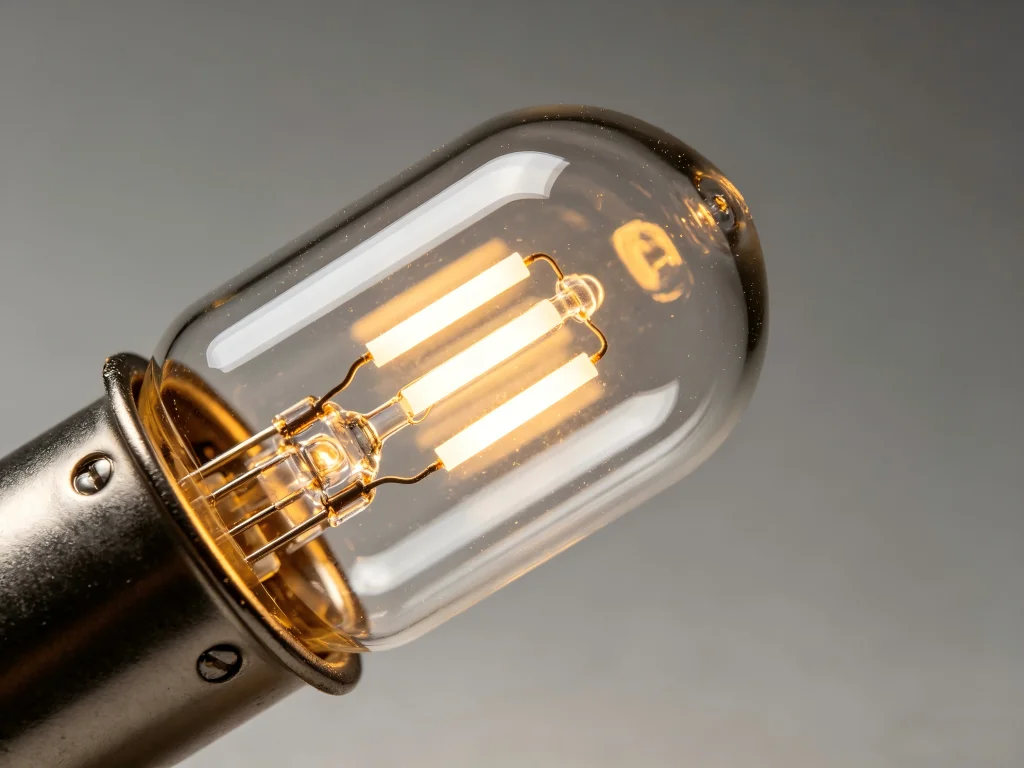
The Halogen Paradox: Why Demand Remains Strong While the Technology Ages
Halogen lighting continues to be widely used in entry-level and mid-segment vehicles where premium lighting technologies are not yet standard. The reasons are straightforward: low production costs, straightforward manufacturing, and broad compatibility with existing vehicle electrical systems.
In 2025, the halogen segment alone accounted for USD 18.1 billion in the broader automotive lighting market. That is not a dying technology. That is a technology with extraordinary installed base and replacement demand.
But here is the tension: by 2026, automakers are phasing halogen headlights out of new production in favor of LED or laser lighting. The aftermarket will continue selling halogen replacements for years — but the supply chain, the regulatory environment, and consumer expectations are all shifting.
For B2B buyers, this creates a strategic question: do you continue stocking halogen bulbs for the existing fleet and customer base, or do you accelerate the transition to LED?
The answer, as with most procurement decisions, depends on your specific application. But the window for making that decision is closing faster than most buyers realize.
Regulatory Realities: What the 2026 Rules Actually Mean for You
Regulation is the wild card that most halogen bulb buyers ignore — and it is the factor most likely to disrupt your supply chain.
In Europe, halogen bulbs for general lighting have been subject to phase-out regulations for years. Automotive applications have been more protected, but the regulatory landscape is shifting. ECE Regulation 37 continues to govern the requirements and categorization of halogen bulbs, ensuring quality, base compatibility, and correct beam angle. But compliance is becoming more stringent, and non-compliant products are being weeded out of the market.
In India, the regulatory picture is even more dynamic. The 2026 RTO rules categorize lighting into three zones based on AIS-010 standards. LED upgrades are permitted only if the bulb is RTO-approved (BIS marked) and does not exceed 3,000 lumens. The Bureau of Indian Standards has also issued revised IS 10322:2026 standards for LED luminaires, with a compliance deadline of August 2026.
The takeaway for procurement professionals: regulatory compliance is no longer optional or assumed. You need to verify that every bulb you purchase — halogen or LED — meets the standards applicable in your operating jurisdiction. And you need to monitor how those standards evolve, because they are evolving faster than most supply chains can adapt.
The Hidden Engineering Challenge That Changes Everything
Here is what the marketing materials do not tell you about the halogen-to-LED transition.
LEDs and halogens produce light through completely different mechanisms. Halogen relies on a heated filament; LED relies on semiconductor junctions. But the optical challenge is the same: the light source must be positioned precisely within the reflector or projector housing to produce the correct beam pattern.
This is where most LED replacements fail. Generic LED bulbs place the emitters in positions that do not match the original halogen filament location. The result is scatter, hot spots, and glare — the exact problems that give LED headlights a bad reputation and attract regulatory scrutiny.
GTR Lighting approached this problem differently. After nearly a decade of experience developing and refining designs, sourcing the best quality raw materials, and gathering feedback from end-users on what makes the best LED bulb with the most effective beam pattern, the engineering team optimized the position of the LEDs so that once locked into the housing, they are directly in-line with what the optics of the projector or reflector was designed for.
The result is a bulb that produces more usable light without creating extra glare to oncoming traffic. In real-world testing, the GTR Lighting Ultra 2s were almost 400% brighter than stock halogen bulbs while maintaining an excellent beam pattern.
This is not marketing hype. This is engineering that respects the original optical design — and it is the difference between an upgrade that works and an upgrade that creates problems.
What the Market Data Tells Us About the Next Five Years
The numbers tell a story of transition, not replacement.
The automotive headlights market was valued at USD 22.35 billion in 2025 and is projected to reach USD 23.41 billion in 2026, with a CAGR of 5.45% through 2032. The halogen bulbs market specifically is projected to grow from USD 10.20 billion in 2025 to USD 11.27 billion in 2026.
These are growth numbers. Halogen is not disappearing overnight. But the growth is being driven by replacement demand from the existing vehicle parc, not new vehicle production. As the vehicle fleet gradually turns over, the replacement base for halogen will shrink — and the LED aftermarket will grow.
For B2B buyers, this means two things:
- Halogen is still a viable product category for the next 5-10 years, particularly for older vehicles, entry-level segments, and applications where upfront cost is the primary decision factor.
- The transition to LED is inevitable — and the buyers who prepare for it now will have better pricing, better product selection, and better compliance outcomes than those who wait until the last moment.
Five Questions Every B2B Halogen Bulb Buyer Should Ask in 2026
Based on our years of manufacturing expertise and engagement with B2B customers across multiple regions, here is the decision framework we recommend:
- What is your replacement cycle? If you are replacing bulbs annually or more frequently, the total cost of ownership for LED may already be lower than halogen — even with the higher upfront cost.
- What is your regulatory environment? Are you operating in a jurisdiction with active LED retrofit restrictions, like India’s 3,000-lumen cap or the US states that ban aftermarket LED bulb swaps into halogen housings?
- What is your optical requirement? Are your vehicles using reflector or projector housings? The answer determines which LED replacements will work correctly.
- What is your quality standard? Are you buying on price alone, or are you verifying compliance, testing beam patterns, and validating supplier claims?
- What is your transition timeline? Are you planning a phased LED adoption, a full fleet upgrade, or a wait-and-see approach?
These are not theoretical questions. They are practical procurement decisions that affect safety, compliance, and operating costs.
The GTR Difference: Engineering That Bridges the Gap
GTR Lighting was founded in 2009 with a singular purpose: bringing high-quality lighting products into a market surrounded by products aimed at being the cheapest, where price held greater value than performance.
Today, the company is responsible for some of the world’s best and brightest LED and HID automotive lighting products. But the philosophy remains the same: educate customers about quality lighting and commit to innovation.
GTR’s Ultra Series 2 bulbs utilize automotive-grade multi-core LED chip technology — specifically, elec-tec NLW753 chips that offer more lumen density than popular but aging options from CREE and Philips. The collars have full rotational adjustability, allowing precise optical alignment. The heat-sink design maintains body temperatures below 80°C, paired with a bearing-less fan for active cooling. The driver housing is completely potted inside die-cast housings, ensuring all components stay cool and dry.
These are not generic bulbs. They are engineered solutions for specific optical and thermal requirements.
And for B2B buyers, the value proposition extends beyond the product itself. GTR provides technical documentation, application support, and compliance verification — the kind of partnership that matters when you are managing a fleet, a distribution channel, or a regulatory compliance program.
Frequently Asked Questions About Halogen Bulb Procurement in 2026
Are halogen bulbs being banned in 2026?
Not completely. While many countries have implemented bans or restrictions on halogen bulbs for general lighting, automotive applications still allow their use. However, automakers are phasing halogen out of new vehicle production. The replacement market will remain for years, but the supply chain is shifting.
What is the lumen limit for LED retrofits in India?
Under 2026 RTO rules, LED bulbs must not exceed 3,000 lumens and must be RTO-approved (BIS marked). Non-compliant LED modifications are considered illegal.
How long do halogen bulbs typically last compared to LEDs?
A standard halogen bulb provides approximately 2,000 hours of illumination. Quality LED bulbs are rated for 25,000 to 50,000 hours or more — 10 to 25 times longer.
Are aftermarket LED bulb replacements legal in the US?
It depends on the state and the specific product. Strict states like California, Virginia, and New York ban aftermarket LED bulb swaps into halogen housings; only full LED headlight assemblies with DOT approval are legal. Moderate states like Texas, Florida, and Ohio allow DOT-certified LED bulbs as long as color and brightness comply.
What is the efficiency difference between halogen and LED?
Halogen bulbs produce approximately 16 to 24 lumens per watt. LED bulbs deliver 80 to 100 or more lumens per watt — roughly 4 to 6 times more efficient.
Why do some LED retrofits cause glare?
Glare occurs when the LED emitter position does not match the original halogen filament location. The reflector or projector optics are designed for a specific light source position; when that position changes, the beam pattern scatters. Quality LED replacements like GTR’s Ultra Series are engineered to replicate the original filament position.
What certifications should I look for in halogen and LED bulbs?
For halogen, ECE Regulation 37 compliance is essential. For LED, look for DOT/SAE compliance in the US, ECE approval in Europe, and BIS marking in India. Always verify that the specific product meets the standards applicable in your jurisdiction.
Your Next Move: Strategic Procurement for a Changing Market
The halogen bulb is not dead. But its role is changing. And the buyers who understand that change — who plan for it, who verify compliance, who choose quality over the lowest price — will be the ones who avoid supply chain disruptions, regulatory penalties, and safety liabilities.
GTR Lighting offers the engineering expertise, product quality, and B2B support to help you navigate this transition — whether you are continuing with halogen replacements or accelerating your LED adoption.
Visit https://www.rhgtr.in to explore our full range of automotive lighting solutions. Contact our B2B team for bulk pricing, technical specifications, and compliance guidance tailored to your market and application.
Your lighting procurement strategy for the next decade starts now. Do not wait until the regulations change — or until your drivers notice the difference.