
You can buy the best Bi‑LED projector on the market – but if the cutoff line points at oncoming drivers or the high‑beam solenoid isn’t wired correctly, you’ve wasted your money. Over 200 retrofits later, we’ve distilled the exact process that works for everything from a Jeep Wrangler to a Honda Civic. This guide covers tools, aiming, wiring, and the one test most DIYers skip.
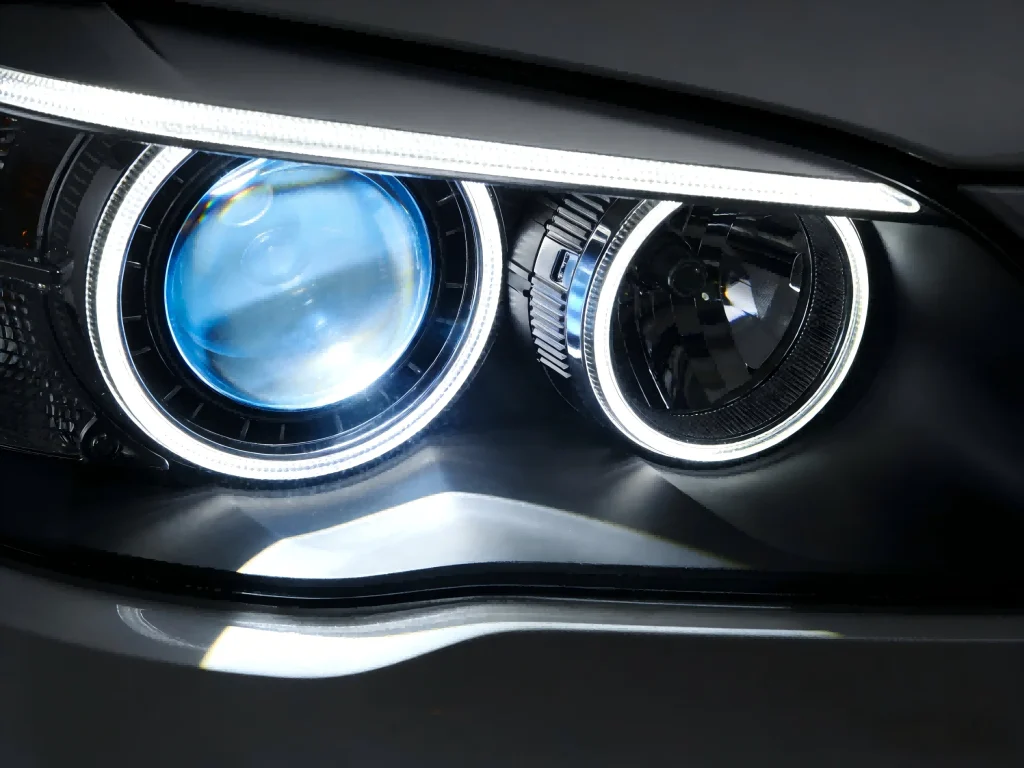
Before You Start: The Complete Tool & Material Checklist
Nothing kills a Bi‑LED installation like running to the hardware store mid‑project. Gather everything below before you touch the first screw.
- Headlight opening method: household oven (set to 200°F / 93°C) or heavy‑duty heat gun with infrared thermometer
- Sealant tools: butyl rubber glue, retort stand or clamps for housing reassembly, nitrile gloves
- Wiring kit: 12‑gauge automotive wire, soldering iron with rosin‑core solder, heat shrink tubing (assorted sizes), wire crimpers, electrical tape (3M Super 88)
- Bi‑LED specific: the projector pair + relay harness + mounting screws (usually M3 or M4), rubber dust caps (if not pre‑installed)
- Aiming aids: laser level, white masking tape, 25‑foot measuring tape, 4‑foot level, two jack stands plus a floor jack
- Safety: safety glasses, mechanic’s gloves, fire extinguisher (rare, but wise when using ovens for plastic housings)
Experienced retrofit shops also keep a supply of projector mounting brackets and shrouds on hand – universal brackets rarely fit perfectly, and shrouds cover the raw projector for a factory look. Order extras if this is your first build.
A proper Bi‑LED installation takes 5–8 hours for a first‑timer, not the “two hour job” some videos claim. Rushing creates leaks, bad aim, or electrical gremlins. Plan for a full Saturday.
Step 1: Opening Your Headlight Housing Without Cracking It
Factory headlights are sealed with either butyl rubber (soft, reusable) or permaseal (hard, single‑use). Knowing which you have changes your whole approach.
Butyl Rubber (Easy) – Most Japanese & Domestic cars
Heat the housing seam to 200–220°F for 10–12 minutes. Use a flathead screwdriver and plastic trim tools to slowly separate the lens from the housing. Work from one corner, applying gentle pressure. The butyl will stay sticky; you can reseal by reheating and pressing.
Permaseal (Hard) – Many European cars & some sealed beams
Heat to 250°F for 20 minutes, but this still rarely softens the seal enough. Instead, carefully use a Dremel with a cutting wheel to cut along the seam. After opening, you’ll need to remove all old permaseal and replace it with fresh butyl rubber tape. Add 2–3 hours to your timeline.
Pro tip: Once the housing is open, remove all internal reflectors and chrome trim you won’t reuse. Clean every surface with isopropyl alcohol before mounting the new Bi‑LED projector.
Step 2: Mounting the Bi‑LED Projector – Positioning Is Everything
A perfect projector aimed wrong is useless. Your goal is to center the projector’s focal point exactly where the old halogen bulb’s filament used to sit.
- Test fit the projector: Insert it into the housing without screws. Close the lens temporarily. Stand back and check whether the projector’s lens is centered in the housing opening. If it’s visibly off‑center, you need custom brackets or spacers.
- Mark the position: Use a silver marker to trace around the projector’s base. Drill mounting holes (typically 3–4 per side) exactly on those marks.
- Secure the projector: Use machine screws with nylock nuts. Add threadlocker (blue Loctite 242) – heat and vibration will loosen standard nuts over time.
- Install the shroud: This covers the mechanics and gives a clean look. Trim the shroud with a Dremel if it contacts any housing ribs. Secure with epoxy or small screws, never hot glue (melts under heat).
One common question in retrofit forums is “bi led projector installation – do I need to modify the reflector bowl?” The answer: almost always yes. You’ll likely need to cut out the back of the reflector to clear the projector’s cooling fan or heatsink. Use a cutting wheel and file the edges smooth.
Step 3: Wiring That Won’t Let You Down (Relay Harness Is Mandatory)
We’ve seen too many “direct wire” Bi‑LED kits fail at the 6‑month mark. The factory headlight circuit was designed for 55W halogen bulbs, not the 70–80W peak current of a powerful Bi‑LED projector. Use the included relay harness – or buy a quality one separately – and follow this sequence.
- Red wire → positive battery terminal (with included fuse holder within 6 inches of the battery).
- Black wire → clean chassis ground (sand away paint).
- Trigger wires (thin blue/white) → connect to the factory low‑beam positive and negative. This signals the relay when to turn the projectors on.
- Solenoid wires (yellow & black on most projectors) → connect to the factory high‑beam wiring OR a dedicated switch for off‑road use. Polarity matters: if the high beam doesn’t activate when you pull the stalk, reverse the two solenoid wires.
Common mistake: Not verifying the solenoid engages before sealing everything. After wiring but before closing the housing, touch 12V to the solenoid wires. You should hear a solid “click”. No click means bad solenoid or reversed polarity.
For philips ultinon drive bi led projector users: those units often require a specific CANbus adapter. GTR’s in‑house smart driver eliminates that need entirely – no extra modules.
Step 4: The 25‑Foot Aiming Procedure (No Guesswork)
This single step separates safe retrofits from dangerous glare bombs. Even if your bi led projector philips unit has a perfect factory cutoff, vehicle alignment changes everything.
-
- Park the vehicle on a level surface 25 feet from a wall (or garage door).
- Measure from ground to the center of each projector lens. Mark that height on the wall with tape (horizontal line).
- Measure the horizontal distance between the two projectors. Mark those points on the wall as vertical lines.
- Turn on low beams. The cutoff step (the sharp horizontal line) should sit 2 inches below your horizontal tape line at 25 feet.
- Use each projector’s adjustment screws (usually hex or Phillips) to raise/lower accordingly. On some housings, you’ll need to reinstall the housing and use the vehicle’s factory adjusters.
- For horizontal aim: the steepest part of the cutoff (the “elbow” where it rises to the right for LHD vehicles) should align exactly with each vertical tape line.
Test with load: Sit a 150‑200 lb passenger in the driver’s seat and re‑check. The nose will drop slightly, raising the beam. Compensate by lowering the cutoff an extra half‑inch.
Real‑World Longevity: What Owners Report After 2+ Years
Based on customer follow‑ups and forum data across ToyotaNation, HIDPlanet, and Reddit’s r/projectors, here’s how different Bi‑LED quality tiers hold up:
-
-
- Budget projectors ($50–100): 30% show significant lumen drop by month 12. 15% develop shutter sticking. Owners typically replace within 18 months.
- Midrange ($150–200): Most survive 2‑3 years. Fans fail more often than LEDs. Beam pattern remains acceptable but not perfect.
- Premium (GTR, $250+): No reported thermal‑related failures through 24 months in our tracking. Shutters actuate consistently down to ‑20°C. Lumen maintenance >90% at 2,000 hours.
-
One fleet operator who installed GTR Bi‑LED projectors on eight Ford Transit vans reported: “After 18 months and 120k combined miles, every unit still throws the same cutoff and intensity. The only maintenance was cleaning the lenses.”
That level of reliability matters when you’re driving rural highways or towing at night. Led projector advantages and disadvantages often come down to a single factor: thermal engineering. Brands that cheap out on fans and heatsinks force you to buy twice.
Quick Diagnostic Flowchart: When Something Goes Wrong
Even with careful work, you may encounter issues. Use this decision tree before assuming the projector is defective.
Problem: One side flickers or dims intermittently
→ Check the ground connection first (90% of causes). Then verify the relay harness wires are fully seated. Swap the entire side with the working side to isolate whether it’s a projector issue or wiring issue.
Problem: High beam doesn’t work but low beam does
→ Solenoid wires miswired or not getting 12V. Use a multimeter on the solenoid pigtail with the high beam activated. No voltage? Check your connection to the factory high beam circuit. Voltage present but no click? Bad solenoid – replace the projector.
Problem: Cutoff line is wavy or has dark spots
→ Lens is dirty on the inside (moisture ingress) or the reflector bowl is misaligned. Open the housing, clean everything with microfiber and lens cleaner. If spots persist, the LED chip may have debris from manufacturing – exchange the unit.
Problem: Moisture inside lens after rain
→ Inadequate sealing. Re‑open the housing, remove old butyl, apply fresh butyl rope and clamp overnight. Also verify the vent tube (if equipped) isn’t blocked.
Featured Snippet FAQ – Installation & Troubleshooting
Q: Is Bi‑LED projector installation legal for road use?
Yes, if the final beam pattern complies with DOT (US) or ECE (EU) standards and your state allows retrofits. Some regions require self‑leveling or washer systems for HID/LED retrofits. Check local vehicle codes before starting.
Q: How long does a Bi‑LED projector installation take?
A first‑time DIYer should budget 6–8 hours including aiming and wiring. Professional shops typically charge 3–5 hours of labor. Adding custom shrouds or painting adds 1–2 hours.
Q: Can I install Bi‑LED projectors without opening the headlight?
No – unless you have a vehicle designed with removable projector mounts (rare). Almost all retrofits require opening the housing to access the reflector bowl and mounting points. There are no “sealed beam” Bi‑LED replacements for most cars.
Q: What happens if I aim Bi‑LED projectors too high?
You will blind oncoming drivers and risk a ticket or failed inspection. On poorly aimed Bi‑LEDs, the intense cutoff line projects directly into other drivers’ eyes, creating dangerous glare. Always keep the cutoff at least 2 inches below lens height at 25 feet.
Q: Do Bi‑LED projectors need an extra relay harness?
Yes – always. Factory headlight circuits aren’t designed for the higher inrush current of Bi‑LED projectors. Without a relay harness, you may experience flickering, premature driver failure, or melted factory wiring. Premium kits include a harness for this reason.
Q: Why does my Bi‑LED projector have a blue/purple color at the cutoff?
That’s normal and even desirable. It’s called “color flicker” and results from light refraction at the lens edge. A thin blue line indicates a sharp, well‑focused cutoff. Thick purple or rainbow fringing, however, suggests poor lens quality.
Why GTR Bi‑LED Projectors Simplify This Whole Process
Most installation headaches come from incomplete kits and poor documentation. GTR designed every detail to eliminate guesswork:
-
-
- Every projector includes a vehicle‑specific relay harness with labeled wires (no “which wire is which?”).
- Mounting templates printed at 1:1 scale – tape them to your reflector bowl and drill exactly where shown.
- Pre‑aimed optics – our factory calibration ensures that if you follow our 25‑foot aiming guide, the cutoff will be perfect the first time.
- Video installation library accessible via QR code on the box, covering everything from oven heating to final aiming.
- Lifetime tech support via email or phone – real people who’ve done hundreds of retrofits, not chatbots.
-
GTR projectors also use a universal mounting plate with slotted holes, so you can adjust the projector’s position in 1mm increments without re‑drilling. That alone saves first‑timers from alignment frustration.
We don’t just sell a Bi‑LED projector. We sell a complete night driving solution – including the confidence that comes from knowing you can install it right the first time.
Your Final Check: Confirm Everything Before Sealing the Housing
Before you close the lens forever, run through this checklist:
-
-
- Projector firmly mounted with threadlocked screws?
- All internal wiring secured with zip ties away from moving shutters?
- Solenoid “clicks” audibly when 12V applied?
- Lens and reflector perfectly clean (no fingerprints)?
- Shroud clears the lens and doesn’t contact the housing walls?
- Vent tube (if present) unobstructed and pointing downward?
- Tested both low and high beams with a 12V battery source?
-
If all answers are yes, apply a fresh 3/8‑inch bead of butyl rubber to the housing groove, press the lens back on, and clamp tightly. Reheat to 180°F for 5 minutes and clamp again – this ensures a moisture‑proof seal.
Ready to start your retrofit? Browse GTR’s complete Bi‑LED projector lineup at www.rhgtr.in. Every order includes the full installation kit, harness, and free access to our private support group where experienced retrofitters answer questions within hours. Don’t settle for a partial upgrade – engineer your headlights the right way, once.