
Walk into any auto parts store or scroll through Amazon, and you will see the same story repeated hundreds of times. H7 LED headlight bulbs with flashy packaging, astronomical lumen claims, and price tags that seem too good to be true. And for the most part, they are.
The LED lighting industry has a dirty little secret. Most brands buy off-the-shelf components from the same handful of Chinese factories, slap their logo on the box, and call it innovation. They use the same generic LED chips. The same cheap driver boards. The same inadequate heat sinks. The only thing they differentiate on is marketing spin.
GTR Lighting took a different path. And that path starts with a single, uncomfortable question: what would happen if we actually engineered this thing properly?
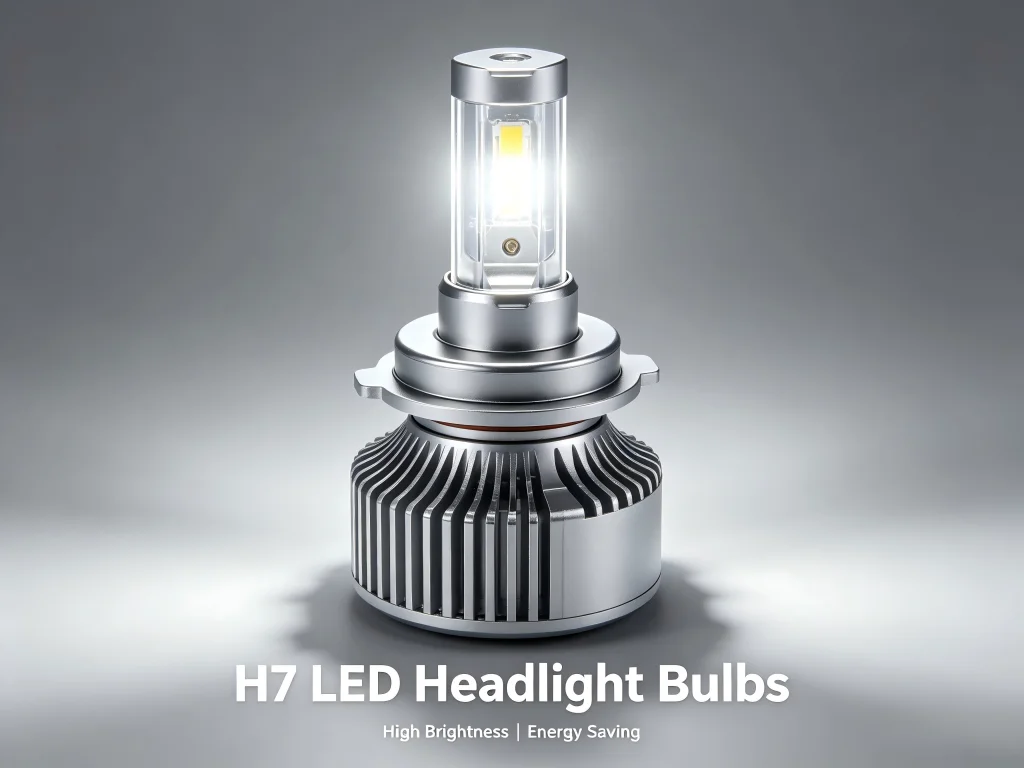
The Chip Decision: Why GTR Said No to Philips and CREE
Here is something that might surprise you. Philips and CREE make excellent LED chips. They are industry standards for a reason. Reliable. Well-characterized. Easy to source. Every lighting engineer knows them. Every manufacturer uses them.
So why did GTR Lighting walk away from both?
Because “good enough” was not good enough for a bulb that needed to perform in reflector housings, projector housings, fog lights, and high-beam optics across hundreds of vehicle models.
Instead, GTR engineered its own chipset: the custom TST 7045. This is not a rebadged commodity chip. It is a purpose-built solution designed around a specific thermal and optical architecture. The goal was not just brightness. The goal was control – a tight, focused light source that could be positioned with digital precision to match original filament tolerances.
And here is the part most brands ignore: thermal separation technology places the LED die on a separate thermal plane from the driver circuit. Heat from the driver does not cook the emitter. The emitter does not cook the driver. Each component operates in its own thermal zone, which means the bulb can sustain high output without the performance degradation that plagues cheaper designs.
Most consumers never think about thermal planes. But every engineer who has ever watched an LED dim to 60% of its initial output after six months of use knows exactly why this matters.
The Real Physics of Heat: What 43 Watts Actually Means
Let us talk about power for a moment. The GTR Ultra 3 draws 43 watts per bulb. That is less than a halogen’s 55 watts but significantly more than many budget LEDs that run at 25–30 watts. Why does this matter?
Because LED output is fundamentally limited by thermal management. You can pump 100 watts into an LED chip. It will be incredibly bright – for about three seconds. Then it will either throttle down to protect itself or simply burn out.
The Ultra 3’s 43-watt design represents a carefully calculated sweet spot. High enough to produce serious output – 4,700 raw lumens per bulb – but sustainable because the thermal separation technology and active cooling system can actually move that heat away from the emitters.
In real-world testing, the Ultra 3 retains 87% of its initial brightness after a typical 27-minute drive. That might not sound impressive until you realize that many budget LEDs lose 20–30% of their output in the first ten minutes of operation as heat builds up and the driver circuitry throttles power to prevent catastrophic failure.
You are not buying peak brightness. You are buying sustained brightness. There is a difference, and most brands are counting on you not knowing it.
Why Beam Pattern Matters More Than Lumens
A headlight bulb that produces 10,000 lumens but scatters light everywhere is worse than a halogen that produces 1,200 lumens in a focused beam. This is not opinion. This is optics.
Here is what happens in a halogen housing. The reflector or projector lens is engineered around a specific light source location – a filament positioned exactly 8–10 millimeters from the base flange. Move that light source even a millimeter off-axis, and the entire optical system breaks down. Light scatters. Glare increases. Hotspots disappear. Dark spots appear.
GTR’s approach to this problem is refreshingly honest. Rather than claiming some magical “universal fit” that works in every housing, the Ultra 3 features digitally optimized LED positioning that most closely matches original filament tolerances. The collars are fully adjustable, allowing you to rotate the chip array to match your specific vehicle’s optics.
In BulbFacts’ testing, the Ultra 3 delivered 1,169 lux in a reflector low beam and 847 lux in a projector hotspot – numbers that reflect not just brightness but focused, usable light. Independent testing by Headlight Revolution recorded the Ultra 3 as producing the highest lux readings ever measured in a Honda Civic reflector housing – 742% brighter than stock halogen.
These are not marketing numbers. These are measured results from third-party testing laboratories.
What The Forums Are Saying
On the Sportsmobile Forum, one owner who installed GTR Ultra 3 bulbs in stock housings reported: “They are extremely bright and I have not been flashed by oncoming traffic once”. That last part is telling. Being flashed by oncoming traffic is the universal signal that your LED bulbs are creating dangerous glare. The fact that this driver is not getting flashed means the beam pattern is actually working.
On the MG Experience forum, a classic car owner replaced Morimoto 4.0 bulbs with GTR Ultra 3s and noted: “Easily adjusted for focus, light is about 5,700K if I remember right so not as blue as the 6,000K common these days”. The 5750K color temperature is a deliberate choice – cool enough to provide crisp, daylight-like visibility without the harsh blue tint that causes eye strain and looks aftermarket in a bad way.
One Ford truck forum member summed up the trade-off honestly: “By the time you buy 4 of the GTR Ultra 3 bulbs, you’re at $650 or more after taxes and shipping”. It is expensive. No one is hiding that. But when you consider that a set of quality LED bulbs should outlast your vehicle, the math changes. Cheap bulbs that fail every 18 months are not cheaper. They are just cheaper upfront.
The Components Nobody Talks About
Every LED headlight bulb contains three critical subsystems: the LED emitters, the driver electronics, and the thermal management system. Most brands cheap out on all three. GTR made different choices.
The driver is 100% potted – meaning the electronics are encapsulated in a solid compound that resists vibration, moisture, and thermal cycling. This is the kind of build quality you expect from military-grade electronics, not consumer light bulbs. But it matters. Vibration kills cheap drivers. Moisture kills cheap drivers. Heat cycling kills cheap drivers. A potted driver survives all three.
The housing is die-cast – not cheap stamped metal or plastic. Die-cast construction provides structural integrity, consistent thermal performance, and a professional appearance that reflects the quality of the engineering inside.
The bulb is waterproof – not just “water-resistant” but genuinely sealed against the elements. If you live somewhere with rain, snow, or humidity – which is most of the planet – this matters.
These are not features you will find on the box of a $30 LED bulb. They are features you will find on components designed to last decades, not months.
Frequently Asked Questions About H7 LED Headlight Bulbs
Why do most LED bulbs fail within two years?
Heat is the primary killer. When thermal management is inadequate, LED chips degrade gradually – output drops, color shifts, and eventually the bulb fails completely. The GTR Ultra 3’s thermal separation technology and active cooling system are designed to prevent this degradation.
What makes the TST 7045 chip different from Philips or CREE?
The TST 7045 is a custom chipset engineered specifically for GTR’s thermal architecture. It places the LED die on a separate thermal plane from the driver circuit, allowing both to operate at optimal temperatures. Off-the-shelf chips cannot match this level of integration.
How much brighter are LED H7 bulbs than halogen?
Quality LED bulbs like the GTR Ultra 3 produce 4,700 raw lumens per bulb, compared to 1,200–1,500 lumens for halogen. In real-world testing, this translates to 261% to 742% improvement in measured lux, depending on the vehicle and housing.
Will H7 LED bulbs work in my vehicle without modifications?
Most H7 applications are plug-and-play with the GTR Ultra 3. However, some vehicles with PWM or CANBUS systems may require anti-flicker modules. Some housings may also need replacement dust caps if the bulb’s rear section is too large for the factory cap.
Why is color temperature important?
5750K provides a natural cool white light that improves contrast and reduces eye strain. Warmer temperatures (3000K–4000K) look yellowish and reduce visibility. Cooler temperatures (6000K+) look blue and can be harsh on the eyes. 5750K is the sweet spot.
How long should H7 LED headlight bulbs last?
Quality LED bulbs are rated for 30,000–50,000 hours. The GTR Ultra 3 is backed by a lifetime warranty – which means the manufacturer is confident enough in the engineering to cover it for as long as you own the vehicle.
Are expensive LED bulbs worth the cost?
The answer depends on how you value your time and safety. Cheap bulbs that flicker, fail, or produce poor beam patterns are not a bargain – they are a headache. The GTR Ultra 3 costs more upfront but delivers sustained performance, proper beam focus, and a warranty that eliminates future replacement costs.
The Engineering Philosophy Behind Every GTR Bulb
Here is what GTR Lighting understood that most brands do not. A headlight bulb is not a commodity. It is a safety-critical component that operates in extreme conditions – temperature swings from -20°C to +80°C, vibration from rough roads, moisture from rain and humidity, voltage fluctuations from modern vehicle electrical systems.
Designing for these conditions requires intentionality. It requires saying no to cheaper components. It requires engineering decisions that prioritize longevity over profit margin.
That is why GTR uses custom TST 7045 chips instead of off-the-shelf alternatives. That is why the drivers are potted instead of assembled with exposed components. That is why the housings are die-cast instead of stamped. That is why the warranty is lifetime instead of one year.
Every decision was made with one question in mind: will this still work five years from now?
Why This Matters For Your Next Set of H7 LED Headlight Bulbs
You came here searching for h7 led headlight bulbs. You probably saw dozens of options with similar specifications and wildly different prices. And you are trying to figure out which one is actually worth your money.
Here is the honest answer. If you just want something that lights up and you do not care about beam pattern, longevity, or glare – buy the cheapest option you can find. It will work for a while. Then it will flicker. Then it will dim. Then you will replace it.
But if you want a bulb that actually improves your night driving experience – one that produces focused, usable light without blinding oncoming traffic, one that maintains its output year after year, one that you install once and never think about again – then the engineering matters. And the engineering in the GTR Ultra 3 is different from anything else on the market.
Independent testing confirms what the specifications suggest. The Ultra 3 delivers 4,700 raw lumens at 5750K. It retains 87% of its brightness after sustained operation. It produces beam pattern results that rival or exceed bulbs costing twice as much. And it is backed by a lifetime warranty that reflects genuine confidence in the product.
Not everyone needs that level of performance. But if you are the kind of driver who notices the difference between adequate lighting and excellent lighting – if you have ever wished for just a few more feet of visibility on a dark rural road – then you already know which category you fall into.
Visit GTR Lighting today and see what happens when engineering takes priority over marketing.