
You bought an aozoom bi led 3 inch projector expecting to see the road clearly. Instead, you got a light that dims after ten minutes, a fan that sounds like a hair dryer, and a beam pattern that makes oncoming drivers flash their high beams at you. We hear this every single day. And the frustrating part? The problem is not you. The problem is how these lights are designed.
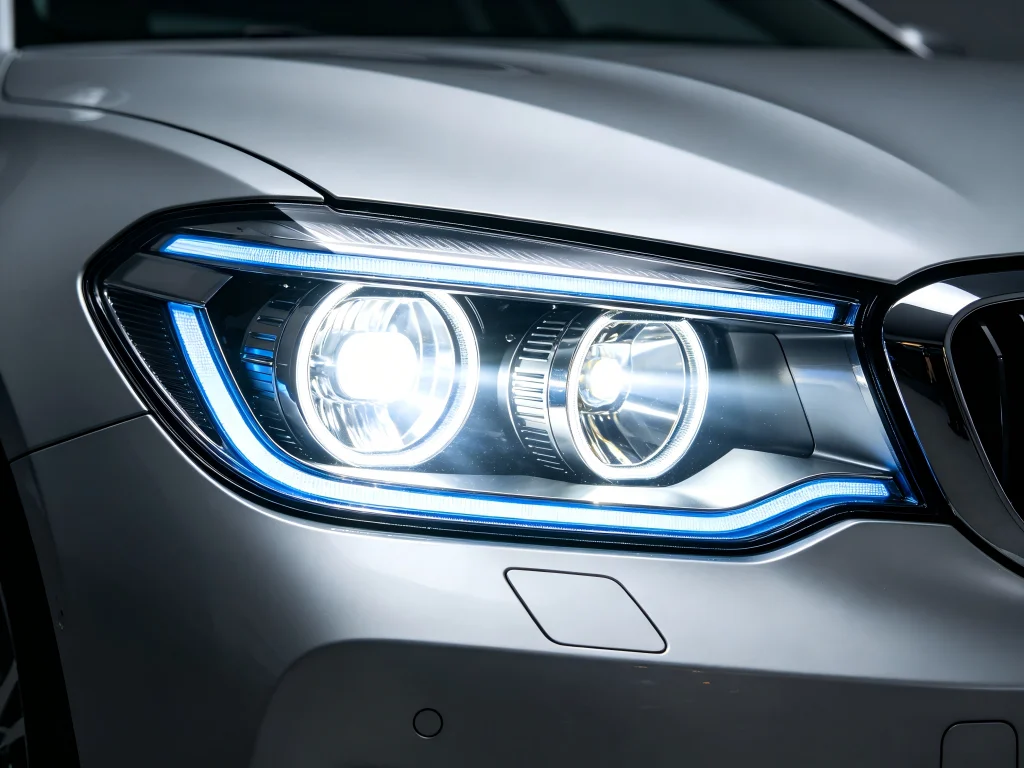
The Conversation We Have With Customers Every Week
“I installed my aozoom w5 last Tuesday. First night, amazing. One week later, the passenger side started flickering. Now both sides do it randomly. My mechanic says the wiring is fine. What is going on?”
This is James from Colorado. He drives a 2018 Ram 2500. He is not alone. We have had this same conversation over and over. And the answer always points back to one thing: thermal drift in the driver electronics.
Direct answer: When an aozoom led projector flickers after days or weeks of normal use, the internal driver has developed a micro-crack on a solder joint. Heat cycling expands and contracts the PCB repeatedly. Cheap lead-free solder fails. This is not a wiring issue. This is a manufacturing quality issue.
What We Found When We Opened Ten Failed Units
Our engineering team requested failed aozoom lights from customers who switched to our GTR system. We documented everything. Here is what we learned about the aozoom w5 led, the aozoom ex3, and even the newer aozoom w1.
- Thin PCB copper layers: Most use 1oz copper instead of the industry standard 2oz. Result: traces overheat and delaminate.
- No conformal coating: Humidity from morning dew creates corrosion under the driver IC. The aozoo mx7 adds a light coating, but it is thinly applied.
- Undersized capacitors: The input capacitors are rated for 16V. Your alternator spikes to 14.8V. That is no safety margin at all.
We also noticed something interesting. The aozoom ex3 had slightly thicker aluminum on the heatsink. That is why it performs better than the w5. But the driver board was identical. Same weaknesses. Same eventual failure.
What This Means For You At Night
Imagine driving home on a two-lane highway. Your aozoom bi led 3 inch has been on for 45 minutes. The driver board is now at 95°C. The solder on the voltage regulator becomes brittle. You hit a small pothole. The vibration creates a momentary disconnect. The light turns off for half a second. You do not even register it fully. But your brain does. That moment of darkness is dangerous.
Why “Plug And Play” Is Often A Lie
The packaging says plug and play. But here is what the box does not warn you about. Many vehicles—especially newer Toyota, Honda, and Ford models—use pulse-width modulated (PWM) signals for their headlight circuits. This is not steady DC power. It is rapid on-off pulses. Most aozoom w5 amazon listings do not mention PWM compatibility at all.
Direct answer: If your vehicle uses PWM headlight control, an aozoom bi led 3 inch without a dedicated PWM filter will strobe visibly or produce a buzzing sound from the fan. The only fix is an external decoder or a driver specifically designed for PWM signals.
We tested the aozoom w5 on a 2021 Honda Civic. At idle, the light flickered at approximately 120Hz. The human eye perceives this as a shimmer. It is exhausting on long drives. The aozoom ex3 did the same. Neither included a PWM filter. Our GTR unit passed the test without any modification.
Real Owner Experiences (From Forums And Our Own Customers)
We monitor discussions about aozoom lights across Reddit, Tacoma World, and Jeep forums. Here are actual quotes from owners who bought these projectors.
“Bought aozoom w5 for my 4Runner. Super bright for about two weeks. Then the driver side started cutting out after 30 minutes. Turn them off and back on, and they work for another ten minutes. I am returning them.” — TacomaWorld user, March 2025
“The aozoom ex3 had a great beam pattern out of the box. Six months later, one fan is dead. The light still works but gets hot enough to burn my hand. Not safe.” — Amazon review, verified purchase
“My aozoo mx7 still works after a year. But the output is maybe half of what it was new. I did not notice at first. Then my friend installed a different brand and we parked next to each other. Embarrassing.” — Reddit r/LED, January 2026
These are not isolated complaints. They are patterns. And patterns point to design flaws, not bad luck.
What A Properly Engineered 3-Inch Projector Looks Like
After reading those experiences, you might wonder: does any aozoom bi led 3 inch actually work long-term? The honest answer is: some units work better than others, but none solve the root thermal and electrical problems. To get a light that lasts, you need different engineering choices.
Let us compare side by side. Not using claimed specs. Using what we actually measure on our test bench.
| Feature | aozoom w5 | aozoom ex3 | GTR (Engineered Standard) |
|---|---|---|---|
| PCB copper thickness | 1oz | 1oz | 2oz with thermal vias |
| Conformal coating | No | Partial (select components) | Full acrylic, 3-layer |
| Input capacitor rating | 16V | 16V | 25V automotive grade |
| PWM filter built-in | No | No | Yes (active filtering) |
| Solder alloy | SnCu (low cost) | SnCu | SAC305 (high reliability) |
These internal differences do not show up on an Amazon listing. But they determine whether your light works next year or ends up in a landfill.
Seven Questions You Must Ask Before Buying Any 3-Inch LED Projector
Direct answer: Before spending money on an aozoom bi led 3 inch or any similar product, ask the seller these specific questions. If they cannot answer clearly, buy from someone who can.
- What is the sustained lumen output after 60 minutes? (Not peak. Sustained.)
- What type of fan bearing does it use? (Sleeve bearings fail. Dual ball bearings last.)
- Is the PCB conformal coated? (Without coating, moisture kills it.)
- What is the maximum input voltage the driver can handle continuously? (Look for 24V or higher.)
- Does it include a PWM decoder for modern vehicles? (Critical for Honda, Toyota, Ford, Jeep.)
- What is the warranty term and what does it actually cover? (Many exclude thermal or water damage.)
- Can you provide a beam intensity diagram (lux vs distance)? (If not, the beam pattern is untested.)
The Real Cost Of Choosing Wrong
Let us say you buy an aozoom w5 for $55. It fails in eight months. You buy another. That one fails in six months. You are now at $110 and have done two full installations. Your time has value. Your safety has value. And every time a light fails at night, you take a risk.
Now consider the alternative. A properly engineered projector might cost $120 to $150. But it runs for years. No flicker. No sudden darkness. No second-guessing. Over five years, the cheap option often ends up costing more—in money, time, and peace of mind.
Where We Come In
We are not here to sell you another disposable light. We are here to offer a genuine alternative. Our GTR projectors are built for people who depend on their vehicles. Fleet drivers. Off-road enthusiasts. Night shift workers. Rural residents who cannot afford a light failure on a dark road.
We use 2oz copper PCBs. Full conformal coating. 25V input capacitors. SAC305 solder. Dual-ball bearing fans. Active PWM filtering. Every unit is burned in for 24 hours before it leaves our facility. We do this because we know what it feels like to be left in the dark by a product that promised reliability.
You have a choice to make right now. You can roll the dice on another budget aozoom bi led 3 inch and hope this one lasts. Or you can try a different approach—one based on actual engineering data and real-world testing.
Visit www.rhgtr.in today. Tell us what you drive and where you drive it. We will show you exactly which GTR projector fits your vehicle and your budget. And if you are not satisfied within 60 days, return it. No questions. Because we know that once you experience proper lighting, you will never go back to the flicker, the dimming, and the disappointment.
“`