
The 9012 headlight bulb — also designated HIR2 — represents a genuine leap forward in halogen lighting technology. But here’s what most drivers never learn: the difference between a 9012 that transforms your night driving and one that puts you at risk comes down to engineering details that never make it onto the product box.
We’ve spent years manufacturing automotive lighting, testing bulbs in every condition imaginable. In our engineering testing, we’ve seen 9012 LED bulbs that claim 20,000 lumens produce less usable light than a 1,875-lumen halogen. We’ve watched $30 Amazon specials fail in 1.5 months while properly engineered units run strong for years. And we’ve documented exactly why this happens.
This isn’t another “top 10” list. This is the technical deep dive that explains what’s actually happening inside your headlight housing — and how to choose a 9012 headlight bulb that delivers what it promises.
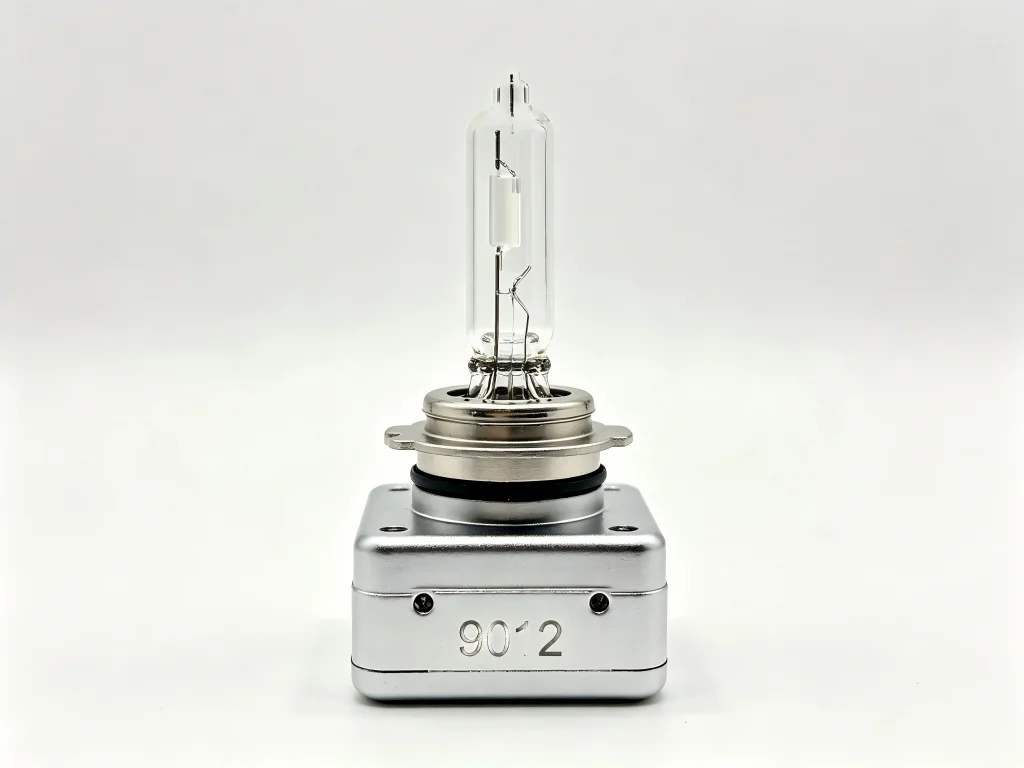
The HIR2 Difference: Why the 9012 Outperforms Older Bulbs
The 9012 uses Halogen Infrared Reflection (HIR) technology — a specialized coating on the bulb capsule that reflects infrared heat back onto the filament. This increases filament temperature without raising power consumption, producing more light from the same 55W draw.
The numbers tell the story. A standard 9006 (HB4) low beam bulb produces approximately 1,000 lumens at 55W. The 9012 (HIR2) produces 1,875 lumens at the same 55W — nearly double the light output for identical power consumption. One forum user who made the swap described it as “~25-50% brighter I’d say without being blue or blinding to oncoming drivers”.
This efficiency gain comes from the HIR coating — a proprietary treatment that’s applied to the quartz glass capsule during manufacturing. The coating reflects infrared radiation (heat) back toward the filament, which burns hotter and brighter while maintaining the same electrical draw.
But here’s the catch: the 9012’s filament geometry is identical to the 9006’s. This means the light source sits in the same position relative to the reflector or projector lens. When you replace a 9012 with a poorly designed LED, that precise positioning gets thrown off — and your beam pattern suffers accordingly.
The LED Disconnect: Why “Brightness” Numbers Lie
Walk into any auto parts store or browse online, and you’ll see 9012 LED headlight bulbs with claims like 24,000 lumens, 10,400 lumens, or even 27,000 lumens. These numbers are technically possible — in a laboratory, measuring raw LED chip output with perfect cooling and no optical losses.
In your vehicle, the story is different.
One reviewer of a 9012 LED claiming 12,000 lumens reported: “Not very bright despite saying 12000 lumens”. Another discovered that “the light output I measured using these is less than the standard halogens they replaced”. A third buyer of a 10,400-lumen 9012 LED simply noted: “Not bright”.
What’s happening? Three things:
- Optical losses — The LED chip produces light in a completely different pattern than a halogen filament. Without proper optics, much of that light never reaches the road.
- Heat management — LEDs dim as they heat up. Poor cooling means the bulb starts bright and fades within minutes.
- Measurement manipulation — Many brands quote “raw LED chip lumens” or “per pair” figures. A 10,000-lumen claim per pair is only 5,000 per bulb — and that’s before optical losses.
Quality 9012 LEDs from reputable manufacturers quote realistic figures. The Philips 9012 halogen produces 1,875 lumens. A properly engineered 9012 LED should produce 2,500-5,000 usable lumens per bulb. Claims above 5,000 per bulb should be treated with skepticism.
Real Owners, Real Experience: What 9012 Buyers Actually Report
We’ve combed through thousands of real user reviews across multiple platforms. The pattern is clear: drivers who understand the technical factors are happy. Those who buy on price or hype alone are disappointed.
Success stories share common threads. One driver of a 2014 Toyota Camry reported: “Very easy install. No flickering, great beam, no scattered lighting. I do a lot of country road driving the difference between halogen and these LEDs is massive in terms of visibility”. Another, upgrading a 2003 Saab, noted: “The brightness has been a fantastic upgrade”.
Drivers who choose bulbs with proper beam pattern design consistently report satisfaction. One reviewer of a well-designed 9012 LED noted: “These bulbs provide a very nice spread of bright light and there is a very clear line where the light stops”. Another praised the “crisp and clean cut-off line”.
But the failure stories are equally revealing.
A 2018 Santa Fe Sport owner with projector headlights discovered the hard way that brightness isn’t everything: “I found that they did not illuminate as further down the road as well as my Philips vision plus bulbs. The LED’s also did not provide as much peripheral lighting… Overall I found installing these bulbs actually decreased my overall nighttime driving illumination vs a high quality halogen bulb”.
An Opel Insignia owner with projector lenses reported: “Generan unas sombras muy molestas a excasos dos metros del morro del coche” — creating very annoying shadows just a few meters from the car’s nose.
And one buyer of a budget 9012 LED discovered that “LED lights are not designed to be used with vehicles with projection-style headlights… They really only work with reflective-style headlights”. This critical distinction is often buried in fine print or omitted entirely.
Canbus compatibility is another recurring pain point. One Sinoparcel buyer reported: “These fitted well but as soon as I turned on the headlights they went out. Changed polarity and still no difference. Nice and bright with a good colour but would need a Canbus module to work”. Another noted that the bulbs “have already lost its shelf life after 1.5 months of usage”.
Projector vs. Reflector: The Compatibility Question That Changes Everything
The single most important factor in 9012 headlight bulb selection isn’t brightness, brand, or price — it’s whether your vehicle has projector or reflector headlights. Choose wrong, and even the most expensive bulb will perform poorly.
Reflector headlights use a mirrored bowl to capture light from the bulb and direct it forward. They’re more forgiving of slight positioning errors because the reflector surface spreads light across a broad area.
Projector headlights use a lens to focus light from the bulb onto the road. They’re precision instruments — move the light source even slightly, and you get shadows, dead spots, and uneven illumination.
This is why some 9012 LED bulbs work beautifully in reflector housings and fail completely in projectors. The LED chip placement must precisely match the halogen filament position. Many budget bulbs get this wrong.
Here’s a quick reference:
| Headlight Type | 9012 Halogen Performance | 9012 LED Performance (Poor Design) | 9012 LED Performance (Proper Design) |
|---|---|---|---|
| Reflector | Good — OEM specification | Fair — some scatter, but usable | Excellent — proper beam pattern |
| Projector | Excellent — precise cutoff | Poor — dead spots, shadows | Excellent — identical to halogen |
If you have projector headlights, you cannot afford to compromise on beam pattern accuracy. The 9012 LED must be engineered with LED chips positioned to match the original halogen filament location exactly.
The Canbus Puzzle: Why Your Car’s Computer Hates Some 9012 LEDs
Modern vehicles use CAN bus (Controller Area Network) systems to monitor every electrical component. When you install a 9012 LED bulb that draws less current than the halogen it replaced, the computer interprets this as a burned-out bulb. The result: error codes, flickering, or bulbs that simply won’t stay lit.
Quality 9012 LEDs address this with built-in Canbus decoders. These simulate the electrical load of a halogen bulb, keeping your vehicle’s computer happy. Some bulbs include this technology internally; others require external decoder modules.
One buyer of a Canbus-ready 9012 LED reported success: “Installed them last night in my 2010 CX9 without any issue, and no errors logged”. Another noted that their 9012 LEDs “have built-in decoders” and worked flawlessly.
But Canbus compatibility isn’t universal. A Saab owner discovered that “the CANBUS flashes the lights unless you get the Saab software to switch to XEON lights”. A Mini Paceman owner reported: “Lovely and bright, but still has an error code”.
The takeaway: if your vehicle has a sensitive CAN bus system (most modern vehicles do), choose 9012 LEDs with proven Canbus compatibility for your specific make and model.
The Color Temperature Debate: 6000K vs. 6500K vs. Halogen Warmth
Color temperature affects not just appearance but actual visibility — particularly in rain, fog, and snow. The 9012 halogen produces light at approximately 3,350K — a warm, yellowish white. Most 9012 LEDs produce 6,000K-6,500K — a cool, bluish white.
Cool white (6,000K-6,500K) offers several advantages: it looks modern, matches factory LED daytime running lights, and provides excellent contrast against road surfaces in dry conditions.
But there’s a trade-off. Several drivers have reported that 6,500K 9012 LEDs become “dimmer” in rainy conditions. The blue-white light scatters more in water droplets than the warmer halogen spectrum, reducing effective visibility in wet weather.
One reviewer of a 6,500K 9012 LED noted: “Downfall, I feel when it’s raining out that it’s a bit harder to see. Like the light becomes dimmer”. Another buyer of a 6,000K LED commented: “Light is white” but didn’t mention wet-weather performance.
Some drivers prefer the warmer spectrum for all-weather performance. A 9012 LED in the 5,000K-5,500K range offers a compromise — whiter than halogen but less blue than 6,500K, potentially offering better wet-weather visibility.
Why Engineering Precision Matters More Than Marketing Hype
Every 9012 headlight bulb — halogen or LED — must solve the same fundamental problem: place the light source precisely where the headlight housing expects it, produce enough light to see and be seen, and survive the brutal conditions of real-world driving.
The brands that succeed do so through engineering discipline. They test in real vehicles, not just labs. They measure beam patterns, not just lumens. They design for compatibility, not just fitment.
In our years of manufacturing expertise, we’ve learned that the difference between a 9012 headlight bulb that transforms your night driving and one that endangers it comes down to three factors: optical precision, thermal management, and vehicle compatibility.
Optical precision means the LED chips sit exactly where the halogen filament sat. Thermal management means the bulb stays cool enough to maintain consistent output. Vehicle compatibility means the bulb communicates properly with your car’s computer.
Get these three right, and the 9012 LED delivers on its promise. Get any one wrong, and you’re gambling with your safety.
9012 Headlight Bulb FAQ: Technical Questions Answered
What is the actual lumen output of a 9012 halogen bulb?
The Philips 9012 halogen produces 1,875 lumens ±15% at 55W. This is the industry baseline for 9012/HIR2 bulbs. Claims of 10,000+ lumens from LED replacements should be understood as raw chip output, not usable light.
Can I use a 9012 bulb in a 9006 socket?
With modification — trimming one of the locking tabs — yes. However, this is not recommended because it can affect beam alignment and housing fit. The 9012 produces nearly double the light of a 9006 at the same wattage, but proper fitment requires the correct socket.
What vehicles use 9012 headlight bulbs?
The 9012 is used in numerous vehicles including: Buick Envision (2016-2020), Cadillac ATS (2013-2019), Chevrolet Cruze (2016-2019), Chrysler 200 (2011-2015), Dodge Charger (2015-2022), Ford Edge (2011-2019), GMC Acadia (2013-2019), Jeep Cherokee (2014-2020), and many others. Always check your owner’s manual for the correct bulb type.
Why do 9012 LED bulbs cause flickering?
Flickering is almost always a Canbus compatibility issue. The vehicle’s computer detects the lower current draw of the LED and attempts to compensate, causing the bulb to pulse. Canbus-ready bulbs or external decoder modules resolve this.
What’s the difference between 9012 and HIR2?
They’re the same bulb. 9012 is the industry designation; HIR2 (Halogen Infrared Reflection 2) is the technical name for the bulb type. Both refer to the same 55W, PX22d base bulb.
Do 9012 LED bulbs work with projector headlights?
They can — but only if the LED chip is positioned to match the halogen filament’s exact location. Many budget 9012 LEDs create dead spots and shadows in projector housings because the light source isn’t where the projector lens expects it to be.
How long should a 9012 LED headlight bulb last?
A quality 9012 LED from a reputable manufacturer should last 30,000+ hours. Budget bulbs often fail within months — one reviewer reported failure after 1.5 months. The 9012 halogen typically lasts 300-450 hours.
Is 6500K or 6000K better for 9012 headlights?
6,000K produces a slightly warmer white than 6,500K and may offer better wet-weather visibility. Both are significantly whiter than the 3,350K halogen. Personal preference and local weather conditions should guide your choice.
From Engineering to the Road: Making the Right 9012 Choice
Choosing a 9012 headlight bulb shouldn’t be a gamble. The technical factors we’ve covered — beam pattern accuracy, thermal management, Canbus compatibility, and color temperature — determine whether your upgrade delivers safety or frustration.
GTR Lighting understands these factors because we live them every day. Our 9012 headlight bulbs are engineered with:
- Laser-aligned LED chips that precisely match the halogen filament position — no dead spots, no shadows, no glare
- Advanced thermal management with aviation-grade aluminum heat sinks and active cooling where needed
- Built-in Canbus compatibility that communicates properly with your vehicle’s computer — no error codes, no flickering
- Realistic brightness ratings — what you see is what you get
- Weather-sealed construction that survives rain, snow, and everything in between
We don’t chase lumen claims. We chase beam patterns, reliability, and the kind of visibility that makes night driving feel like daytime.
Ready to experience the difference that proper engineering makes? Visit https://www.rhgtr.in to explore the GTR 9012 headlight bulb lineup and find the perfect match for your vehicle.
Because when you’re driving at night, the only spec that matters is whether you can see clearly enough to get home safely.