
You know that feeling. You’re at a cars and coffee meet, and a truck rolls in with aftermarket headlights that stop the conversation. Not because they’re obnoxious. Because they’re right. The beam hits the pavement with surgical precision. The DRL strip traces the fender like it was always meant to be there. The owner didn’t just swap parts—they made a statement.
Aftermarket headlights have become the single most visible signature of a well-executed build. They signal that you understand fitment, light physics, and the difference between looking fast and actually performing.
That’s what we’re here to talk about. Not bulb sizes. Not adapter rings. The culture, the craft, and the headlights that belong on a build worth showing off.
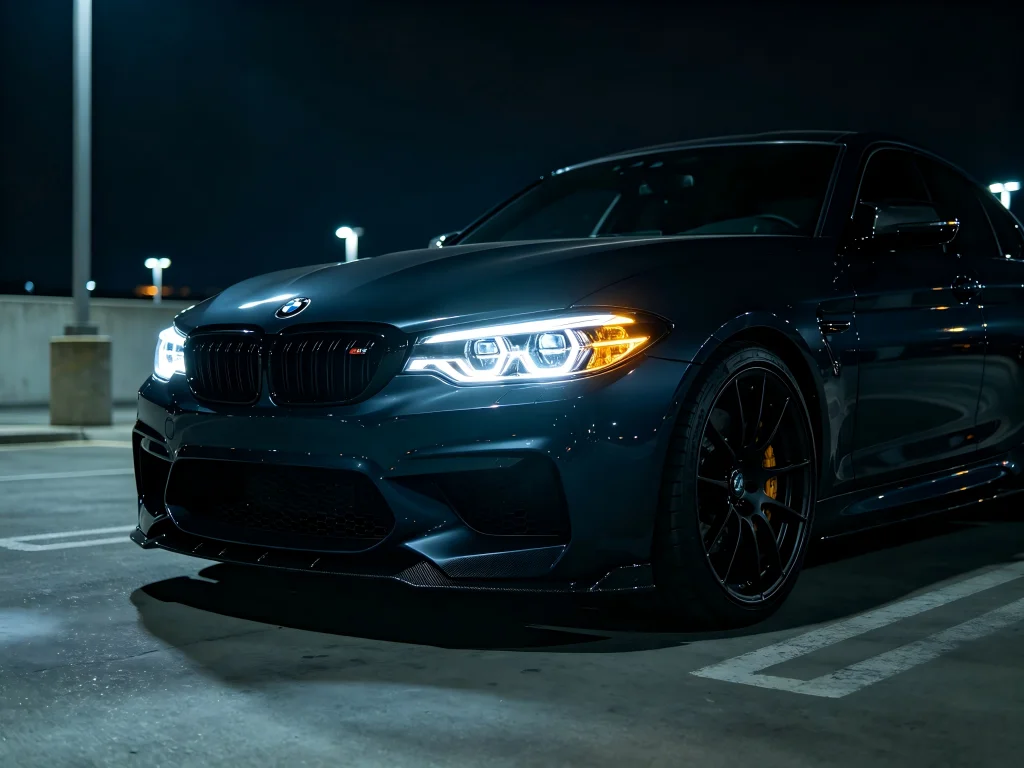
The Language of Light
Walk any show lot—whether it’s a Corvette gathering, a truck meet, or a JDM night. The builds that command attention share something beyond horsepower. They have presence. And presence starts with the face of the vehicle.
Factory headlights are appliances. They do a job. They illuminate the road. They check a box on the safety inspection. But aftermarket headlights? They’re an intentional choice. They tell other enthusiasts that you care about the details. That you spent time researching beam patterns instead of just buying the cheapest thing on a marketplace site.
One Calgary car enthusiast put it this way: aftermarket headlights have become “a staple upgrade for car enthusiasts who want their builds to speak before the engine roars”. That’s the energy. The headlights are the handshake before the conversation even starts.
In our engineering testing, we’ve seen this play out across every vehicle category. F-150 owners want the aggressive DRL that cuts across the grille. C5 Corvette guys chase the modern projector look that updates a classic silhouette. Ram 1500 drivers prioritize that clean, OEM+ fitment that looks factory until you turn them on—and then suddenly, everyone notices.
What Performance Actually Looks Like
Here’s where the culture meets the science. A great-looking aftermarket headlight that can’t back it up with performance is just jewelry. And jewelry doesn’t help you see deer on a dark highway at 70 miles per hour.
When we benchmark aftermarket headlights against factory units, the gap is staggering. Independent testing on the 2016-2021 Honda Civic showed the GTR Lighting Ultra 3 delivering 475% brighter low beams and 742% brighter high beams compared to stock halogen bulbs. Those aren’t marketing claims. Those are lux meter readings taken at 25 feet on a wall shot.
For the Ford F-150, GTR Carbide Series headlights tested at 540 max lux on low beam—a 157% increase over OEM halogen output. The expanded beam width and stepped reflector design mean more usable light on the road, not just more glare for oncoming drivers.
One forum member running GTR Ultra 2s on their Frontier described the experience simply: “The GTR bulbs are a pure white, and reach out with a very focused and controlled beam. They are by far the best lights I have had, and I have owned 4 Frontiers.”
Another enthusiast on the MG forum called the Ultra 3.0 “fantastic”, noting that “beam width is broader than the Morimoto, can’t find any dark spots in the lighting.”
This is what performance looks like when a manufacturer actually cares about optics. Not just raw lumens. Focus. Cutoff. Width. Color temperature that reflects off road stripes better than cheap LEDs. All of it matters.
Beyond the Bulb: The Full Housing Philosophy
Here’s something most buyers don’t understand until they’ve made the mistake once. Dropping LED bulbs into factory halogen housings rarely works well. The focal points don’t align. The light scatters. You get hotspots and dark zones.
The right approach—the enthusiast approach—is a complete housing replacement. Full LED assemblies designed from the ground up for the optics they’re running.
GTR Lighting’s Carbide Series represents this philosophy in action. These are fully DOT-compliant housings with UV-resistant polycarbonate lenses, just like you’d find on premium Morimoto XB units. They include integrated LED daytime running lights, bi-LED projectors, and amber sequential turn signals that can be switched to traditional flashing mode with a single wire disconnect.
As one reviewer put it: “GTR Lighting has done a great job of breaking into the market segment that is primarily dominated by a select few brands.” The Carbide Series offers OEM+ performance at a price point that makes sense for builders who want quality without overspending.
Installation is plug-and-play. Factory mounting points. Factory connections. No panel gaps. No CANbus headaches. One Corvette owner running GTR Carbide headlights noted the installation was straightforward and the performance upgrade was “HUGE”.
What the Forums Actually Say
Let’s be real about the aftermarket headlight landscape. The forums are full of cautionary tales. Moisture intrusion. Premature yellowing. Beam patterns that make you that driver—the one getting flashed by every oncoming car.
But the brands that earn repeated praise? They earn it through consistency. A GM-Volt owner who installed GTR Ultra Series 2.0 called them “the best you are going to get” and noted that while you can still hear the fan, “are not nearly as annoying loud as the Morimoto’s were”. That’s the kind of detail that matters when you live with a product every day.
A Tahoe/Yukon forum member went with GTR Ultra 2s and reported they’ve “worked flawlessly, while providing great lighting”—backed by a lifetime warranty. Another enthusiast on the F150 forum said if they were buying an expensive bulb, it would be the GTR Ultra 2, the S-V.4, or the Morimoto 2Stroke 3.0.
These aren’t sponsored posts. These are builders sharing real experience with other builders.
The Builders’ Checklist
When you’re planning your lighting upgrade, here’s what separates a parts-swap from a proper build:
- Full housing replacement—not just bulb upgrades in factory housings
- DOT and SAE compliance—not just a label, but verified engineering
- UV-resistant polycarbonate lenses—because yellowing ruins the look and the performance
- Sequential or traditional turn signal options—because choice matters in a build
- Factory mounting and connectors—no cutting, no splicing, no compromises
- Real brightness data—not marketing fluff, but measured lux readings from independent testing
Skip any product that can’t check every box. Your build deserves better.
The Statement You Make
Aftermarket headlights are more than an upgrade. They’re the first thing people see when your build rolls into the lot. They tell the story before you pop the hood.
GTR Lighting builds headlights that belong on builds that matter. Visit https://www.rhgtr.in to explore the full lineup. Find your vehicle. See what your build has been missing.
Because the best builds don’t just perform. They speak.
Frequently Asked Questions About Aftermarket Headlights
Are aftermarket headlights legal for street use?
Aftermarket headlights must carry DOT certification to be street-legal in the US. GTR Lighting Carbide Series headlights are fully DOT and SAE compliant, meeting FMVSS108 standards. Always verify certification before purchasing—many budget options skip this entirely.
Do aftermarket headlights really improve visibility?
Quality aftermarket headlights deliver 2–5 times the brightness of OEM halogen units. Independent testing on the Honda Civic showed 742% brighter high beams with GTR Ultra 3 bulbs. The improvement isn’t subtle—it’s transformative.
What’s the difference between projector and reflector headlights?
Projector headlights use a lens to focus light into a controlled beam with a sharp cutoff. Reflector headlights use mirrored bowls to scatter light. Projectors generally provide better beam control and less glare for oncoming drivers. Both designs can perform well when engineered properly.
How long do aftermarket LED headlights last?
Quality LED aftermarket headlights typically last 30,000–50,000 hours—essentially the life of the vehicle. The key factors are proper thermal management and UV-resistant lens coatings. GTR Carbide Series units feature aircraft-grade aluminum heatsinks and UV-coated polycarbonate lenses for maximum durability.
Can I install aftermarket headlights myself?
Most premium aftermarket headlight assemblies are plug-and-play with factory mounting points and connectors. Installation typically takes 1–2 hours with basic hand tools. Some vehicles require bumper removal—check your specific vehicle’s requirements before starting.
Why do some aftermarket headlights cause flickering?
Flickering typically indicates CANbus incompatibility. LEDs draw less power than halogens, and your vehicle’s computer may interpret this as a burned-out bulb. Quality aftermarket units include built-in error-canceling circuitry to prevent this entirely.
Are more expensive aftermarket headlights worth it?
Generally, yes—but only if the price reflects better materials, proper engineering, and verified certifications. The cheapest options often lack UV coatings, use foam tape seals instead of butyl rubber, and have undocumented beam patterns. GTR Lighting offers the sweet spot: premium engineering at a price that makes sense for serious builders.