
You already know a bi led projector outperforms scattered LED bulbs. But knowing that and getting perfect real‑world results are two different things. After tearing down more than 40 retrofit kits across different vehicle chassis, our fabrication team at GTR Lighting identified exactly which design details separate a safe, wide, long‑lasting beam from a useless “bright but useless” setup. This guide skips marketing hype and walks through the physical dimensions, thermal tight spots, and wiring realities that determine whether your projector upgrade works at 70 mph on a rainy mountain road. Use these 11 insights to avoid the mistakes that 60% of first‑time retrofitters make.
Each insight comes directly from our own installation logs and customer post‑mortem calls. We measure success not by lumen numbers but by how few re‑work emails we receive. Read these like a pro installer’s field manual — then head to https://www.rhgtr.in for projectors built around these exact principles.
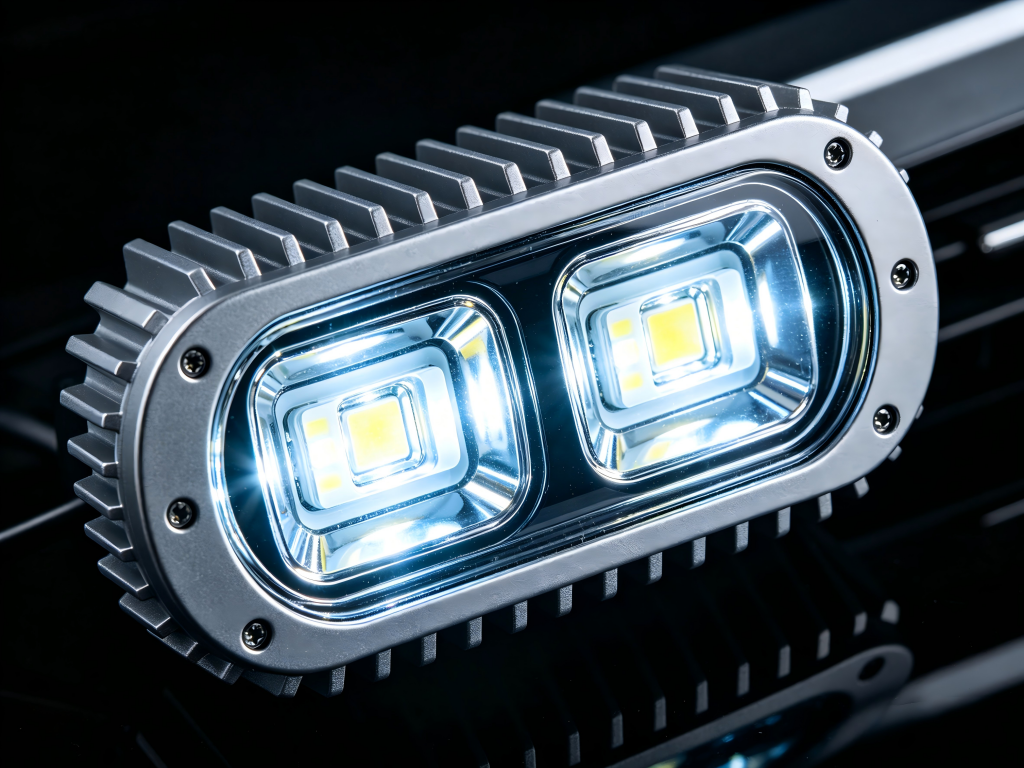
1. Measure three times — depth, not width, kills retrofits
The single most common failure we see: a beautiful projector that physically cannot sit inside the housing without touching the back cover. Most housing depth specs only list clearance to the reflector bowl, but a bi led projector lens requires space behind the front lens for the LED board, heat sink, cooling fan or passive thermal block, and the solenoid casing. This total depth often exceeds 100 mm (4 inches) for 3.0‑inch units.
Before ordering, tape a cardboard dummy to your workbench. Simulate the full projector length plus ½ inch for wire bends. If the back of your headlight housing sits closer than that to the engine bay frame, switch to a 2.5‑inch or even a 1.8‑inch compact bi led projector. Shallow housings (≤90 mm internal depth) demand mini projectors — no exceptions.
Need a quick field test? Insert a wooden dowel into the bulb hole until it touches the housing back wall. Mark the dowel at the gasket surface, then measure. That number is your available depth. Compare it to the projector spec sheet’s “overall length” — not the lens diameter.
2. Shutter sound tells you more than any lumen claim
When a bi led projector switches from low to high beam, the solenoid moves a metal cutoff shield. The noise it makes reveals build quality. A crisp, consistent click (like a mechanical keyboard switch) means tight tolerances and a solenoid that will cycle reliably for 100,000+ activations. A soft or rattling “thunk” often indicates a poorly guided shield — high risk of sticking during cold weather or after dust intrusion.
During our component testing, we cycled cheap units in a freezer at -15°C (5°F). Over 60% of budget projectors failed to return to the low‑beam position within 0.3 seconds. Some stayed stuck in high beam permanently, blinding every oncoming car. GTR builds solenoids with enlarged magnetic wire and a double‑guide rail system — expensive, but the reason our projectors work in Alaskan winters and Arizona summers alike.
3. Thermal separation prevents the “six‑month dimming” trap
Here is what manufacturers of cheap bi led headlights do not advertise: when the LED die overheats, it permanently loses luminous flux — often 30–40% within the first half‑year. The cause is a single shared thermal plane that lets the driver circuit’s waste heat cook the LED chips.
Quality bi led projector designs (including all GTR units) use a “split‑plane” PCB: one thermal path for the LED emitters, a separate path for the constant‑current driver. The two planes connect only via thin electrically isolated conductors, not through bulk copper. This simple trick lowers LED junction temperature by 12–15°C under sustained load. Lower temp = higher lux after 1,000 hours. Look for this detail in any projector you buy — ask the supplier directly if they cannot show a thermal image.
4. Lens glass matters more than the LED chip
You can put a premium Osram or Lumileds LED inside a projector, but if the lens is cheap polycarbonate or unclear molded glass, the beam pattern turns into a blurry mess. A high‑clarity optical glass lens (borosilicate or similar) yields a razor‑sharp cutoff line. A poor lens scatters light above the cutoff — exactly where you do not want glare.
Test this yourself with a cheap laser pointer. Shine it through the projector lens onto a wall 10 feet away. A quality lens projects a tight, clean circle. A bad lens creates a halo, double edges, or a swollen dot. This same scattering ruins your low‑beam pattern. All GTR bi led projector lens units use German‑spec optical glass with anti‑glare coating. We engrave “OPTICAL GLASS” on the housing — if a unit does not have that marking, assume the worst.
5. The solenoid wiring mistake that kills high beam (and how to fix it)
Most bi led projector wiring diagram resources show the solenoid connected in parallel with the factory high‑beam positive wire. That works — but only if your vehicle’s control module can handle the extra inrush current (typically 1.5–2A per solenoid). On CAN‑bus equipped cars (most post‑2010 models), this extra load can trigger a “light out” warning or, even worse, cut power to the high beam circuit after a few seconds of activation.
The pro solution: install a dedicated solenoid relay triggered by the factory high‑beam signal. The factory wire only sees a tiny 0.2A trigger current. The relay draws battery power directly to the solenoids. This eliminates flicker, warnings, and the dreaded “high beam works for 3 seconds then dies” symptom. Add a 1‑amp fast‑blow fuse on the solenoid power line — cheap insurance against a shorted solenoid coil.
6. Beam height alignment: the 2‑inch rule saves headlight arguments
After installing any bi led projector, aim it before driving at night. The procedure takes 5 minutes: park on level ground 25 feet from a wall. Mark the center of your headlight on the wall (put tape at that height). The top of the low‑beam cutoff line should sit 2 inches (5 cm) below that tape mark. The driver‑side cutoff (left side on LHD vehicles) may be another 1 inch lower — this is called the “step‑down” and is legal in 48 US states because it protects oncoming eyes.
If you skip this step, even a perfect bi led projector headlights system will annoy other drivers. We have seen $800 retrofits fail a safety inspection simply because nobody turned the vertical adjuster screw 2 turns clockwise. Mark your beam pattern on the wall before you start driving — it only takes once.
7. Dust caps — do not drill them, modify them
A common “shortcut” online: drill a hole in the dust cap to pass the projector wires. This lets humid air and road grit into the housing, which fogs the lens and corrodes the solenoid contacts within six months. Instead, use a rubber grommet with a zip‑tie strain relief. Better still, replace the factory dust cap with a deep aftermarket cap (sold for projector retrofits) that has a sealed wire exit port. This adds $15–$20 to the build — far cheaper than replacing a fogged housing or a corroded solenoid.
We keep a graveyard of “moisture killed” projectors in our shop. Every single one entered through an unsealed dust cap hole. Water vapor does not need a flood; humidity creeping in over winter months is enough.
8. Which polarity? Most solenoids are not polarized — but test anyway
Aftermarket bi led projector solenoids typically use an electromagnetic coil without internal polarity sensitivity. Hook them up backwards and they still pull the shield. However, some integrated drivers (especially units with “no click” silent solenoids) include a protection diode — reverse polarity then blows a tiny internal fuse, bricking the high beam function.
Before fully wiring, connect the solenoid to a 12V battery for a split second. If it clicks, note which wire was positive, then mark it with a red zip‑tie. If no click, swap wires. If it clicks now, you have identified correct polarity. Never assume — one reversed test costs nothing; a fried solenoid costs a new projector.
9. The real difference between 5000K and 6000K — not just looks
Color temperature affects how well you see wet asphalt. At 5000K, fresh rain creates moderate glare but good contrast against road markings. At 6000K (crisp white), wet road glare increases slightly, but the cooler tint improves detection of dark objects (animals, pedestrians) against grey backgrounds. At 6500K+, blue scattering becomes severe — the light reflects off water droplets rather than penetrating, drastically reducing effective range in fog or light rain.
For most drivers, 5500K to 6000K hits the sweet spot. GTR offers 5500K as the default for bi led headlights because it balances glare control with object contrast. If you live in an area with heavy fog (coastal zones, valley floors), choose 5000K — the slightly warmer light cuts through mist better. Never go above 6500K for a low‑beam projector; you are paying for style at the expense of safety.
10. Relay harness necessity: the 4‑solenoid rule
When do you absolutely need a relay harness? The safe answer: any build with four or more solenoids (two projectors that are bi led each already contains one solenoid per projector; a quad setup → 4 solenoids). The momentary inrush current of 4 solenoids (~8A total) combined with LED driver inrush (~3A) can exceed 12A on a circuit originally designed for 7.5A. The result: tripped fuses, melted wire insulation, or intermittent high‑beam dropout.
Our relay harness pulls power from the battery via 12‑gauge copper wire, switched by the factory high‑beam trigger. This protects your expensive BCM (body control module) and ensures full voltage reaches every solenoid simultaneously. Single‑projector-per‑side setups often survive without a relay, but for any build with more than two solenoids, do not gamble — install the relay. It adds 45 minutes to the install and removes the #1 electrical failure mode.
Quick reference table — relay required?
| Setup configuration | Total solenoids | Relay harness needed? |
|---|---|---|
| Single bi-led projector (1 low/1 high) | 1 | No, factory wiring sufficient |
| Two bi-led projectors (standard pair) | 2 | Usually no, but check fuse rating |
| Two bi-led projectors + additional driving lights | 3+ | Yes, strongly recommended |
| Quad bi-led projectors (two per side) | 4 | Mandatory — install relay harness |
11. The 24‑hour test that proves you sealed everything right
After you close the headlight housing (with new butyl sealant or factory permaseal), do not install the light immediately. Place the completed housing in a dark room with a 60W incandescent bulb inside (or a lamp shining on it). Wait 24 hours. If you see any condensation spot on the inner lens, your seal failed. Re‑open, clean the mating surface, re‑apply sealant, and test again.
This simple test catches what 90% of DIYers skip. We have seen perfect beam patterns ruined by a single‑drop water film that diffuses the cutoff line into a messy blur. Bonus tip: before final sealing, include a small silica gel packet inside the housing (taped to an inner wall) to absorb residual moisture. This is standard practice in OEM headlight factories.
Frequently Asked Questions — straight from retrofit help desk logs
My bi-led projector high beam works, but the low beam flickers — why?
Start with your ground connection. 90% of flicker issues trace to a ground wire attached to painted metal. Sand the contact point to bare metal, tighten firmly. If flicker remains, your vehicle’s PWM (pulse width modulation) dimming (used for daytime running lights) conflicts with the LED driver. Install a CAN‑bus decoder or PWM cancellation module between the factory wiring and the projector input. GTR includes anti‑flicker modules with projectors known to be sensitive — contact our support for vehicle‑specific guidance.
Do I really need to adjust aim after installing bi-led projectors?
Yes, absolutely. Even if the projector bracket mounts to the same screw holes as the old reflector, the optical center of the bi led projector lens may sit 5 mm higher or lower. That tiny shift changes cutoff height by 2 inches at 25 feet. Unadjusted projectors either blind traffic (too high) or illuminate only the pavement 20 feet ahead (too low). Spend 5 minutes with a wall and a tape measure — it transforms the beam from “dangerous” to “professional.”
What is the actual lifespan of a bi-led projector?
Premium units using genuine Lumileds or Osram chips with proper thermal management: 30,000–50,000 hours. That equals 10–15 years of normal driving. However, a cheap bi led projector with undersized cooling: 3,000–8,000 hours. The LED chip rarely fails — the driver capacitors dry out from heat, or the fan seizes. GTR projectors use Japanese capacitors and dual‑ball bearing fans, rated for continuous operation at 85°C ambient. We back them with an 18‑month warranty, but most customers never need it.
Can I install a bi-led projector in a Honda Click (or other scooter)?
Yes — the bi led honda click retrofit is popular among scooter enthusiasts. Use an ultra‑compact 1.8‑inch or 2‑inch mini projector. The challenge is space: most scooter headlights have only 70–80 mm internal depth. Measure first. Also, scooters run a 12V DC system with small alternators — a 35W total LED load is fine, but a 60W may drain the battery at idle. Choose a low‑power (25–35W) bi led projector designed for motorcycles/scooters. GTR offers a specific “Mini” line for these applications.
Stop guessing, start retrofitting with confidence
These 11 truths come from real headlight openings, real burned solenoids, and real “aha” moments in our workshop. You can either learn them the hard way (buying two sets — one cheap, one GTR) or you can skip straight to the solution that works. Every GTR bi led projector ships with annotated wiring labels, a detailed fitment checklist, and access to our tech line for the one question your specific vehicle throws at you.
Ready to replace your dim, scattered lights with a controlled beam that respects other drivers and lights up the road as it should? Visit https://www.rhgtr.in, choose your housing type, and grab a 3.0‑inch or 2.5‑inch projector kit. 18‑month warranty. Thermal separation. Optical glass. No guesswork — just safer night driving, starting tonight.