
Walk into any bike shop today and you’ll see shelves lined with bicycle headlight options claiming everything from “ultra-bright” to “revolutionary.” But beneath the marketing gloss lies a century of engineering evolution that most riders never think about. The bicycle headlight you clip onto your handlebars is the product of innovations in optics, battery chemistry, and solid-state lighting that would astonish the cyclists of 1896. Understanding where this technology came from—and where it’s going—changes how you evaluate what’s actually worth buying.
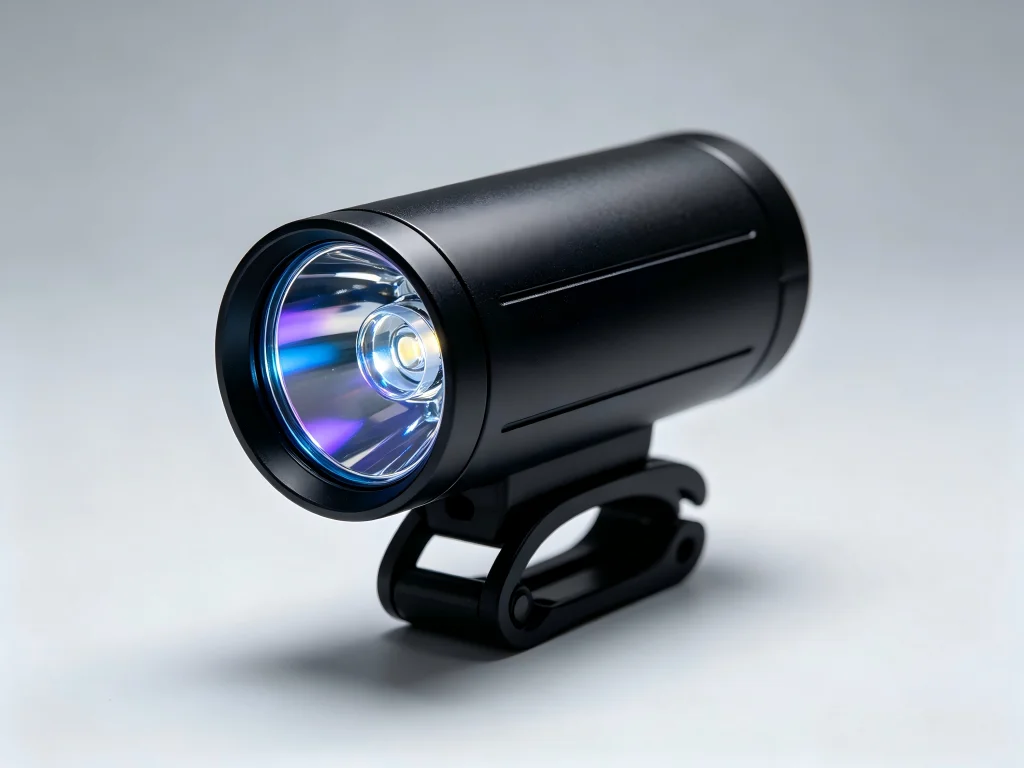
The 140-Year Journey: How Bicycle Headlights Evolved
The earliest bicycle lamps, manufactured from 1876 for the Ordinary (high-wheel bicycle) and solid-tired tricycles, were oil-fueled. By 1896, acetylene gas lighting arrived—carbide lamps that produced what was then called “artificial daylight” by combining calcium carbide with water. These were genuinely bright for their era, but they required constant maintenance and refueling.
Electric-powered bicycle lamps appeared as early as 1888 but didn’t become practical until 1898, when incandescent bulbs paired with lead-acid batteries or dynamos entered the market. Lead-acid batteries eventually gave way to dry cells and later alkaline batteries. Dynamos improved in efficiency and reliability, with hub dynamos becoming a premium option. Plastic molding techniques advanced too, allowing lens optics to improve while costs dropped.
Then came the LED revolution. LED technology development has revolutionized bicycle lights, making them more energy-efficient, brighter, and longer-lasting than traditional incandescent bulbs. Today’s bicycle headlight rechargeable units deliver outputs that would have been unthinkable just two decades ago—all from a package that fits in the palm of your hand.
What’s Inside Your Headlight: The Core Technologies
Light Sources: LED vs. Halogen vs. Laser
LEDs dominate the modern bicycle headlight market for a reason: they convert electricity to light at roughly 100 lumens per watt—about two and a half times more efficient than halogen systems.
Halogen lamps, once the standard, generate significant heat and consume far more power for the same output. They’re increasingly rare in new bicycle headlight designs. Lasers, while technically capable of producing extremely narrow, bright beams, remain niche in bicycle applications. The real story is how LED arrays have evolved—from single-die emitters to multi-LED systems with sophisticated optics.
Optics: Where the Light Actually Goes
A bicycle headlight is only as good as its beam pattern. Modern reflectors are remarkably clever devices that guide light precisely. The beam pattern determines the shape and spread of the light beam, making your lumens actually useful—or not.
This is where the StVZO (German Road Traffic Licensing Regulations) standard enters the picture. Germany is one of the few countries with specific regulations for bicycle lights. StVZO-compliant lights must have a clear cutoff line and cannot have a flashing mode. They carry a K-number (wave symbol + letter K + number combination) indicating official approval by the German Federal Motor Transport Authority. The standard demands specific lux measurements—for example, the K-mark requires minimum illuminance of 20 lux at the A point.
Why does this matter beyond Germany? Because StVZO-compliant optics produce beam patterns that illuminate the road without blinding oncoming traffic. That’s good engineering, regardless of where you ride.
Battery Systems: The Power Behind the Light
The transition from disposable batteries to bicycle headlight rechargeable systems represents one of the biggest quality-of-life improvements for cyclists. Modern lithium-ion batteries offer excellent energy density and long cycle life. But quality varies enormously.
A well-engineered bicycle headlight includes battery management systems that protect against over-discharge, overheating, and overcharging. These systems maintain consistent output from full charge to empty—no sudden drops or surprise failures. The integration of battery management, smart connectivity, and adaptive beam patterns is becoming more common, requiring closer coordination between optics, electronics, and mechanical design teams.
The Global Standards Landscape
Different markets enforce different standards. Understanding them helps you assess what a bicycle headlight actually delivers.
| Standard | Region | Key Requirements |
|---|---|---|
| StVZO | Germany | Cutoff beam pattern, no flashing, K-number certification |
| ANSI FL-1 | USA (voluntary) | Standardized testing for lumens, runtime, beam distance, impact/water resistance |
| AS/NZS 6742 | Australia/New Zealand | Safety requirements, photometric performance, test methods for lighting devices |
| ISO 6742 | International | Functions, safety requirements, photometric performance of cycle lighting |
Not all manufacturers comply with these standards voluntarily. A bicycle headlight that meets ANSI FL-1, for instance, provides verifiable performance metrics you can actually compare across brands. AS/NZS 6742 aims to ensure bicycles are equipped with proper lighting and reflective materials to enhance visibility, especially in low-light conditions.
Where the Industry Is Headed
The bicycle lights market was valued at USD 1.09 billion in 2025 and is projected to reach USD 1.81 billion by 2032, growing at a CAGR of 7.44%. That growth reflects more than just more cyclists—it reflects fundamental shifts in what riders expect from their lights.
Smart Connectivity and Adaptive Beams
We’re seeing the integration of smart connectivity and adaptive beam patterns become more commonplace. Products like the Garmin Varia UT800 automatically adjust beam intensity based on speed—more light when you’re riding faster, conserving battery at slower speeds. Cannondale’s SmartSense ecosystem integrates lights, rear-facing radar, sensors, and a smartphone app.
Adaptive Driving Beam (ADB) technology—borrowed from the automotive world—is appearing in bicycle headlights. These systems manage high and low beams to ensure a clear view for the rider while preventing dangerous glare for oncoming cyclists and pedestrians. Busch + Müller’s Briq-M E Highbeam delivers 150 lux with a wide, even beam pattern. MagicShine’s HORI 1300 combines a wide-angle low beam for side visibility with a focused center high beam, like automotive headlights.
USB-C and Ambient Light Sensors
Modern bicycle headlight designs increasingly integrate USB-C charging, ambient light sensors, and smart power management. Ambient light sensors automatically switch on the beam when darkness falls—no more forgetting to turn on your lights in well-lit city traffic.
E-Bike Integration
The rise of electrically assisted bicycles has broadened performance and regulatory considerations, elevating lighting as both a safety necessity and a differentiating feature. E-bike lights often integrate with the bike’s main battery system, offering higher outputs and synchronization with displays.
What This Means for Your Purchase Decision
Understanding the technology behind your bicycle headlight helps you separate genuine innovation from marketing hype. Here’s what to look for:
- Beam pattern over peak lumens: A well-designed beam with a cutoff line delivers more usable light than a scattered high-lumen output. Look for StVZO-style optics even if you don’t ride in Germany.
- Sustained output over maximum claims: Ask for runtime charts showing output over time, not just peak numbers. A 1,200-lumen light that runs 2-3 hours at mid-output is more useful than a 2,500-lumen light that dies in 45 minutes.
- Battery replaceability: Can you swap the cell when it degrades, or is the whole unit disposable? Quality lights offer replaceable batteries.
- Standards compliance: ANSI FL-1, StVZO, or AS/NZS 6742 certification indicates a manufacturer has submitted to testing.
- Smart features that add value: Ambient light sensors, speed-based dimming, and connectivity can genuinely improve your riding experience—but only if they work reliably.
Frequently Asked Questions About Bicycle Headlight Technology
What’s the difference between lumens and lux in a bicycle headlight?
Lumens measure total light output from the source. Lux measures what actually reaches a surface at a specific distance. A 1,000-lumen light with poor optics may deliver less usable light than a 600-lumen light with excellent optics.
What is StVZO and why does it matter for bicycle headlights?
StVZO is the German Road Traffic Licensing Regulation. It requires bicycle headlights to have a beam with a cutoff line that prevents glare for oncoming traffic and prohibits flashing modes. StVZO-compliant lights carry a K-number indicating official approval.
What does ANSI FL-1 standard mean for a bicycle headlight?
ANSI FL-1 is a voluntary standard that specifies testing methods for lumens, runtime, beam distance, and impact/water resistance. It allows buyers to compare specifications across brands with confidence.
Are LED bicycle headlights better than halogen?
Yes—significantly. LEDs are more energy-efficient (approximately 100 lumens per watt vs. halogen’s roughly 40), last longer, and generate less heat. LED technology has revolutionized bicycle lights.
How do adaptive beam patterns work in bicycle headlights?
Adaptive beam systems use sensors to adjust light output based on speed, ambient light, or riding conditions. Some automatically switch between high and low beams to prevent glare; others dim the light when you slow down to conserve battery.
What’s the future of bicycle headlight technology?
Expect wider adoption of adaptive beam patterns, smart connectivity with bike computers and smartphones, ambient light sensors, and integration with e-bike systems. The market is projected to grow from USD 1.09 billion in 2025 to USD 1.81 billion by 2032.
Should I buy a bicycle headlight with a replaceable battery?
Yes—if you want the light to last. Replaceable batteries extend the product’s useful life significantly. When the battery degrades after 300-500 charge cycles, you can swap it instead of discarding the entire light.
Where GTR Fits in This Picture
After decades of watching the bicycle headlight industry evolve—from the early electric lamps to today’s smart, connected systems—one pattern is clear: engineering discipline separates the products that last from the ones that fail.
GTR approaches bicycle headlight design with the same rigor that the best automotive suppliers apply to their work. Our optical systems prioritize beam pattern over peak lumen claims. Our battery management systems maintain consistent output across the discharge curve. Our housings use aluminum for thermal management—because heat is the enemy of LEDs and batteries alike.
We don’t chase the lowest price. We chase the longest service life, the most usable beam, and the most reliable performance. And we build our lights to meet or exceed the standards that actually matter—StVZO-style optics, ANSI FL-1 testing protocols, and the durability requirements of ISO 6742.
The technology in your bicycle headlight has come a long way since 1876. But the fundamental question hasn’t changed: will it work when you need it? At GTR, we engineer the answer to be yes.
Explore GTR’s bicycle headlight collection at www.rhgtr.in — engineered for riders who understand that good light isn’t about brightness alone.