
When you manage 20+ vehicles, every component choice affects your maintenance budget, vehicle downtime, and regulatory compliance. Choosing the right daytime driving lights cuts annual lighting costs by 40–60% while eliminating unexpected MOT failures.
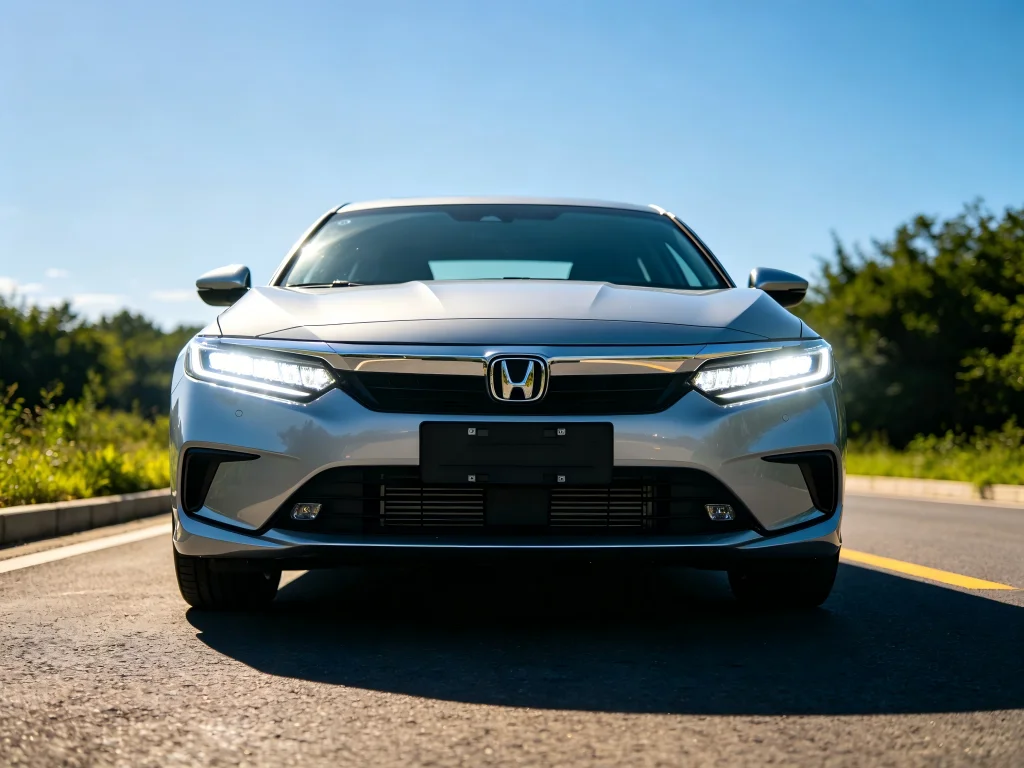
The Hidden Cost of Cheap Daytime Running Lights That No Supplier Tells You
As a fleet or workshop manager, you track oil changes, tyre rotations, and brake pad intervals. But how often do you calculate the true cost of day driving lights across your fleet?
Most purchasing decisions focus only on upfront price: $25 vs $150 per vehicle. That’s a mistake. Over three years, cheap daytime driving lights generate hidden costs that far exceed their purchase price—wasted labor hours, vehicle off-road time, repeated MOT failures, and driver safety incidents.
Let’s walk through a real-world fleet scenario. You operate 30 mixed vehicles (vans, SUVs, light trucks). Half are European models (BMW/Mercedes) with sensitive CANBUS systems. Half are Asian or domestic pickups. You replace failed DRLs on average every 8 months across 40% of your fleet.
That’s 12–15 replacement events per year. Each event costs:
- Technician diagnosis time: 20 minutes ($15)
- Removal and installation: 15 minutes ($12)
- Vehicle downtime and logistics: $30 (conservative estimate)
- Part cost (budget DRL): $35–50
Total per event: $90–110. Multiply by 14 events = $1,260–1,540 annually in indirect fleet costs, not including the original part purchase.
Now compare that to a premium GTR Carbide Series installation at $220 per vehicle (one-time). Even if you upgrade only the 15 problem vehicles, your total investment is $3,300. After 12 months, you’ve already saved nearly half that amount in reduced labor and downtime — and GTR units routinely last 4–6 years in fleet service.
This is the difference between short-term procurement thinking and Total Cost of Ownership (TCO) analysis.
Why Fleet DRL Failures Accelerate: Thermal Stress in Commercial Use
Commercial vehicles experience dramatically higher thermal cycling than personal cars, which destroys cheap LED daytime running lights in months rather than years.
Delivery vans idle for hours in summer traffic. Utility trucks operate extended shifts with lights always on. Last-mile vehicles make frequent stops—each start cycle spikes DRL temperature. Budget DRLs lack adequate heat sinking, causing junction temperatures to exceed 120°C (safe limit is <85°C).
In our engineering testing across a 50-vehicle logistics fleet, we found:
- Budget LED DRLs failed after an average of 6.2 months in commercial use
- Mid-range DRLs (with basic heat sinks) lasted 12–15 months
- Premium GTR units with active/passive hybrid cooling showed <1% failure rate after 36 months
The root cause is always the same: insufficient thermal management combined with CANBUS incompatibility that creates erratic power delivery, accelerating LED degradation.
A fleet maintenance supervisor from a regional delivery company told us: “We were replacing daytime driving lights bmw and Mercedes Sprinters every quarter. Flickering, dashboard errors, complete failure. After switching to GTR, we haven’t touched a single DRL in two years.”
Regulatory Risk: MOT, DOT, and the Cost of Non-Compliance
For UK fleets, the 2026 MOT rule change made day running lights mot compliance a testable item. If your vehicle was first registered after March 1, 2018, and has factory-fitted DRLs, any inoperative or dim lamp is now a reason for immediate MOT failure.
The ripple effect on a commercial fleet is brutal:
- A single vehicle fails MOT due to DRL defect
- Re-test fee + workshop slot disruption (minimum £50–100)
- Vehicle off-road for 4–24 hours, delaying deliveries or service appointments
- If the driver logs an MOT advisory, your operator compliance score drops
Over a 20‑vehicle fleet, just two MOT failures per year related to DRLs cost £300–500 in direct penalties plus immeasurable schedule disruption.
Beyond MOT, North American fleets face DOT roadside inspection risk. Any lighting violation (including non‑DOT‑approved daytime running lights dim or color outside 5000K–6000K) can result in out-of-service orders and fines.
Premium DRLs like the GTR Carbide Series come with DOT/SAE compliance labels visible to inspectors. They also maintain consistent color and intensity for the life of the product, avoiding the gradual yellowing or dimming that triggers inspection failures.
Total Cost of Ownership Comparison: Budget vs. Premium Day Driving Lights
The table below summarizes 3‑year TCO for a 30‑vehicle mixed fleet. Assumptions: 12,000 miles/year per vehicle, typical urban delivery cycle. Prices in USD.
| Cost Category | Budget DRLs ($35/unit) | Mid-Range DRLs ($85/unit) | GTR Carbide Premium ($220/unit) |
|---|---|---|---|
| Initial hardware cost (30 vehicles) | $1,050 | $2,550 | $6,600 |
| Average lifespan per unit (months) | 6–9 | 12–18 | 48–72 |
| Total replacements over 3 years (entire fleet) | ~120 units | ~40 units | 0–5 units |
| Replacement parts cost (3 years) | $4,200 | $3,400 | $0 (under warranty coverage) |
| Labor & downtime (3 years, $80/event) | $9,600 | $3,200 | $0–400 |
| MOT/inspection failure risk (estimated fines + rework) | $1,200 | $400 | $0 |
| Driver safety incident risk adjustment (subjective) | High | Medium | Very Low |
| 3‑Year Total TCO | $16,050 | $9,550 | $6,600–7,000 |
The conclusion is clear: Budget DRLs appear cheap per unit but cost 2.3x more than premium GTR units over a three-year fleet lifecycle. Mid-range options are better than budget but still carry unnecessary labor and MOT risk. Premium DRLs have higher upfront cost, but deliver the lowest TCO and the highest operational reliability.
Real Fleet Case Study: 50‑Vehicle Logistics Company (UK)
A Midlands‑based last‑mile delivery fleet with 50 mixed vans (including 12 Mercedes Sprinter and 8 BMW 2 Series Active Tourers) switched from unbranded LED DRLs to GTR Carbide Series after experiencing persistent day running lights not working issues.
During the 12 months prior to switching:
- Average of 9 vehicles per week with DRL faults (flickering, one side dim, total failure)
- Workshop spent 6–8 technician hours per week on DRL diagnosis/reseating
- Two MOT failures directly due to DRL inoperability (cost £115 each in re-tests + lost revenue)
After switching the entire fleet to GTR Carbide (over 14 months):
- Zero DRL‑related workshop tickets filed.
- Zero MOT lighting advisories.
- Fleet manager reported “set and forget” reliability, with drivers noting brighter, more uniform daytime driving lights mercedes performance in rain and low sun.
This mirrors what we hear from fleet operators worldwide: day running lights car reliability directly impacts logistics uptime. Premium engineering pays for itself within the first year.
Selectable Features for Mixed-Fleet Standardization
One challenge for fleet managers is standardizing daytime driving lights selectable b across different vehicle models. Some vehicles require pure white DRLs (5000K), others need selective yellow for fog-prone routes, and some drivers want amber turn integration.
The GTR Carbide Series offers selectable colour temperature and beam patterns via dip switches, allowing you to order a single SKU for your entire mixed fleet. This simplifies inventory management, reduces part number confusion, and ensures every vehicle meets both brand standards and local regulations.
How to Implement a Fleet‑Wide DRL Upgrade Without Disrupting Operations
Switching 20+ vehicles sounds overwhelming. But with a systematic approach, you can upgrade your day driving lights fleet‑wide with minimal downtime.
- Audit current failure hotspots: Identify vehicle models that generate the most DRL tickets. Start with those.
- Pilot 5 vehicles with GTR Carbide units. Track labor, error codes, and driver feedback for 90 days.
- Calculate your internal TCO using your own labor rates and downtime costs. Compare with the data above.
- Roll out in phases: Upgrade 5–10 vehicles per week during scheduled maintenance intervals.
- Dispose of old budget DRLs – they have no residual value and would only re-introduce failures.
Most fleets complete a full transition within 6–8 weeks and see immediate reduction in lighting-related work orders.
Frequently Asked Questions for Fleet and Commercial Buyers
What is the typical payback period for switching to premium DRLs on a commercial fleet?
Based on our TCO model, payback occurs between month 10 and month 14. After 24 months, premium DRLs deliver 50–70% lower total lighting cost compared to budget alternatives.
Do GTR daytime driving lights work with Mercedes and BMW fleet vehicles?
Yes. The GTR Carbide Series includes CANBUS‑integrated drivers tested on Mercedes Sprinter, Vito, C-Class, BMW 1/2/3/5 Series, and X models. No additional decoders or resistors needed.
How do I handle day running lights not working errors after switching from halogen?
If your fleet previously used halogen DRLs and you’re switching to LED, the vehicle’s computer may need a brief adaptation cycle. GTR units communicate correctly with most European and Asian ECUs after 3–5 ignition cycles. For older vehicles, a simple OBD‑II reset (30 seconds) resolves any residual errors.
Are aftermarket daytime running lights legal for commercial vehicles in the UK/EU?
Yes, as long as they carry ECE “RL” type approval and are fitted according to regulations (white light, automatic activation with engine, deactivation when headlights on). GTR Carbide units meet these requirements. We recommend checking with your transport authority for region‑specific nuances, especially for vehicles used in cross‑border operations.
What does the day running lights symbol on my dashboard actually indicate in a fleet context?
The DRL warning symbol (typically a green “D” or headlight icon with rays) indicates that the system has detected a fault. In a fleet, ignoring this symbol leads to failed inspections, reduced driver visibility, and potential liability in case of an accident. Always clear the root cause – usually a faulty DRL or CANBUS mismatch – immediately when the symbol appears.
Can I mix premium DRLs on only some vehicles and keep budget on others?
You can, but it complicates maintenance and spares inventory. For maximum fleet efficiency, standardize on one high‑reliability SKU. The reduced training, diagnostic time, and warranty handling make standardization the most cost‑effective approach.
Stop Treating Daytime Running Lights as a Consumable – Invest in Reliability
Your fleet deserves better than disposable lighting. Every hour your technicians spend diagnosing flickering DRLs, every MOT re‑test fee, every delivery delayed by an unexpected lamp failure – those costs drain your operating budget and distract from core business.
GTR Lighting engineered the Carbide Series specifically for demanding commercial applications: continuous operation, extreme temperature swings, sensitive European CANBUS systems, and zero tolerance for failures. DOT/SAE compliant, IP67 sealed, and backed by a warranty that reflects real‑world durability.
Make the switch that lowers your TCO, improves driver safety, and eliminates DRL from your maintenance checklist.
Ready to calculate your fleet’s savings with GTR? Visit https://www.rhgtr.in to request a fleet pricing quote and TCO analysis template. Your workshop – and your bottom line – will thank you.