
Installing LED in fog lights should start with one question: what problem are you trying to solve? A city commuter, a lifted F-150, a Ram 1500 work truck, a motorcycle, and a vehicle with a steel bull bar do not need the same fog-light setup. The right answer depends on the road, weather, housing, mounting position, and beam you actually need.
That is why this guide does not begin with lumens, wattage, or brand claims. It begins with the vehicle.
Think of your fog lights as part of an optical system. The LED source, housing, mounting height, road surface, weather, and driver vision all work together. Change one element, and the final result changes with it.
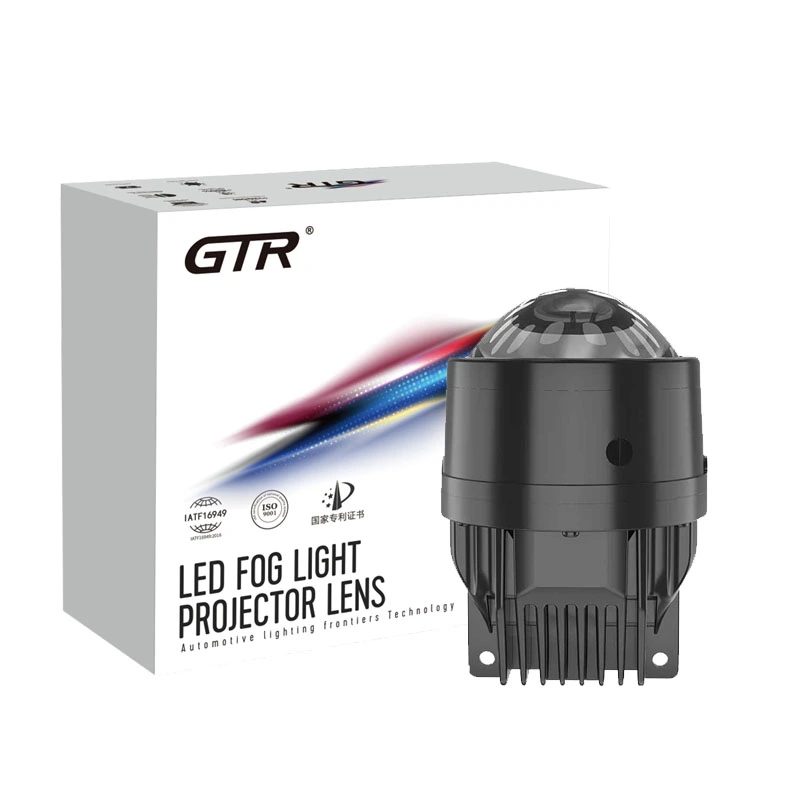
Start Here: What Type of Fog-Light User Are You?
The best LED fog-light setup depends on where and how the vehicle is used. Daily commuters usually need clean low-beam support, while trucks, motorcycles, bull-bar builds, and rural vehicles may need stronger weather resistance, wider shoulder lighting, vibration resistance, or a dedicated auxiliary fog-light assembly.
Before choosing LED bulbs in fog lights, place yourself in one of these groups.
| Driver Type | Main Need | Best Priority | Common Mistake |
|---|---|---|---|
| Urban Commuter | Better road-edge visibility | Clean beam + easy installation | Buying excessive brightness |
| Rain/Fog Driver | Better contrast in poor weather | Low beam placement + suitable color | Choosing color before beam quality |
| Pickup Owner | Wide road and shoulder coverage | Durability + fitment + output stability | Assuming all model years use the same lamp |
| Off-Road Driver | Terrain visibility | Mounting strength + beam choice | Using a spot beam as a fog beam |
| Motorcycle Rider | Visibility + compact lighting | Low power + vibration resistance | Installing lights that are too heavy |
| Fleet Operator | Low downtime | Consistency + service life + support | Buying only on unit price |
Scenario 1: You Drive Mostly in the City
If most of your driving happens on paved urban roads, you probably do not need the most aggressive fog-light system available.
You need a predictable beam.
For LED fog lights for car applications, compact size and correct focal placement often matter more than extreme cooling systems or off-road housings.
A useful urban setup should:
- Fit inside the original fog-light housing without modification
- Produce a broad but controlled beam
- Avoid excessive upward light
- Match the vehicle’s electrical system
- Maintain stable output during extended use
If the original housing already creates a good beam with halogen, a carefully matched LED replacement may be enough.
If the housing is damaged, yellowed, poorly designed, or badly aimed, replacing only the bulb may not solve the real problem.
Scenario 2: You Drive in Heavy Rain, Mist, or Snow
For frequent bad-weather driving, beam placement usually matters more than maximum brightness. A low, wide, controlled fog-light pattern can help illuminate road edges and lane markings while reducing unnecessary light directed into moisture, snow, or airborne particles in front of the vehicle.
Bad-weather visibility creates an unusual problem.
More light does not always mean more usable detail.
When light hits water droplets, snow, dust, or mist, part of that light is scattered back toward the driver. If too much light is projected upward or directly into the weather, the driver may experience a bright visual veil.
This is why LED fog lights should generally be aimed low and wide rather than high and far.
Should You Use White or Yellow?
Both can work.
White LEDs provide a modern appearance and often match LED headlights. Warmer white or yellow solutions may feel more comfortable to some drivers during fog, rain, snow, or dusty conditions.
But this sequence matters:
- Get the beam shape right.
- Get the mounting height right.
- Get the aim right.
- Then choose the preferred color temperature.
A poorly aimed yellow light is still poorly aimed.
Scenario 3: You Need LED Fog Lights for Trucks
Truck applications introduce mechanical stress that many passenger-car products never experience.
A pickup may travel on gravel, construction roads, farm tracks, or rough rural highways. That means LED fog lights for trucks should be judged by more than output.
Look closely at:
- Housing construction
- Bracket strength
- Connector sealing
- Wire strain relief
- Heat-sink stability
- Vibration resistance
- Long-duration thermal performance
In our manufacturing work, one useful question is: does the product still behave the same after repeated heat, vibration, and moisture exposure?
That matters more than how impressive the lamp looks during a short bench test.
Scenario 4: You Are Shopping for LED Fog Lights for Ram 1500
This search term looks simple, but the fitment process is not.
LED fog lights for Ram 1500 should be selected by exact year, generation, trim, factory lamp type, and original bulb or assembly specification.
Do not rely only on a product title that says “Fits Ram 1500.”
A Better Ram 1500 Check
Before ordering, record:
- Model year
- Trim level
- Factory halogen or factory LED fog light
- Original bulb number
- Horizontal or vertical housing layout where applicable
- Available space behind the housing
- Connector configuration
Why be so specific?
Because manufacturers can change lamp systems within the same vehicle family. Even a visually similar fog-light housing may use a different bulb, connector, driver, or mounting design.
Scenario 5: You Need LED Fog Lights F150 Owners Can Install Reliably
The same principle applies to Ford trucks.
When evaluating LED fog lights F150 products, identify whether you are replacing the original bulb, the complete factory lamp, or an aftermarket bumper light.
These are not interchangeable purchasing categories.
| F-150 Upgrade Type | What to Verify | Main Risk |
|---|---|---|
| LED Bulb Replacement | Bulb base, space, beam geometry | Poor beam pattern |
| Complete Fog Assembly | Mounts, connector, electrical system | Physical or wiring mismatch |
| Aftermarket Bumper Lamp | Bracket and beam type | Wrong mounting angle |
| Auxiliary Fog Module | Harness, switch, regulations | Improper road use |
Scenario 6: You Have a Bull Bar
A bull bar changes the entire lighting equation.
LED fog lights for bull bar applications are not controlled by the factory housing location. You choose the mounting position, which means you also become responsible for the beam height and aim.
This gives you flexibility, but it also creates more ways to get the setup wrong.
Mounting Too High
If a fog beam is mounted too high, it may send more light into rain, fog, or oncoming drivers’ sight lines.
Mounting Too Low
If the lamp sits extremely low, terrain, curbs, or bumper structures may block part of the beam.
Mounting Too Far Outward
Wide spacing can help illuminate shoulders, but the beam should still overlap enough to avoid a dark center area.
For an overview of general vehicle-lighting rules, buyers should check the regulations in their own market and may review resources from the National Highway Traffic Safety Administration.
Scenario 7: You Need LED Fog Lights for Ranch Hand Bumper Builds
Heavy-duty bumpers create a mechanical fitment challenge.
When selecting LED fog lights for Ranch Hand bumper applications, start with the bumper rather than the lamp catalog.
Measure the opening.
Then measure the depth behind it.
Then inspect the bracket.
Only after that should you choose the light.
Five Measurements Worth Recording
- Opening width
- Opening height
- Available installation depth
- Mounting-hole spacing
- Maximum adjustment angle
This simple process can prevent one of the most common aftermarket problems: buying a lamp that technically fits the opening but cannot be aimed correctly.
Scenario 8: You Need LED Fog Lights for Bike Use
Motorcycles benefit from the efficiency of LEDs because electrical capacity and mounting space are limited.
But LED fog lights for bike applications need a different engineering mindset.
A motorcycle experiences constant vibration, direct weather exposure, and greater movement than a passenger car.
That means the best product is not necessarily the biggest or brightest.
It should be:
- Compact
- Lightweight
- Securely mounted
- Efficient
- Weather resistant
- Protected against wire fatigue
- Easy to aim
A heavy lamp mounted on a thin extension bracket may look strong when parked but can create fatigue under long-term vibration.
The 60-Second LED Fog-Light Decision Tree
Use this sequence before buying.
Question 1: Is the Original Housing in Good Condition?
If yes, a matched LED bulb may be the simplest option.
If no, consider replacing the complete lamp assembly.
Question 2: Do You Need Factory Fit or Custom Mounting?
Factory fit usually favors direct replacement.
Custom bumpers, bull bars, and off-road builds may benefit from dedicated auxiliary LED fog modules.
Question 3: Is Your Main Problem Weather or Darkness?
If the problem is rain, fog, or snow, focus on low beam placement and controlled spread.
If the problem is remote-road visibility, wider coverage and stronger overall illumination may become more important.
Question 4: Does the Vehicle Monitor Bulbs Electronically?
If yes, confirm electrical compatibility before purchase.
Some vehicles may produce flicker or warning messages when LED current draw differs from the original halogen bulb.
Question 5: Can the Lamp Survive the Environment?
A daily commuter and a mining truck should not be evaluated by the same durability standard.
Why Chip Placement Matters in LED Bulbs in Fog Lights
LED chip position affects how the reflector or projector redirects light. If the emitting surface is too large, too thick, or located away from the original filament position, the housing may create an unfocused beam with hotspots, dark areas, or upward scatter instead of useful road illumination.
This is one of the most technical yet most overlooked parts of an LED conversion.
A reflector does not simply “bounce light forward.”
Its surfaces are shaped around the original light-source position.
Change the position, and the exit angle changes.
That is why two LED bulbs with similar power and chip brands can create very different beam patterns in the same fog-light housing.
Why Stable Brightness Beats Peak Brightness
LED output can fall as operating temperature increases.
A product may look extremely bright during the first minute, then stabilize at a lower level once the LED, driver, and heat sink become hot.
For this reason, professional buyers should compare:
| Test Point | What It Shows |
|---|---|
| Cold Start | Initial brightness |
| 10 Minutes | Early thermal behavior |
| 30 Minutes | More realistic operating output |
| Extended Run | Thermal stability and reliability |
In our engineering testing, we prefer to evaluate what the lamp delivers after it has reached a stable operating temperature.
Your customer drives with a hot lamp, not a cold laboratory sample.
What Does IP67 or IP68 Really Tell You?
Ingress-protection ratings describe resistance to dust and water under defined test conditions. General information on IP classifications is available through the International Electrotechnical Commission.
But the printed rating is only part of the story.
A fog-light system may still fail at:
- The connector
- The driver box
- The cable entry
- The housing seam
- The breather
This is why serious B2B evaluation should examine the complete assembly rather than a single specification.
What Wholesalers Should Ask Before Adding a New Fog-Light SKU
A consumer buys one pair.
A distributor may buy hundreds or thousands.
That changes the definition of risk.
A product with a low purchase price but a high complaint rate can damage margins very quickly.
Ask the Supplier These Questions
- Which exact vehicle applications were tested?
- Can you provide real beam-pattern images?
- What happens to output after thermal stabilization?
- How is the driver protected against voltage variation?
- How is moisture controlled inside the lamp?
- Can the product be customized for different markets?
- How is batch consistency controlled?
- What support is available when fitment problems appear?
Those questions reveal much more than a price list.
A Better Way to Compare Two LED Fog Lights
Place both products in the same housing.
Aim them at the same wall.
Use the same distance.
Then compare the following:
| Area | What to Look For |
|---|---|
| Center | Balanced brightness without a blinding hotspot |
| Left Side | Useful shoulder illumination |
| Right Side | Useful roadside illumination |
| Upper Area | Minimal unwanted upward scatter |
| Lower Area | Sufficient near-field coverage |
| After 30 Minutes | Stable brightness and beam |
This simple side-by-side test can expose differences that packaging specifications will never show.
When Should You Avoid a Simple LED Bulb Swap?
A bulb replacement is not always the best path.
Consider a complete fog-light solution when:
- The original reflector is damaged
- The lens is heavily degraded
- The housing does not create a usable LED beam
- You need a different beam geometry
- The vehicle has a custom bumper
- The original lamp cannot handle the desired output
- You need stronger environmental sealing
The correct upgrade may be a better bulb.
Or it may be a better optical system.
Why GTR Builds Around Applications, Not Just Specifications
At GTR, automotive lighting projects often begin with an application list rather than a generic target such as “make it brighter.”
That list may include:
- Passenger-car fog-light replacements
- Truck applications
- Ram 1500 fitments
- F-150 fitments
- Bull-bar installations
- Heavy-duty bumper applications
- Motorcycle auxiliary lighting
- Private-label distributor programs
From there, the product can be evaluated around optical requirements, installation space, electrical behavior, heat management, housing design, target pricing, and local market expectations.
For B2B customers, this can reduce the gap between what looks good in a catalog and what actually works after installation.
FAQ About LED in Fog Lights
Can I replace a halogen fog bulb with an LED?
Often yes, but the LED should match the socket, available installation space, electrical system, and optical design of the fog-light housing. A physical fit does not automatically guarantee a good beam.
Are LED bulbs good for fog lights?
Well-matched LEDs can provide efficient and durable fog lighting. Performance depends heavily on chip placement, beam control, cooling, fitment, and installation quality.
Is yellow or white better for fog lights?
Both can work. White offers a modern appearance, while warmer or yellow light may feel more comfortable in certain poor-weather conditions. Beam shape and aim should be selected before color.
What is the best beam pattern for fog lights?
A fog beam should generally be low and wide, with useful horizontal coverage and limited upward scatter. This helps illuminate road edges while controlling glare.
Why do my LED fog lights flicker?
Flicker may result from vehicle bulb monitoring, voltage modulation, incompatible drivers, weak connections, or electrical design issues. Vehicle-specific testing can help identify the cause.
Do LED fog lights get hot?
Yes. LEDs generate heat at the semiconductor junction. Good thermal management moves this heat away from the LED to maintain output and service life.
Are LED fog lights suitable for bull bars?
Yes, but the mounting height, beam type, bracket strength, wiring, and aim should be evaluated carefully. A driving beam and a fog beam are not the same.
What should distributors test before bulk purchasing?
Test beam pattern, thermal stability, fitment, electrical compatibility, weather resistance, vibration performance, batch consistency, and supplier support before committing to large quantities.
Build the Fog-Light Setup Around the Road
A sedan in downtown traffic should not use the same lighting strategy as a Ram 1500 on a muddy worksite. A motorcycle should not use the same mounting logic as an F-150 with a heavy-duty bumper.
That is the central rule of choosing LED in fog lights: start with the application, then engineer the light around it.
If you are an importer, automotive lighting distributor, retrofit chain, wholesaler, or regional brand building a new fog-light program, GTR can help evaluate the project from the vehicle outward.
Send us your target models, road conditions, preferred color temperature, housing type, beam requirement, packaging needs, and expected order volume. Explore GTR automotive lighting solutions at www.rhgtr.in and build a product range around the environments your customers actually drive in.
— SEO Information
—Article Angle Used: C. Scenario-Based Diagnostic & Application Guide
SEO Title:
1. LED in Fog Lights: Real-World Setup Guide for Cars & Trucks
2. LED in Fog Lights: Choose the Right Setup by Vehicle Type
3. LED in Fog Lights Guide: Cars, Trucks, F150, Ram & Bikes
Meta Description:
Learn how to choose LED in fog lights by vehicle, weather and use case. Covers cars, trucks, Ram 1500, F150, bull bars, bumpers and bikes.
Suggested Keywords:
led in fog lights, led bulbs in fog lights, led fog lights, led fog lights for car, led fog lights for trucks, led fog lights for ram 1500, led fog lights f150, led fog lights for bull bar