
Walk into any independent auto electrical workshop and ask about the d1s headlight bulb. You will get a reaction most drivers never expect. A sigh. A story. Sometimes a photo on a phone showing a melted connector or a ballast with a scorched circuit board.
These are the people who see the aftermath. Not the unboxing. Not the first night of crisp white light. The aftermath.
I have spent a lot of time in those workshops. Not as a customer, but as someone who builds lighting products and wants to know what actually fails in the field. What I learned changed how I think about D1S bulbs entirely. It is not about brightness claims or color temperature marketing. It is about a handful of failure modes that repeat with almost mechanical predictability.
This article is what those technicians would tell you if they had the time, the patience, and the inclination to explain the whole picture.
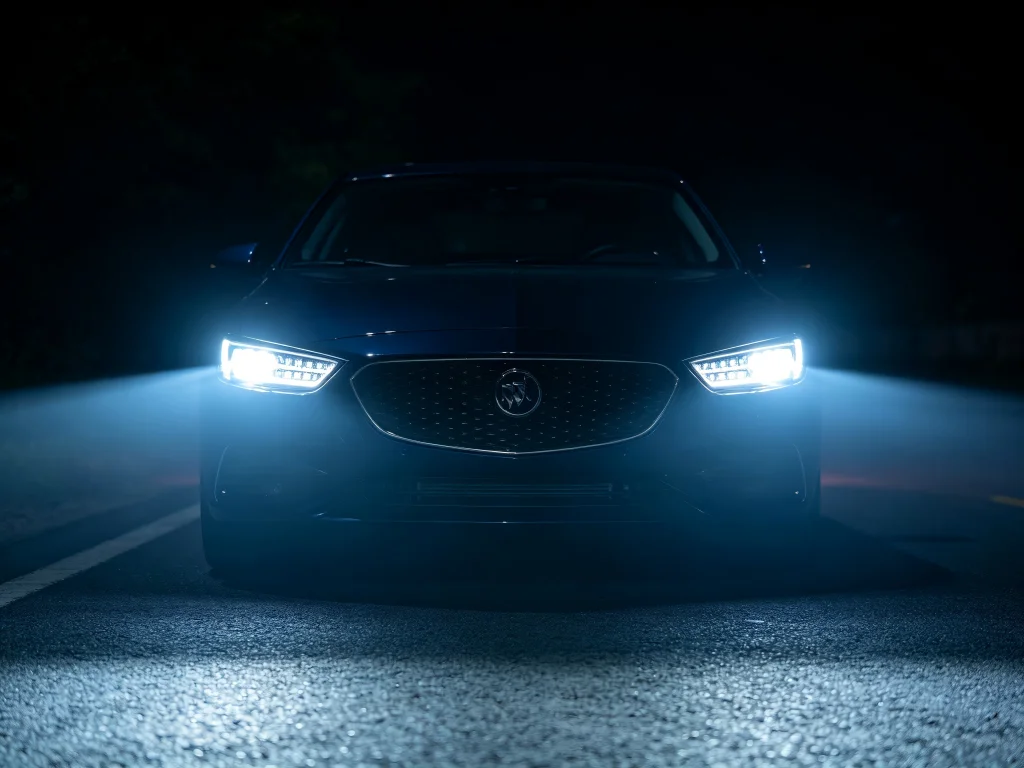
The Three Failure Modes That Account for Most D1S Problems
Most D1S headlight failures trace back to one of three causes: igniter degradation inside the bulb base, ballast stress from a mismatched replacement, or connector corrosion from moisture intrusion. The bulb itself is often the victim, not the culprit.
Drivers tend to think of a headlight bulb as a consumable. Like a battery or a wiper blade. It wears out, you swap it, you move on. That mental model works fine for halogen. It falls apart with D1S.
Here is why. A D1S bulb is not a standalone component. It is one part of a system that includes the ballast, the wiring harness, the connector, and the projector housing. When one part degrades, it stresses the others. A failing ballast will shorten the life of a new bulb. A corroded connector will cause voltage drops that make a healthy bulb flicker. A bulb with a weak igniter will draw abnormal current and cook the ballast over time.
The technicians I have spoken with describe it as a chain reaction. One weak link pulls on the next until something visibly breaks.
Failure Mode 1: Igniter Degradation
D1S bulbs have the igniter built into the base. That small module generates the initial high-voltage pulse that starts the arc. Over thousands of starts, the igniter components degrade. The bulb may still light, but it takes longer to strike, and the startup draw becomes erratic.
This is the failure mode drivers notice last, because the bulb still works. It just works badly.
Failure Mode 2: Ballast Stress
The ballast is the expensive part. Replacing one often costs more than a set of premium bulbs. When a cheap or mismatched bulb draws abnormal current, the ballast absorbs the stress. It runs hotter. Its internal components age faster. Eventually it fails, and the driver assumes the bulb was the problem all along.
Failure Mode 3: Connector and Seal Degradation
The D1S connector sits in an environment that swings from engine-bay heat to winter road spray. The rubber seals around the connector harden over time. Moisture gets in. Corrosion follows. The contact resistance rises, voltage at the bulb drops, and the light output suffers even though the bulb itself is fine.
Why the “Just Replace the Bulb” Advice Often Fails
This is where the workshop stories get frustrating. A driver comes in with a flickering headlight. The technician replaces the bulb. Two months later, the same driver is back with the same complaint.
The bulb was not the root cause. It was a symptom.
Good technicians do not just swap parts. They measure. They check voltage at the connector under load. They inspect the ballast for heat discoloration. They look at the seals. They verify that the replacement bulb matches the ballast’s output characteristics.
Most drivers never get this level of diagnosis. They buy a bulb online, install it in the driveway, and hope. Sometimes it works. Often it does not, and the cycle repeats.
A Diagnostic Sequence Worth Following
Before buying any D1S replacement, run through this sequence. It takes twenty minutes and can save you from replacing the wrong part.
- Swap the bulbs side to side. If the problem follows the bulb, the bulb is at fault. If the problem stays on the same side, the issue is in the ballast, wiring, or connector.
- Inspect the connector and seals. Look for green corrosion, brittle rubber, or moisture traces. A $10 connector repair can solve a problem that looks like a $100 bulb failure.
- Check ballast behavior. A failing ballast often causes a bulb to flicker, strike intermittently, or change color during warm-up. If a known-good bulb behaves badly in one housing, suspect the ballast.
- Verify the replacement bulb type physically. Read the stamp on the old bulb base. D1S is not D3S. The voltage systems differ, and mixing them damages components.
- Replace in pairs. HID bulbs age together. Replacing one side leaves you with a color mismatch and a second failure looming.
What Separates a Bulb That Lasts From One That Doesn’t
The technicians I have interviewed are blunt about this. They can often predict which aftermarket bulbs will come back as warranty claims within a year. The markers are not subtle once you know what to look for.
| Indicator | Bulb Likely to Last | Bulb Likely to Fail Early |
|---|---|---|
| Base construction | Machined metal base, tight tolerances, clean welds | Stamped metal, visible gaps, rough edges |
| Igniter potting | Fully potted, sealed against moisture | Partially potted or open, exposed circuitry |
| Arc tube clarity | Clear quartz, no discoloration, even wall thickness | Cloudy or uneven quartz, visible inconsistencies |
| Documentation | Published specs, compliance markings, batch traceability | Marketing claims only, no technical data |
| Packaging | Protective foam, anti-static wrap, sealed against moisture | Loose in a bag, no moisture protection |
Notice that none of these indicators involve brightness numbers. Brightness claims are easy to fake. Build quality is not. A bulb with a poorly potted igniter will fail in humid climates regardless of how many lumens the box promises.
Where Drivers Actually Buy D1S Bulbs, and What They Get
The purchasing channel matters more than most drivers realize.
AutoZone and similar chains carry a limited D1S selection. Convenience is the selling point. The bulbs are often rebranded generics with minimal specification transparency. Fine in an emergency, less ideal as a long-term solution.
Walmart offers lower prices but even less selection. The D1S bulbs on the shelf tend to be budget-tier products with the failure characteristics described above.
Philips is the gold standard for many drivers. Genuine Philips D1S bulbs are excellent. The problem is counterfeits. The market is flooded with fake Philips bulbs in convincing packaging. Buying from unauthorized sellers is a gamble.
Specialty manufacturers sit outside the retail channel entirely. These are the brands that supply workshops and fleet operators. They compete on failure rates and warranty returns, not shelf space. That dynamic tends to produce better products.
What GTR Does Differently
We build D1S-compatible lighting for the people who see the aftermath. The workshops. The fleet managers. The drivers who are tired of replacing the same part every year.
That means we focus on the things that cause failures in the field, not the things that look good on a product page.
- Fully potted igniters. Because moisture is the enemy, and half-sealed electronics do not survive humid climates.
- Ballast-matched electrical characteristics. Because a bulb that stresses the ballast is not saving anyone money.
- Machined bases with tight tolerances. Because a loose fit means vibration, and vibration means premature failure.
- Batch traceability. Because when something goes wrong, we want to know why, not just replace it and hope.
We do not publish inflated lumen numbers. We publish specifications that technicians can verify. If that sounds like a low bar, spend some time in the D1S aftermarket and you will understand why it is not.
Questions Technicians Get Asked Every Week
Why does my new D1S bulb flicker?
Flickering after a fresh install usually points to one of three things: the bulb is not compatible with the ballast’s electrical signature, the ballast is already failing, or the connector has resistance from corrosion. Swap the bulb to the other side to isolate the cause.
Can I upgrade my D1S to LED?
Only with an LED bulb designed specifically for D1S ballast systems. These contain internal drivers that accept the 85V ballast output. Standard LED bulbs will not work and can damage the ballast.
How long should a quality D1S bulb last?
A well-built D1S bulb typically delivers 2,500 to 3,500 hours of usable output. Cheap bulbs often fail well before 1,000 hours. The difference shows up in the igniter and base construction, not the marketing claims.
Should I replace the ballast when I replace the bulb?
Not automatically. Test the ballast first. If a known-good bulb behaves correctly on that ballast, the ballast is fine. If the same bulb flickers or fails to strike, the ballast is suspect.
Are genuine Philips D1S bulbs worth the premium?
Genuine Philips bulbs are excellent. The risk is counterfeits. Buy from authorized distributors, not marketplace sellers with suspiciously low prices. If the deal looks too good, it probably is.
Fix the System, Not Just the Bulb
The workshop view of D1S lighting is uncomfortable but useful. Most failures are preventable. Most repeat failures happen because the root cause was never addressed. And most drivers spend more money over three years than they would have spent solving the problem properly the first time.
If your headlights have become a recurring expense, stop treating them like a consumable. Treat them like the system they are.
Visit https://www.rhgtr.in to see how GTR approaches D1S lighting. We build for the drivers who are done with the cycle of replace, flicker, replace again.
The road is dark enough. Your headlights should not be the reason you cannot see it.