
Direct Answer: The right H7 LED bulb depends on three factors: your vehicle’s CANBUS sensitivity, your headlight housing type (projector vs. reflector), and your driving environment. Match these correctly, and any quality bulb will perform. Mismatch them, and even the most expensive bulb will flicker, glare, or fail prematurely.
You’ve read the reviews. You’ve watched the comparison videos. You’ve narrowed down your options to three or four h7 led bulb candidates. But you’re still stuck. Because every review tells you a different bulb is “the best.” One says brightness matters most. Another says beam pattern is everything. A third insists CANBUS compatibility is non-negotiable.
They’re all right. And they’re all wrong.
The truth is simpler and more frustrating: there is no single “best” H7 LED bulb. There’s only the best bulb for your specific vehicle, your specific driving habits, and your specific budget. Based on our years of manufacturing and testing H7 LED bulbs at GTR, we’ve built a decision framework that cuts through the marketing noise and matches you to the right bulb—every time.
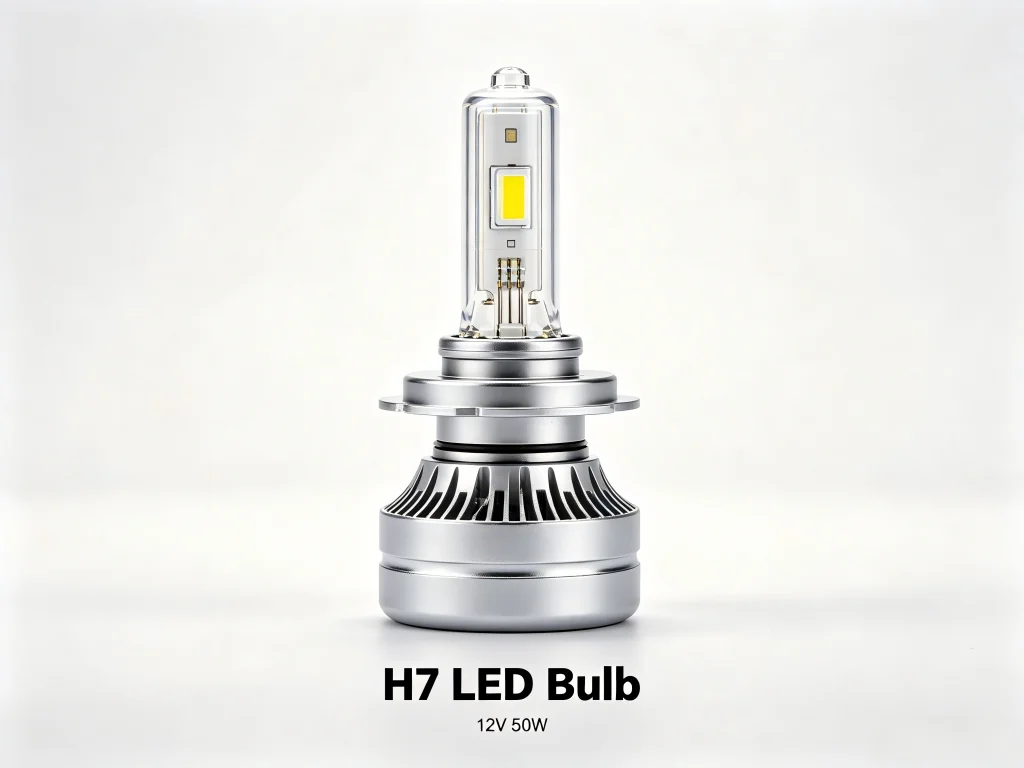
Step 1: Know Your Vehicle’s Electrical System
This is the single most important factor in your H7 LED decision. Get this wrong, and nothing else matters.
The CANBUS Reality Check
Modern vehicles use CANBUS (Controller Area Network) systems to monitor every electrical component. When you replace a 55W halogen with a lower-wattage h7 led bulb, the computer detects the difference and assumes the bulb is burned out. The result: dashboard error messages, flickering, or bulbs that turn off entirely.
Some vehicles are more sensitive than others. BMW, Mercedes, Audi, and Volkswagen models tend to have the most finicky CANBUS systems. Japanese and American vehicles are generally more forgiving, but still require attention.
Your decision path:
- If you drive a European vehicle (BMW, Mercedes, Audi, VW, Porsche): You need a bulb with built-in CANBUS decoders specifically tested on your model. External resistors may work, but they generate heat and can damage wiring.
- If you drive a Japanese or Korean vehicle (Toyota, Honda, Hyundai, Kia): You have more flexibility. Many standard LEDs work without errors, but CANBUS-ready bulbs are still recommended.
- If you drive an American vehicle (Ford, Ram, Chevrolet): CANBUS sensitivity varies widely. Check owner forums for your specific model year.
Step 2: Identify Your Headlight Housing Type
Direct Answer: Projector housings require LED chips positioned with micron-level precision to match the original halogen filament. Reflector housings are more forgiving but still need proper chip orientation to avoid scatter and glare.
Your headlight housing type determines whether an h7 led bulb will produce a clean, usable beam or a scattered mess that blinds oncoming traffic.
Projector Headlights
Projector housings use a lens to focus light from a single point. The halogen filament sits at a specific focal point. If your LED chips aren’t in exactly the same position, the beam pattern suffers. You’ll see hotspots, dark spots, and a fuzzy cutoff line.
What to look for: Bulbs that explicitly mention “1:1 filament positioning” or “OEM beam pattern” for projector applications. The chip spacing should be thin—0.03 inches or less.
Reflector Headlights
Reflector housings use curved mirrors to shape the beam. They’re more forgiving of minor chip misalignment, but poor positioning still causes glare and uneven light distribution.
What to look for: Bulbs with adjustable bases that allow you to rotate the chip orientation for optimal beam pattern.
Step 3: Evaluate Your Driving Environment
Where and when you drive matters more than most buyers realize.
Urban Drivers (City Streets, Well-Lit Highways)
You don’t need maximum brightness. Focus on beam pattern quality and color temperature. A 5,700K-6,000K bulb provides crisp white light that cuts through streetlight glare without overwhelming other drivers.
Rural Drivers (Unlit Roads, Country Highways)
You need maximum reach and brightness. Look for bulbs with higher lumen output (4,000+ lumens per bulb) and longer beam distance. The GTR Ultra 2, for example, tested at nearly 400% brighter than stock halogen with excellent beam distance.
All-Weather Drivers (Rain, Fog, Snow)
Color temperature matters here. 5,000K-5,700K produces a slightly warmer white that penetrates fog and rain better than the 6,500K “cool white” that many manufacturers push.
The H7 LED Decision Matrix
Use this table to narrow your options based on your vehicle type and priorities:
| Vehicle Type | CANBUS Sensitivity | Recommended Feature Priority | Bulb Recommendation |
|---|---|---|---|
| BMW / Mercedes / Audi | Very High | Built-in CANBUS decoder + 1:1 design | GTR Ultra Series (tested on BMW) |
| VW / Porsche | High | CANBUS-ready + compact cooling | GTR Ultra Series or Philips Ultinon |
| Toyota / Honda / Hyundai | Low-Medium | Beam pattern + brightness | GTR or SEALIGHT |
| Ford / Ram / Chevrolet | Medium | Thermal management + brightness | GTR or FAHREN |
| Older Vehicles (pre-2010) | Low | Brightness + lifespan | Any quality LED with good cooling |
Real-World Testing: What the Data Shows
Independent testing tells a clearer story than marketing claims. In a head-to-head comparison of top LED bulbs, the GTR Lighting Ultra 2 came out on top, measuring 709% brighter than the original halogen bulb. It maintained over 75% of its output for more than 5,000 hours of continuous use—earning a “Superior” rating for durability.
One driver reported: “I have used GTR Ultra2 LED bulbs in a couple different halogen reflector housings with very good results. This includes a 2020 Freightliner in which I spend literally a hundred thousand miles driving in the dark”. Another noted: “Both have PERFECT light cut off, won’t blind oncoming drivers with stray light”.
Compare this with generic Amazon brands. While they may claim 36,000 or even 60,000 lumens, real-world testing often reveals inflated numbers and unreliable beam patterns. One reviewer of a popular budget brand noted: “The beam pattern is well-focused… It remains to be seen what longevity is like”—a polite way of saying they don’t trust it to last.
Common H7 LED Purchase Mistakes (And How to Avoid Them)
Mistake 1: Buying Based on Lumens Alone
Lumen claims are unregulated. A bulb advertising 60,000 lumens may produce 5,000 in reality. Focus on beam pattern quality and real-world testing instead of raw numbers.
Mistake 2: Ignoring Thermal Management
LEDs generate heat. If that heat isn’t removed, the bulbs dim and fail. Look for copper heat pipes or high-speed turbine fans (8,500+ RPM). Passive cooling (fanless) works in some applications but is less effective in confined headlight housings.
Mistake 3: Assuming “Plug and Play” Means “Works With Your Car”
“Plug and play” refers to installation difficulty, not compatibility. A bulb can be easy to install and still flicker, throw errors, or produce a terrible beam pattern. Always verify CANBUS compatibility and beam pattern claims separately.
Mistake 4: Not Checking Dust Cover Clearance
Some LED bulbs are too long to fit behind your vehicle’s dust cover. Check the bulb dimensions against your housing before purchasing. A “1:1 mini size” claim often addresses this, but verify with measurements.
Frequently Asked Questions About H7 LED Bulbs
What does H7 mean in headlight bulbs?
Direct Answer: H7 is a single-filament bulb size standardized for automotive use. It’s one of the most common low-beam and high-beam bulb types in European and Asian vehicles, characterized by a PX26d base and 55W halogen specification.
Can I use H7 LED bulbs in any car?
H7 is a physical size standard, so the bulb will fit any H7 socket. However, electrical compatibility (CANBUS) and beam pattern performance vary by vehicle. Always verify compatibility for your specific make and model.
Why do my H7 LED bulbs flicker after installation?
Flickering occurs when your vehicle’s CANBUS system doesn’t recognize the LED’s lower power draw. The solution is CANBUS-compatible bulbs with built-in decoders or external resistors that mimic halogen electrical signatures.
What’s the best color temperature for H7 LED bulbs?
5,700K-6,000K produces crisp white light that closely resembles daylight. 6,500K is cooler (slightly blue) and may reduce visibility in rain and fog. 5,000K is warmer and better for all-weather driving.
How long do H7 LED bulbs last?
Quality LEDs last 30,000-50,000 hours. Cheap LEDs may fail within months due to poor thermal management. Look for bulbs with copper heat pipes and high-quality cooling fans.
Are H7 LED bulbs legal for road use?
Legality varies by country and vehicle. In many regions, LED retrofit bulbs are not street-legal in halogen housings because beam patterns may differ from factory specifications. Check local regulations before purchasing.
Do I need to replace both H7 bulbs at the same time?
Yes—always replace headlight bulbs in pairs. This ensures balanced brightness and beam pattern between the two sides.
Your H7 LED Decision in 3 Simple Steps
- Check your vehicle’s CANBUS sensitivity—European cars need built-in decoders; others may not.
- Identify your housing type—projector housings demand 1:1 filament positioning; reflectors are more forgiving.
- Match your driving environment—urban drivers prioritize beam quality; rural drivers need maximum brightness and distance.
Once you’ve made these three decisions, the right h7 led bulb becomes obvious. You’re no longer comparing 50 different products with confusing specs. You’re choosing from a shortlist of bulbs that actually work for your specific situation.
Why GTR Belongs on Your Shortlist
GTR doesn’t sell generic bulbs with inflated specs. We engineer solutions for specific problems: CANBUS errors, beam pattern failures, heat degradation, and installation headaches.
The GTR Ultra Series features:
- Built-in CANBUS decoders tested across 200+ vehicle models—no resistors, no coding, no flickering
- Filament-perfect beam positioning with micron-level chip placement for projector and reflector housings
- Copper heat pipe + turbine fan cooling that maintains stable output for 50,000+ hours
- Independent testing validation—709% brighter than halogen in head-to-head comparisons
One customer put it simply: “From CRV 2019 stock light to this, this is day and night!”
You’ve done the research. You understand the decision matrix. Now make the choice that actually works for your vehicle.
Visit GTR Lighting today and find the H7 LED bulb that matches your vehicle, your driving style, and your budget. Because the right bulb isn’t the brightest or the cheapest—it’s the one that works. And GTR works.