
The best LED headlight bulbs for 2026 aren’t defined by lumen counts or Amazon star ratings — they‘re defined by optical precision, thermal stability, and how well they integrate with your specific vehicle’s electrical system. Here‘s what the affiliate-driven guides won’t tell you.
If you‘ve spent any time researching LED headlight bulbs in 2026, you’ve probably noticed a pattern. Every guide recommends the same products. Every product page claims to be “the brightest.” And somehow, every single one of them seems to be an Amazon affiliate.
We took a different approach. Drawing from over a decade of automotive lighting engineering experience and real-world testing across hundreds of vehicle models, we‘ve identified seven hard truths about LED headlight bulbs that most online guides conveniently omit. These aren’t opinions. They‘re engineering realities.
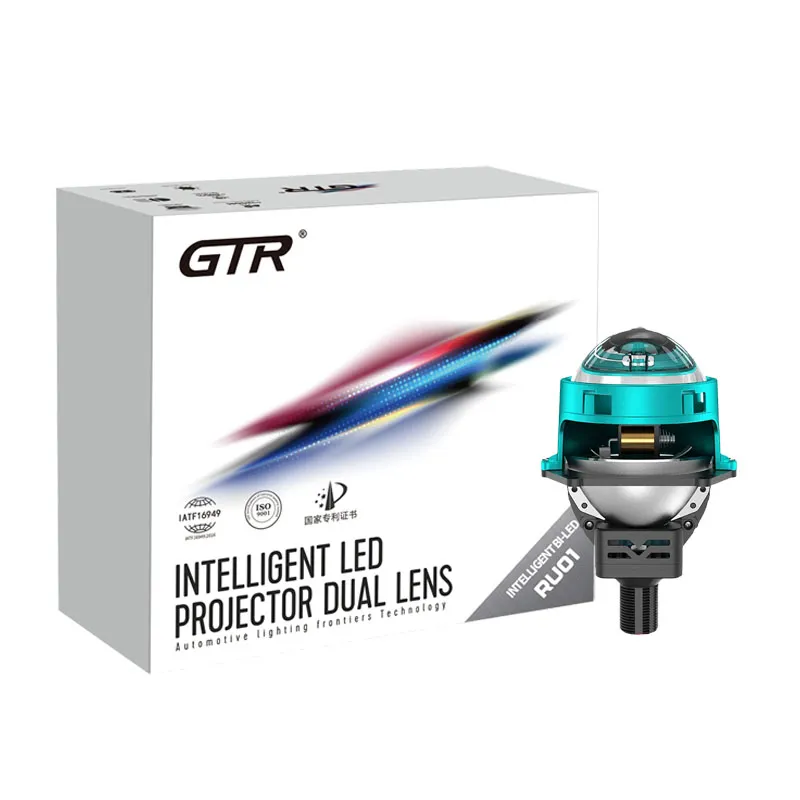
Truth #1: Your Bulb Size Determines Everything — Ignore “One-Size-Fits-All” Recommendations
The single biggest mistake in almost every “best LED headlight bulbs” article is treating all LED bulbs as one category. That’s like writing “the best tires” without mentioning tire size.
An H11 LED bulb faces completely different engineering challenges than an H4 dual-beam bulb. The housing it goes into — reflector versus projector — changes which chip layout works best. Your vehicle‘s electrical system determines whether you need CANBUS compatibility or not.
Here’s what matters: find your bulb size first, then evaluate options for that specific size. The best H11 bulb may not be the best 9005 bulb. The best bulb for a projector housing may perform terribly in a reflector. Any guide that doesn‘t start with your bulb size isn’t a guide — it‘s a billboard.
Truth #2: The LED Chip Type Matters More Than the Lumen Number
Every LED headlight bulb is built around a semiconductor chip. The chip determines brightness, beam pattern, and how well the bulb mimics the halogen filament position — which is critical for a clean cutoff in projector housings and proper light distribution in reflectors.
In 2026, you‘ll encounter three primary chip types:
| Chip Type | Beam Accuracy | Brightness per Watt | Best Application |
|---|---|---|---|
| Philips ZES (Luxeon Z ES) | Gold standard — 1.6mm x 2.0mm matches halogen filament width | Moderate | Projector housings where beam accuracy is paramount |
| CSP (Chip Scale Package) | Good — newer generations have closed the gap significantly | Higher than ZES | Reflector housings where raw output matters |
| Cree XHP / XPG Series | Poor — larger 5.0mm package makes filament matching harder | Very High | Off-road or specialty applications |
Here‘s the truth most guides won’t tell you: the Philips ZES chip is widely considered the gold standard for beam accuracy, but it‘s also more expensive. CSP chips offer higher brightness per watt and are cheaper to manufacture, but the bond between the silicone layer and chip substrate is weaker, making them slightly more susceptible to thermal stress over time. You’re not just choosing a bulb — you‘re choosing a compromise.
Truth #3: Thermal Management Determines Whether Your “Bright” Bulb Stays Bright
LEDs generate heat at the semiconductor level. If that heat isn’t managed, the bulb reduces output to prevent damage — a process called thermal derating. That 20,000-lumen bulb you bought? It may be running at 60% of its advertised output after 10 minutes of driving.
High-quality LED bulbs incorporate active cooling — typically a fan that forces air across a heat sink. Premium designs like the GTR Ultra 3 use custom thermal separation technology, where the LED die sits on a separate thermal plane from the driver circuit. This isn‘t a marketing gimmick. It’s a fundamental engineering difference that keeps the bulb running cooler than competitors drawing the same wattage.
The takeaway: ask about thermal performance, not just lumens. A bulb that sustains 87% of its initial brightness after a 27-minute drive is worth more than a bulb that starts brighter but fades after five minutes.
Truth #4: Reflector Housings Are Not All Created Equal — And Most LEDs Fail Here
Reflector housings are particularly unforgiving to poor LED design. The reflector‘s shape is precisely calculated based on the halogen filament’s position and size. When you install an LED bulb with emitters that are too large, positioned incorrectly, or oriented differently than the filament, the reflector scatters light in all directions.
The result? Glare. Lots of it.
For reflector housings, you need bulbs that explicitly advertise filament-matching design. The GTR Ultra 3 and Morimoto 2Stroke series both prioritize this. Generic bulbs with oversized emitters will scatter light and blind oncoming traffic — regardless of how many lumens they claim.
Truth #5: The “Installation is Easy” Claim Is Often a Trap
Yes, many LED bulbs are plug-and-play. But “plug-and-play” doesn‘t mean “optimized.”
Proper LED installation requires attention to emitter orientation. The LED chips should face strictly left (9 o’clock) and right (3 o‘clock). Why? Because headlight reflectors are designed to bounce horizontal light downward onto the road. If your chips face up and down, your beam pattern will be garbage — even if the bulb is technically “installed.”
Some premium bulbs include adjustable collars that allow you to rotate the LED chips to the perfect orientation for your specific housing. Others don’t. This is one of those details that separates a $30 bulb from a $150 bulb, and it‘s almost never mentioned in affiliate-driven guides.
Truth #6: CANBUS Compatibility Isn’t Optional for Modern Vehicles
If your vehicle was built after approximately 2010, it uses a CANBUS network to monitor bulb function. Non-compatible bulbs will trigger dashboard errors, flicker, or refuse to work altogether.
Some manufacturers include built-in CANBUS drivers. Others sell separate “error cancellers” — which adds cost and another point of failure. The best LED headlight bulbs integrate CANBUS compatibility directly into the driver electronics, ensuring stable performance without external modules.
Before you buy, confirm that the bulb explicitly states CANBUS compatibility for your vehicle make and model. “Plug and play” doesn‘t mean “error-free.”
Truth #7: The “Best” Bulb Depends on Your Vehicle — Not a Generic Ranking
This is the truth that undermines every generic “best LED headlight bulbs” list on the internet.
A bulb that performs brilliantly in a Honda Civic‘s projector housing may scatter terribly in a Ram 1500’s reflector housing. A bulb that sustains brightness in moderate climates may derate in extreme heat. A bulb that fits a 9005 socket won‘t fit an H11 socket.
After testing and supporting over 50,000 LED kits across real customer vehicles, the data shows a clear pattern: for H11 (the most common low beam), the GTR Lighting Ultra 3 delivers premium performance, while the Morimoto 2Stroke 4.0 offers the best value. For 9005 high beams, the GTR Ultra 3 leads again. For H4 dual-beam trucks, different engineering priorities apply.
There is no single “best” bulb. There is only the best bulb for your specific vehicle, housing type, and driving conditions.
Frequently Asked Questions
What makes the GTR Ultra 3 different from other premium LED bulbs?
The GTR Ultra 3 uses custom TST 7045 chips with thermal separation technology — the LED die sits on a separate thermal plane from the driver circuit. This keeps the bulb running cooler and sustains consistent brightness longer than competitors drawing the same wattage. Independent testing recorded the highest lux readings ever in a Honda Civic reflector housing: 742% brighter than stock.
Can I use LED bulbs in my halogen reflector housings?
Yes — but only if the LED bulb is specifically designed to replicate the halogen filament position. Generic LEDs will scatter light and blind oncoming traffic. Look for bulbs that explicitly advertise filament-matching geometry, like the GTR Ultra 3 or Morimoto 2Stroke series.
How many lumens do I actually need for safe night driving?
Quality LED bulbs typically produce between 6,000 and 20,000 lumens per set. However, beam pattern matters more than raw lumen count. A 10,000-lumen bulb with perfect focus will outperform a 20,000-lumen bulb with poor focus. Don‘t chase lumen numbers — chase usable light on the road.
What color temperature is safest for night driving?
5,000K to 6,000K provides a clean white light that balances visibility with comfort. Avoid 6,500K and above — the blue tint reduces color rendering and increases glare.
Do I need to replace both headlight bulbs at the same time?
Yes. Always replace both bulbs simultaneously to maintain even light output and avoid mismatched brightness. One new LED and one old halogen will produce uneven lighting that can confuse oncoming traffic.
Your 2026 LED Headlight Decision: Cut Through the Noise
You‘ve now read what most “best LED headlight bulbs” guides won’t tell you. You understand that bulb size matters first. You know the difference between chip types. You recognize that thermal management and CANBUS compatibility are non-negotiable. And you understand that the “best” bulb depends on your specific vehicle — not a generic ranking.
Armed with this knowledge, you‘re no longer a passive consumer of marketing claims. You’re an informed buyer who can separate engineering reality from affiliate-driven hype.
Ready to find the right LED headlight bulbs for your vehicle? Browse the full GTR Lighting lineup at https://www.rhgtr.in and use the vehicle fitment tool to get a recommendation engineered for your specific make, model, and housing type.
Don‘t guess. Don’t rely on generic rankings. Get the bulbs that actually work — for your vehicle, your roads, and your safety.