
Walk into any auto parts store — O’Reilly, AutoZone, or your local dealer — and you’ll see shelves of d3s headlight bulb options. Different brands. Different prices. Different promises. But how do you separate engineering reality from marketing hype?
Direct Answer: A D3S headlight bulb is a 35W mercury-free HID bulb that operates at 42V DC with a built-in igniter. It was introduced specifically for newer, environmentally-conscious vehicle lighting systems and is found in premium vehicles from Audi, BMW, Mercedes-Benz, and Lexus.
This guide cuts through the confusion. We’ll explain what D3S actually means, how the technology has evolved, what to look for in a replacement, and why the shift to LED is reshaping the entire category.
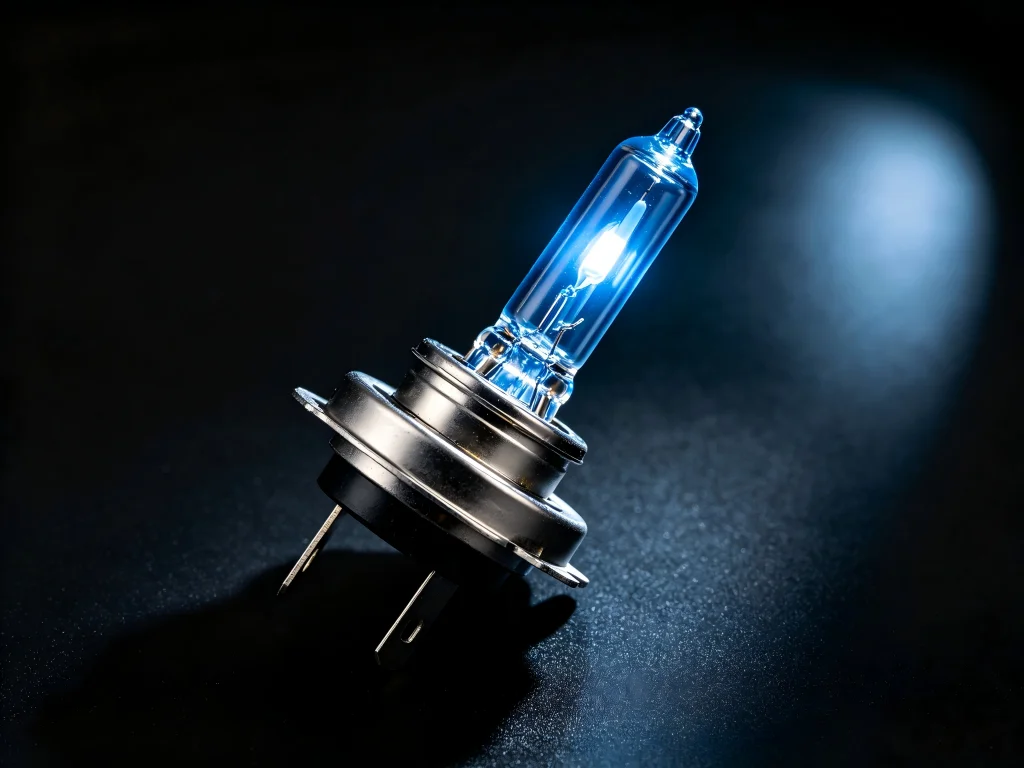
What Makes a D3S Headlight Bulb Different?
The “D” in D3S stands for “Discharge” — these are High-Intensity Discharge (HID) bulbs that use xenon gas and an electrical arc to produce light. Unlike halogen bulbs that use a glowing filament, HID bulbs create a plasma arc between two electrodes sealed inside a quartz capsule.
What sets D3S apart from other D-series bulbs comes down to three factors:
- Voltage: D3S operates at 42V DC, while D1S and D2S run at ~85V AC
- Igniter: D3S has a built-in igniter (like D1S), unlike D2S and D4S which require external igniters
- Environmental impact: D3S is mercury-free, making it safer for the environment than D1S and D2S
This mercury-free design was a key reason automakers adopted D3S systems in newer models. It aligns with global regulations while delivering the brightness drivers expect from premium vehicles.
D3S vs. D1S, D2S, and D4S: A Quick Reference
| Bulb Type | Voltage | Igniter | Mercury | Common Use |
|---|---|---|---|---|
| D1S | 85V | Built-in | Contains | European luxury (Audi, BMW) |
| D2S | 85V | External | Contains | Japanese vehicles (Toyota, Lexus) |
| D3S | 42V | Built-in | Mercury-free | Newer eco-friendly systems |
| D4S | 42V | External | Mercury-free | Modern replacement systems |
These bulbs are not interchangeable. Installing a D1S bulb in a D3S system — or vice versa — can damage your ballast, trigger electrical faults, or simply not work at all. Always match the exact type your vehicle requires.
When Your D3S Headlight Bulb Needs Replacement
HID bulbs don’t fail suddenly like halogen bulbs. They degrade gradually. Here are the telltale signs:
- Dimming output — the road ahead looks darker than it used to, even on high beam
- Color shifting — the light turns pink, purple, or noticeably yellowish
- Flickering — intermittent operation, especially at low RPMs
- Delayed startup — the bulb takes longer than usual to reach full brightness
- Complete failure — one or both headlights stop working entirely
One forum user described the experience perfectly: “My aging OEM Philips D3S bulbs started flickering at low RPMs during night drives. The old bulbs had lost over 40% of their output — they were still glowing but barely illuminated more than 30 feet ahead”.
HID bulbs typically last 2,000–3,000 hours — roughly 2–3 years of average driving. And when one fails, replace both. A new bulb paired with an aged one will create uneven brightness and color between your headlights.
LED Technology: The D3S Upgrade That Changes Everything
The automotive lighting industry is undergoing a fundamental shift. LED technology has matured to the point where it now outperforms HID in virtually every meaningful metric.
Here’s what that means for your d3s headlight bulb replacement decision:
Instant Full Brightness
HID bulbs take 3–5 seconds to warm up to full output. LED bulbs reach full brightness in 0.01 seconds. In emergency situations — a deer on the road, a sudden curve, a pedestrian stepping out — those seconds matter.
Dramatically Longer Lifespan
Factory D3S HID bulbs last 2,000–3,000 hours. Quality D3S LED replacements are rated for 30,000–50,000 hours — 15–25 times longer. You’ll likely sell the car before you need to replace the bulb again.
Consistent Color, No Shifts
Aging HID bulbs often develop a pink or purple tint — a sign of imminent failure. LED technology maintains consistent color output throughout its entire lifespan. No surprises. No gradual degradation. Just steady, reliable light.
Better Cold Weather Performance
HID bulbs can struggle in cold temperatures, requiring longer warm-up times before reaching full brightness. LED bulbs perform consistently in all weather conditions — whether you’re driving through a Canadian winter or a humid Gulf Coast summer.
More Durable Construction
HID bulbs rely on a fragile gas chamber and delicate electrodes. LED bulbs use solid-state components, making them more resistant to vibrations and road impacts. On rough roads or in vehicles with stiff suspensions, that durability matters.
One AudiWorld forum member summarized it well: “LED lighting has massive advantages over halogen and possible advantages over HID”. Another noted: “LEDs have advanced to be reliable over time, not lose the brightness like xenon while able to provide a lot more light on the road”.
Installation: What Nobody Tells You
Replacing a d3s headlight bulb sounds simple. And for many vehicles, it is — 10–15 minutes per side. But forum after forum reveals the same frustrations.
The Most Common Installation Problem
The bulb turns and comes out easily. The new bulb keys into place but won’t turn to lock. You try the old bulb again — same problem. What changed?
One Giulia owner discovered the solution: “Apply a tiny amount of grease to the light bulb retention spring mechanism. A dusting of corrosion on the metal bits was causing high friction”.
Other drivers have reported similar issues. The mounting mechanism can be finicky, and corrosion on the retention spring is surprisingly common.
Critical Installation Rules
- Never touch the glass — oils from your fingers can cause the quartz to cloud or shatter at operating temperature
- Ensure the bulb is fully locked — an improperly seated bulb creates the wrong beam pattern and can dazzle oncoming drivers
- Match the connector orientation carefully — forcing a connection the wrong way can cause flickering or damage
- Wear gloves during installation — this protects both the bulb and your hands
CANBUS: The Modern Compatibility Challenge
Modern vehicles monitor their lighting systems through CANBUS (Controller Area Network). If a bulb doesn’t match the expected electrical load, you’ll get dashboard warnings, flickering, or complete system shutdown.
This is where many aftermarket bulbs fail. One user’s review of a popular brand warned: “Don’t buy for CANBUS systems — these do not work in CANBUS systems as a direct replacement”.
Quality D3S LED replacements include built-in CANBUS error-canceling circuitry that simulates the correct electrical load. This ensures compatibility with 99% of vehicles without additional decoders or modifications.
What Drivers Are Saying: Real-World Feedback
Automotive forums reveal the真实 experiences of D3S bulb users. Here’s what stands out:
On LED upgrades: “Significant improvement over the HID lights without any ill effects”. “The LED bulbs provide increased light output and better light penetration than the HID bulb in the same projector”.
On reliability concerns: “The tech and reliability are getting very good lately, much better than the early offerings”. However, some users warn that generic LEDs can cause “dangerous scatter patterns” if the beam isn’t properly focused.
On beam pattern: “Just be cognizant of the light pattern LED projects, as it is likely to vary from the original bulbs, and adjust the aim accordingly to balance your road vision with oncoming driver comfort”.
On heat management: One user reported their working bulb was “ridiculously hot” with a fan “starting to sound like an electric toothbrush” — a reminder that thermal engineering separates quality LEDs from cheap imitations.
The consensus? LED technology has matured significantly. But quality varies dramatically between brands. The best LED D3S replacements deliver superior performance; the worst create glare, overheat, or fail prematurely.
FAQ: Your D3S Headlight Bulb Questions, Answered
What vehicles use a D3S headlight bulb?
D3S bulbs are found in vehicles with factory xenon HID systems, including Audi (A4, A6, Q5, Q7), BMW (select models with factory HID), Mercedes-Benz (C-Class, E-Class), Lexus (select years), Porsche (Cayenne, Macan, 911), Land Rover/Range Rover, Jaguar (XF, F-Pace), Ford Fusion, Lincoln MKZ/MKX, Cadillac CTS/SRX, Dodge Charger, and Chrysler 300 (2008+). Always verify your original bulb type — not all trims use D3S.
Can I use a D3S bulb in a D1S system?
No. D1S operates at 85V; D3S operates at 42V. Using the wrong bulb can damage your ballast, cause electrical faults, or prevent the bulb from working entirely. Always match the exact type your vehicle requires.
Why is my D3S bulb flickering?
Flickering typically indicates one of three issues: (1) the bulb is reaching end-of-life (often accompanied by a pink/purple color shift), (2) the ballast is failing, or (3) the bulb is incompatible with your vehicle’s CANBUS system. Quality LED replacements with built-in CANBUS circuitry eliminate the third cause.
Should I replace D3S bulbs in pairs?
Yes. HID bulbs degrade at similar rates. Replacing only one creates uneven brightness and color between your headlights. Always replace both bulbs simultaneously for consistent performance.
Are D3S LED bulbs legal for road use?
This depends on your jurisdiction. Some LED replacement bulbs are marketed for “off-road use only” in certain regions due to regulations. Always check your local requirements and ensure any bulb you purchase is compliant for on-road use. Quality manufacturers engineer their bulbs to meet or exceed OEM specifications for beam pattern and glare reduction.
How much does a D3S headlight bulb cost?
Factory HID replacements from brands like Philips or Osram typically cost $150–$400 per pair. Dealership replacements can exceed $500 for a single bulb. Quality D3S LED replacements deliver superior performance and dramatically longer lifespan at a competitive price point.
What’s the difference between D3S and D3R?
Both use the same electrical specifications (42V DC, 35W). The difference is optical: D3S has an internal shield for projector housings; D3R lacks the shield for reflector housings. A D3S bulb will typically work in a D3R system (with some beam pattern changes), but a D3R bulb in a D3S system will produce uncontrolled glare.
Making the Right Choice for Your Vehicle
Your d3s headlight bulb is more than just a replacement part. It’s a critical safety component that affects your visibility, your reaction time, and your ability to see — and be seen — on the road.
The data is clear: LED technology has matured to the point where it outperforms HID in brightness, lifespan, response time, and durability. But not all LED bulbs are created equal. Thermal management, optical precision, and CANBUS compatibility separate premium products from cheap imitations.
GTR’s D3S LED headlight bulb is engineered with advanced thermal management, precision optics, and built-in CANBUS error-canceling circuitry. 50,000+ hours of life. Instant full brightness. Consistent 6000K color output. Plug-and-play installation.
Don’t gamble with cheap bulbs that flicker, overheat, or fail. Don’t overpay for outdated HID technology at the dealership. Choose GTR — and see the road the way it was meant to be seen.
Visit https://www.rhgtr.in today to find the right D3S LED headlight bulb for your vehicle. Your next drive could be your safest yet.
Every driver deserves to see clearly at night. Every passenger deserves to arrive safely. GTR delivers both.
References: Osram XENARC technical specifications, HID Nation D-series comparison guide, XenonsOnline D3S LED vs HID analysis, and multiple automotive forum user experiences.