
You need new automotive light bulbs. You pull out your phone and search automotive light bulbs near me. A list of stores appears. Walmart. Canadian Tire. Home Depot. AutoZone. Maybe a specialty shop you’ve never heard of.
Direct Answer: The best place to buy automotive light bulbs depends on your vehicle’s age, your budget, and whether you need a basic replacement or a performance upgrade. Big-box retailers like Walmart and Canadian Tire offer convenience and low prices but limited selection. Auto parts stores provide better expertise and mid-range options. Specialty manufacturers like GTR deliver premium engineering and compatibility assurance that big retailers simply cannot match.
Based on our years of manufacturing expertise at GTR and thousands of customer conversations about where they bought their previous bulbs—and why those bulbs failed—we’ve built this retailer-by-retailer comparison. This isn’t another generic automotive light bulbs types explainer. This is a practical guide to where you should actually spend your money.
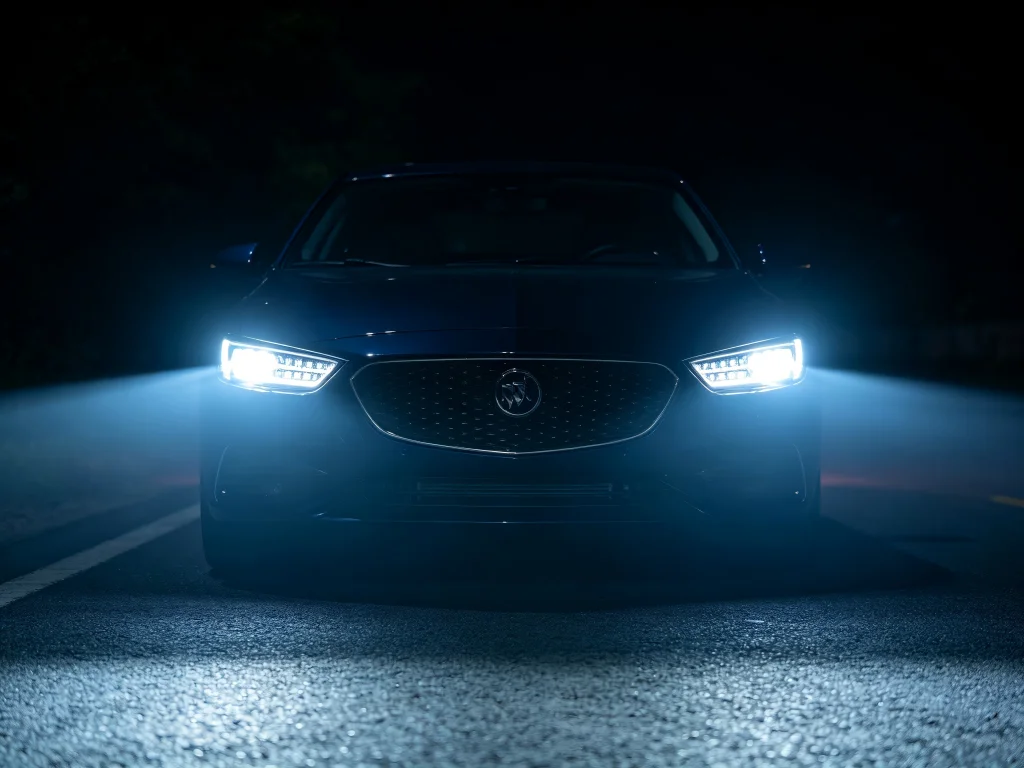
The Retail Landscape: Where Can You Buy Automotive Light Bulbs?
Before we dive into the details, here’s the automotive light bulbs chart of retail options you have:
| Retailer Type | Examples | Best For | Watch Out For |
|---|---|---|---|
| Big-Box Retailers | Walmart, Canadian Tire, Home Depot | Emergency replacements, budget halogens | Limited LED selection, no expert advice |
| Auto Parts Chains | AutoZone, O’Reilly, Advance Auto, NAPA | Mid-range bulbs, fitment verification | Staff expertise varies widely |
| Online Marketplaces | Amazon, eBay | Wide selection, customer reviews | Counterfeit risk, no installation support |
| Specialty Manufacturers | GTR, Philips, Osram (direct) | Premium performance, guaranteed compatibility | Higher upfront cost |
Big-Box Retailers: Walmart, Canadian Tire, and Home Depot
When you search automotive light bulbs Walmart or automotive light bulbs Canadian Tire, you’re looking for convenience. These stores are everywhere. They’re open late. You can grab bulbs while you’re buying groceries.
Walmart does sell headlight bulbs in their automotive section, both in-store and online, with a wide variety of bulb types, brands, and price points. Canadian Tire carries halogen, xenon HID, and LED bulbs across their automotive lighting assortment. Home Depot also stocks automotive bulbs, though their selection tends to be more limited compared to dedicated auto parts stores.
What works: If you have an older vehicle with halogen bulbs and you need a quick, cheap replacement, these stores get the job done. A basic halogen bulb costs $10-$30 and takes five minutes to install.
What doesn’t work: LED selection at big-box retailers is inconsistent. Some locations carry LED headlight bulbs; others don’t. More importantly, the LED bulbs they do stock tend to be entry-level models that may lack CAN-bus compatibility, proper thermal management, and 1:1 filament geometry. You might save $20 on the purchase, then spend hours troubleshooting flickering or dashboard error codes.
One driver we spoke with bought LED auto light bulbs Walmart for his 2018 Ford F-150. The bulbs fit physically. They turned on. But they flickered constantly because his truck’s CAN-bus system detected the lower electrical load and threw a “bulb out” warning every time he started the engine. He returned them, bought a more expensive set from a specialty retailer, and the problem disappeared.
The lesson: big-box retailers are fine for halogens. For LED upgrades, you’re rolling the dice.
Auto Parts Chains: AutoZone, O’Reilly, Advance Auto, NAPA
Auto parts stores like AutoZone, O’Reilly Auto Parts, Advance Auto Parts, and Pep Boys offer a wider selection than big-box retailers. They can look up the correct bulb size for your vehicle using your year, make, and model. Staff may have some technical knowledge, though expertise varies by location and individual employee.
What works: These stores carry multiple brands and price points. You can compare halogen, HID, and LED options side by side. They often have bulb finder tools at the counter or online that help you match the right size.
What doesn’t work: The LED selection at most auto parts chains still skews toward mid-range products that may not address the specific engineering challenges of your vehicle. A 2026 buyer’s guide from AutoZone explains the key factors—brightness measured in lumens, color temperature measured in Kelvins, and lifespan—but the products on their shelves may not deliver on those metrics consistently.
We’ve analyzed the LED bulbs sold at major auto parts chains. Many use older LED chip technology, passive cooling that struggles in high-output applications, and external CAN-bus resistors that add complexity and failure points. The beam pattern often suffers because the emitter geometry doesn’t match the original halogen filament position.
If you’re replacing a burned-out halogen with another halogen, auto parts stores are a solid choice. If you’re upgrading to LED, proceed with caution and ask specific questions about CAN-bus compatibility and beam pattern.
Online Marketplaces: Amazon, eBay, and Beyond
Online marketplaces offer the widest selection of automotive light bulbs at the widest range of prices. You can find bulbs for under $20 and over $200 on the same search results page. Customer reviews help, but they can be misleading—many reviewers install bulbs, love the initial brightness, and post a five-star review the same day, only to discover three months later that the bulbs have degraded or failed.
What works: Selection. You can find every bulb size, every color temperature, every technology type. Price comparison is easy.
What doesn’t work: Quality control is inconsistent. Counterfeit products are common. “50,000 lumens” claims on Amazon listings are almost always theoretical maximums measured at the LED chip, not the light that actually reaches the road. Many online-only brands have no customer service, no warranty support, and no engineering expertise behind their products.
We’ve seen this pattern repeatedly in our testing. A driver buys a cheap LED kit online, installs it, and experiences flickering, error codes, or poor beam pattern. They try to contact the seller. No response. They buy a second kit from a different seller. Same problems. They eventually spend more money on a quality product from a reputable manufacturer than they would have if they’d bought quality the first time.
The online marketplace is the Wild West of automotive light bulbs. Proceed with extreme caution.
Specialty Manufacturers: GTR, Philips, Osram (Direct)
Buying directly from a specialty manufacturer like GTR gives you access to the best engineering, proper compatibility, and expert support. You’re buying from a company that designs and tests automotive light bulbs for a living—not a retailer that sells thousands of different products.
What works: Products are engineered for specific applications. GTR bulbs, for example, use custom TST 7045 chips with thermal separation technology that places the LED die on a separate thermal plane from the driver circuit—running cooler than competitors drawing the same wattage. In head-to-head testing, the GTR Lighting Ultra Two came in at 709% brighter than the original halogen bulb and outperformed every competitor.
Compatibility is verified. CAN-bus integration is built in, not added as an afterthought. Beam pattern is engineered with 1:1 filament geometry that matches your vehicle’s housing.
What doesn’t work: Higher upfront cost. But when you factor in longevity (30,000+ hours vs. 500-1,000 hours for halogen), the total cost of ownership is actually lower.
The Hidden Factor Most Guides Ignore: Your Headlight Housing Type
Here’s what most automotive light bulbs types guides won’t tell you. Your headlight housing—reflector vs. projector—determines which LED bulbs will work and which will fail.
Reflector housings use a faceted reflective surface to direct light. If the LED emitter isn’t positioned exactly where the halogen filament was, light scatters unpredictably.
Projector housings use a lens to focus light. They’re more forgiving but still demand precise geometry.
How do you identify your housing type? Open your hood. If you see a chrome, faceted bowl with no clear lens, it’s a reflector. If you see a round glass lens inside the housing, it’s a projector.
Most cars after 2015 use projectors for low beams; trucks and SUVs often use reflectors.
This matters because a bulb that works perfectly in a projector housing may produce terrible scatter in a reflector housing—and vice versa. Generic auto light bulbs from big-box retailers or online marketplaces rarely specify which housing type they’re designed for. GTR bulbs are engineered with specific geometry for both housing types.
What the Automotive Light Bulbs Chart Doesn’t Tell You
You’ve seen the automotive light bulbs chart comparing halogen, HID, and LED. Here’s what the chart omits:
- Real lumens vs. marketing lumens: A properly engineered LED upgrade can achieve around 170 meters of range while drawing less power than halogen. Ignore claims of 50,000+ lumens—they’re theoretical. For most drivers, 3,000-6,000 real lumens is optimal.
- Color temperature trade-offs: 5,000K-6,000K pure white provides the best visibility. 4,300K-5,000K works better in fog and rain. Avoid 6,500K+—it creates glare and reduces wet-weather visibility.
- Wattage misconceptions: Higher wattage (100W+) can overload factory wiring and blow fuses. A properly designed LED achieves excellent output at factory-equivalent 50W-70W.
- CAN-bus compatibility is non-negotiable: If you drive a BMW, Mercedes, Audi, VW, or any modern European vehicle, CAN-bus compatibility is not optional. Without it, your LED upgrade will flicker, throw error codes, and may not work at all.
Frequently Asked Questions About Automotive Light Bulbs
Can I buy automotive light bulbs at Walmart?
Yes. Walmart sells headlight bulbs in their automotive section, both in-store and online. Selection includes halogen and some LED options, though LED availability varies by location.
Does Canadian Tire sell automotive light bulbs?
Yes. Canadian Tire carries a selection of automotive lighting including halogen bulbs, xenon HID, and LED bulbs.
Does Home Depot sell automotive light bulbs?
Yes, Home Depot stocks automotive bulbs, though their selection is more limited than dedicated auto parts stores.
What’s the difference between halogen, HID, and LED automotive light bulbs?
Halogen bulbs use a tungsten filament heated to about 4,500°F and last 500-1,000 hours. HID bulbs produce light through an electrical arc in xenon gas, last 2,000-3,000 hours, and are significantly brighter than halogen. LED bulbs use semiconductors, last 30,000+ hours, and are the most efficient option.
How do I know which automotive light bulb fits my vehicle?
Check your owner’s manual, use an online bulb lookup tool (available on most auto parts store websites), or ask an expert at a local auto parts store.
Why do my LED headlights flicker after installation?
Most flickering is caused by CAN-bus incompatibility. Your vehicle’s computer sends diagnostic pulses that the LED driver can’t handle properly. Quality LED bulbs with built-in CAN-bus integration circuits solve this problem.
Are more lumens always better for automotive light bulbs?
No. Raw lumen ratings are often measured at the LED chip, not the light that reaches the road. What matters is usable light output—how much illumination actually reaches the road in a focused beam pattern.
How long should automotive light bulbs last?
Halogen: 500-1,000 hours. HID: 2,000-3,000 hours. Quality LED: 30,000-50,000 hours.
Your Decision Framework: Where Should You Buy?
Based on everything we’ve covered, here’s a simple framework:
- Emergency replacement, older vehicle, budget priority: Big-box retailer (Walmart, Canadian Tire) or auto parts store. Buy a quality halogen from a reputable brand. You’ll spend $10-$30 and be back on the road in minutes.
- Mid-range upgrade, newer vehicle, want better visibility: Auto parts chain with knowledgeable staff. Ask specific questions about CAN-bus compatibility and beam pattern. Be prepared to spend $50-$100.
- Premium upgrade, modern vehicle, want the best performance and reliability: Specialty manufacturer direct (GTR, Philips, Osram). You’ll pay more upfront but get engineering that actually works, verified compatibility, and support from people who understand automotive lighting.
Stop Guessing. Start Seeing.
You’ve read the comparison. You understand the retail landscape. You know that automotive light bulbs from Walmart, Canadian Tire, or Home Depot might get you home tonight—but they might not get you home safely six months from now.
You know that the automotive light bulbs chart in a generic buying guide doesn’t tell you about reflector vs. projector housings, real lumens vs. marketing lumens, or CAN-bus compatibility that actually works.
GTR automotive light bulbs are engineered by people who understand these details. Our bulbs are tested in real vehicles, not just in labs. We build CAN-bus compatibility into every bulb so you don’t need external resistors or coding. We design 1:1 filament geometry so your beam pattern stays focused where it belongs—on the road, not in oncoming drivers’ eyes.
Thousands of drivers have made the switch. They’ve stopped replacing bulbs every year. They’ve stopped dealing with flickering and error codes. They’ve started seeing the road clearly at night.
Ready to upgrade? Visit https://www.rhgtr.in to find the right GTR automotive light bulbs for your vehicle. Use our fitment guide, compare specifications, and see why GTR is the choice of professionals who know the difference between a bulb that lights up and a bulb that actually works.
Your safety deserves more than what’s on the shelf at the big-box store. Choose GTR and experience the difference that proper engineering makes.