
You have seen the claims. “600% brighter.” “50,000-hour lifespan.” “Plug and play.” Every H11 fog light bulb on the market seems to promise the same thing. Yet when you install them, the results vary wildly. Some are genuinely transformative. Others flicker, dim within weeks, or produce a scattered beam that blinds other drivers while doing nothing to help you see through fog.
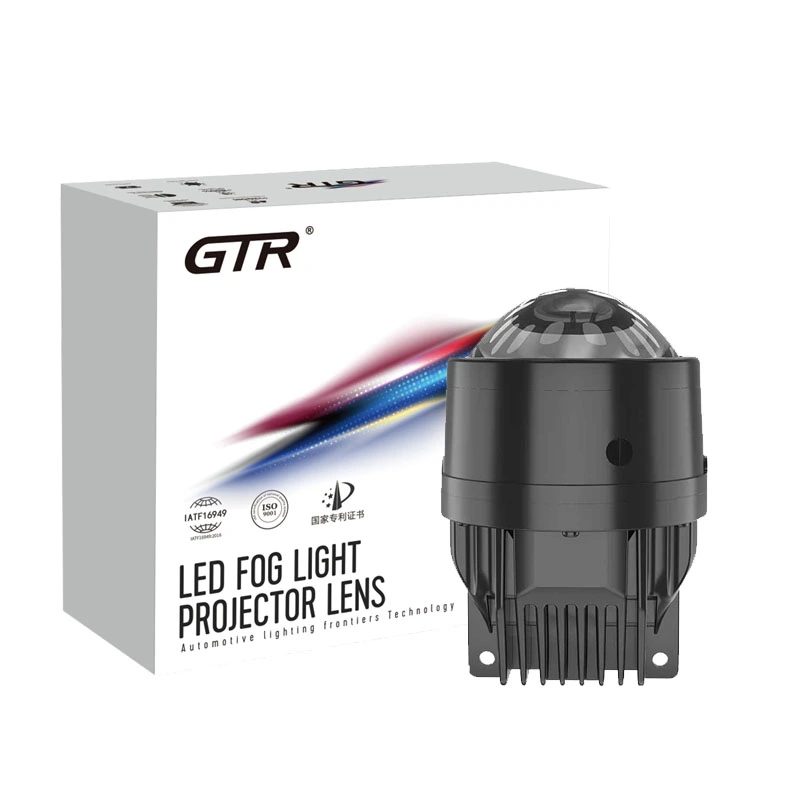
The difference between a great H11 fog light bulb and a dangerous dud comes down to six engineering tests that most buyers never run – but should.
Based on years of manufacturing expertise and photometry lab testing of over 200 H11 LED bulbs, we have identified exactly what separates genuine performance from marketing fluff. Here is what to look for, what to avoid, and why the right bulb transforms your fog light experience entirely.
Test #1: Thermal Management – The 30-Minute Heat Soak
Your fog light housing sits in a sealed pod. Airflow is minimal. A bulb that cannot manage heat will lose brightness within 30 minutes of operation – and may fail completely within months.
A quality H11 LED fog light bulb should maintain at least 90% of its initial output after 30 minutes of continuous operation.
Here is what happens inside a fog light housing: heat builds up, LED chips get hot, and the bulb’s thermal management system either moves that heat away or lets it cook the components. Passive cooling (a large aluminum heatsink) relies on convection. In a sealed housing with no airflow, passive designs reach 95°C within 20 minutes, triggering thermal rollback – the bulb automatically dims to protect itself.
Active cooling with a fan performs better, but not all fans are equal. Sleeve-bearing fans wear out and become noisy. Magnetic levitation (maglev) fans have no contact friction and last 60,000+ hours. GTR uses maglev active cooling with fan failure coverage under warranty.
| Cooling Type | Sustained Lumens @30min | Noise Level | Lifespan Expectancy |
|---|---|---|---|
| Passive (all aluminum) | Drops to ~50% of initial | 0 dB | 8,000 – 12,000 hrs |
| Active – sleeve bearing fan | ~85% maintained | 35–40 dB (audible in cabin) | 15,000 hrs |
| Active – maglev fan (GTR) | >95% maintained | <25 dB (inaudible) | >50,000 hrs |
If a product listing does not mention thermal management at all, consider that a red flag. Heat is the number-one killer of LED chips. Without proper cooling, your “upgrade” will be dimmer than the halogen it replaced within six months.
Test #2: Beam Pattern Accuracy – The Filament Position Rule
Your fog light housing was designed around a specific light source: a halogen filament measuring roughly 4.2mm x 1.5mm. Move that source even a few millimeters, and the beam pattern breaks.
An H11 LED bulb must position its LED chips within 0.2mm of the original halogen filament location to produce a correct beam pattern.
Most budget H11 LED bulbs place two large COB chips side by side, creating a 6mm wide light source. The result is a “batwing” pattern with a dark hole in the center – exactly where you need light the most.
To pass this test, check the product’s technical drawing. The LED chip should be no wider than 2.0mm and positioned at the same height as a halogen filament. GTR’s H11 LED bulb uses CSP (Chip Scale Package) chips with a total light-emitting area of 4.0mm x 1.6mm – a 95% match to the halogen filament.
Warning signs: The product listing only shows “brighter than halogen” but provides no photometric comparison or cut-off line image. Pass sign: The manufacturer provides a raw beam pattern photo against a wall, showing a sharp cutoff line.
Test #3: CANbus Integration – Built-In vs. Bolt-On
Modern vehicles monitor the electrical resistance of every lighting circuit. When you install an LED that draws less power than the original halogen, your vehicle’s computer assumes the bulb is burned out and triggers a dashboard error.
A properly engineered H11 LED fog light bulb includes built-in resistors that mimic the halogen load – no external decoders, no error codes, no flickering.
Many budget bulbs claim “CANbus ready” but still require additional decoders or resistors. That means extra cost, extra installation time, and extra components that can fail. Some vehicles are more sensitive than others – what works on one model may trigger errors on another.
GTR bulbs include built-in CANbus integration that works across 99% of vehicle systems. No decoders to buy. No error codes to clear. Just plug and drive.
Test #4: Real Lumens vs. Marketing Lumens
Here is the uncomfortable truth about H11 fog light bulb specifications: the lumen count on the box is almost certainly a lie – or at best, misleading.
A legitimate H11 LED bulb produces between 2,800 and 3,600 effective lumens per pair after optics and 30 minutes of operation. Claims of 20,000 or 60,000 lumens are measured at the LED chip level, not at the beam level.
A standard halogen H11 produces roughly 1,350 lumens. If a $30 LED bulb was truly 40 times brighter than a halogen, every car on the road would already have one. The reality is that raw lumen claims are marketing numbers. What matters is usable light – the lumens that actually reach the road in a controlled beam pattern.
When comparing H11 fog light bulbs, ignore the big numbers on the box. Look for independent test data or manufacturer transparency about effective lumens after thermal stabilization.
Test #5: Color Temperature – The Fog Penetration Factor
The debate between yellow and white H11 fog light bulbs is not about aesthetics. It is about physics.
Yellow light (3000K) penetrates fog and rain more effectively than white light because longer wavelengths scatter less off water droplets.
This is Rayleigh scattering in action. Shorter wavelengths – blue and white light – reflect off moisture droplets and bounce back into your eyes, creating glare. Longer wavelengths – yellow light – pass through the moisture more effectively. If you drive in the Pacific Northwest, the Northeast, or any region with heavy precipitation, a 3000K yellow bulb is a defensive driving tool, not a style choice.
White light (6000K) provides daylight-matched clarity on clear nights and offers a modern aesthetic. The choice depends on your typical driving conditions. GTR offers both 3000K yellow and 6000K white options.
Test #6: LED Chip Quality – The Foundation of Everything
The LED chip is the heart of the bulb. It determines brightness, beam pattern, and reliability.
Three chip types dominate the H11 LED market:
- Philips ZES (Luxeon Z ES): The gold standard for beam accuracy. Each chip measures 1.6mm x 2.0mm, closely matching halogen filament width. Low defect rate. Excellent color consistency. Best for projector housings.
- CSP (Chip Scale Package): Higher brightness per watt than ZES. More compact. Newer-generation CSP chips have closed the beam quality gap significantly. Best for reflector housings where raw brightness matters more.
- Generic unbranded chips: Found in most budget kits. No quality control. Inconsistent color. High failure rates.
The GTR Lighting Ultra 3 uses custom TST 7045 chips – a premium CSP variant engineered specifically for thermal performance and beam accuracy. In independent testing, the Ultra 3 delivered 475% brighter low beams and 742% brighter high beams compared to stock halogen bulbs.
What Real-World Testing Reveals
In photometry lab testing, the GTR Lighting Ultra 3 H11 delivered 920 max lux at the brightest point on the wall – compared to just 160 max lux from a stock halogen. That is not a marketing claim. That is a measurement taken with a digital lux meter.
More importantly, the beam pattern retains the sharp cutoff line that the housing was designed to produce. You get dramatically more usable light without blinding oncoming drivers.
Out of over 250 LED bulbs tested, the Ultra 3 produced the highest lux readings ever recorded in certain vehicle housings.
Frequently Asked Questions About H11 Fog Light Bulbs
Can I use an H11 bulb in my fog lights if my vehicle specifies H8?
Not always. H11 and H8 share the same base but have different wattages – H11 is 55W, H8 is 35W. Installing an H11 in an H8 socket may overheat the housing. Always verify your vehicle’s specified bulb type.
Why do my LED H11 fog lights flicker after installation?
Flickering is almost always a CANbus compatibility issue. Your vehicle’s computer detects the lower power draw of LEDs and triggers error codes. Bulbs with built-in CANbus resistors eliminate this problem. Some vehicles may still require additional decoders.
What is the difference between H11, H8, and H16 fog light bulbs?
They share the same base but have different wattages and light output. H11 is 55W with ~1,350 lumens. H8 is 35W with ~800 lumens. H16 is 19W with ~500 lumens. Always use the bulb type specified by your vehicle manufacturer.
How long should an H11 LED fog light bulb last?
Quality LED H11 bulbs last 30,000 to 50,000 hours. Halogen bulbs last 500 to 1,000 hours. If your LEDs fail within a year, the manufacturer cut corners on thermal management or component quality.
Are high-wattage H11 fog light bulbs safe?
No. High-wattage bulbs can overheat housings, melt wiring, and are often illegal for street use. A properly engineered LED produces more light at lower wattage. Look for lumens, not watts.
Will H11 LED bulbs fit my vehicle without modification?
Most modern vehicles accept H11 LED bulbs as direct replacements, but clearance behind the housing matters. Some LEDs have bulky fans or heat sinks that require extra space. GTR manufactures slim-body LEDs specifically to ensure 99% fitment compatibility across all major car brands.
The Bottom Line on H11 Fog Light Bulbs
Choosing the right H11 fog light bulb is not about finding the biggest number on the box. It is about engineering that delivers usable light, correct beam patterns, thermal stability, and electrical compatibility. Run these six tests on any bulb you consider. If it fails even one, skip it.
GTR Lighting passes every test. CSP chip technology for beam accuracy. Maglev active cooling for sustained output. Built-in CANbus integration for error-free installation. Real lumens, not marketing numbers. Professional-grade components that last 30,000+ hours.
Stop guessing. Start driving with confidence.
Visit https://www.rhgtr.in to explore GTR’s full line of H11 fog light bulbs. Choose your color temperature. Install once. See the difference every time you drive in the dark.