
In 2014, BMW unveiled the i8 with laser headlights and the automotive world collectively gasped. Laser headlights promised a future where night driving felt like daylight – 600 meters of illumination, 70% energy efficiency, and a beam so focused it seemed almost magical. A decade later, BMW is phasing them out. The question is: why did the most exciting lighting technology in a generation fall out of favor – and who’s picking up the torch?
This isn’t a eulogy for laser headlights. It’s an autopsy of what went wrong, a reality check on what the aftermarket is actually selling, and a look at how GTR is keeping the technology alive for drivers who refuse to settle for less.
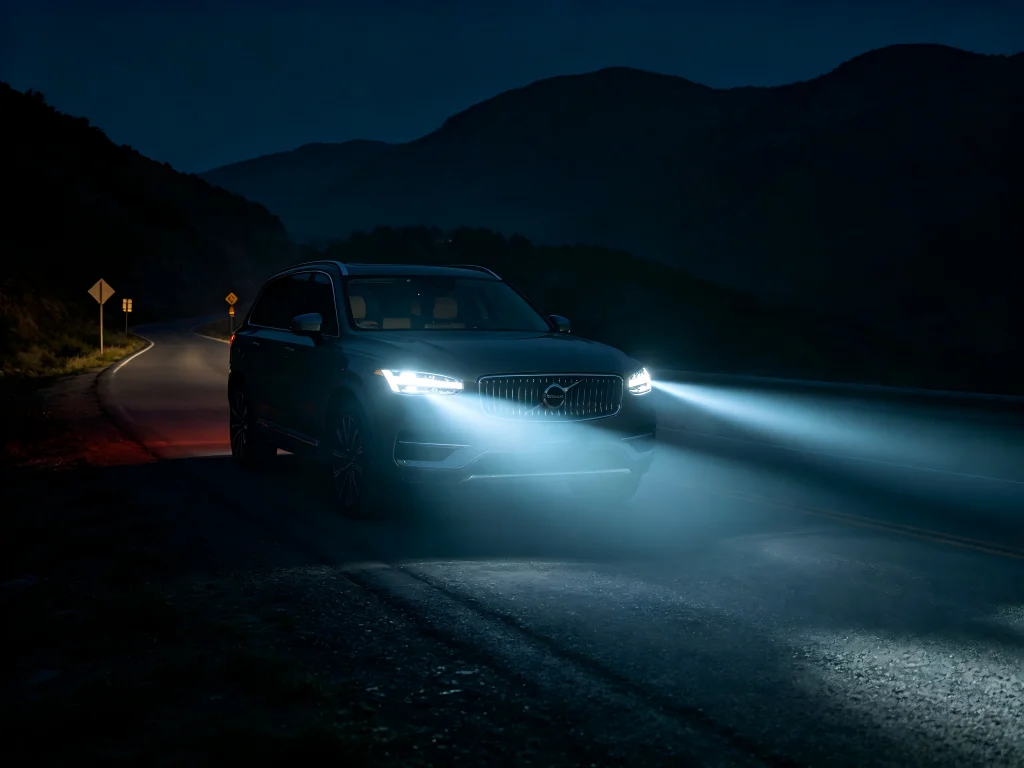
The Rise and Fall of OEM Laser Headlights
BMW’s laser headlights could project a beam over 600 meters – but U.S. regulations capped them at just 250 meters. The Federal Motor Vehicle Safety Standard (FMVSS) 108 limited headlight output to 150,000 candela, while Europe allowed up to 430,000 candela. This regulatory gap effectively neutered the technology’s primary advantage in the world’s largest automotive market.
Andreas Suhrer, BMW’s large-car product manager, put it bluntly: “The laser lights are pretty good with absolute range, but the latest generation of Matrix LED lights does a better distribution.” In other words, laser headlights illuminated far – but not wide. Matrix LEDs offered better overall light distribution at a fraction of the cost.
Then there’s the replacement cost. A single BMW laser headlight costs $7,000 to $8,000 including shop time. For a $63,000 BMW 420i, that’s more than 12% of the car’s entire value. The math simply didn’t work for automakers or consumers.
What This Means for the Aftermarket
The OEM retreat created a vacuum. Drivers who experienced laser headlights on premium vehicles – or simply wanted the best possible lighting – found themselves with limited options. Either pay exorbitant OEM replacement costs or settle for LED systems dressed up with “laser-style” aesthetics that deliver zero performance benefit.
This is where the aftermarket stepped in – and where things got complicated.
The “Laser” Headlight Problem: Separating Technology from Marketing
Most aftermarket products labeled “laser headlights” use no actual laser technology whatsoever. They’re LED systems with blue accents, laser-inspired housing designs, and marketing language designed to confuse buyers who don’t know the difference.
Let’s be precise about what genuine laser headlights actually are. The technology works like this: blue laser diodes fire onto a yellow phosphorus lens, which absorbs the blue light and converts it into intense white illumination. This is fundamentally different from LED technology, which produces light through semiconductor emission.
Here’s the performance gap:
- Light intensity: Laser headlights provide 1.7 times the light intensity of LEDs at the same power
- Beam range: Genuine laser systems reach up to 600 meters versus 250-300 meters for premium LEDs
- Energy conversion: Lasers convert up to 70% of electricity to light; LEDs convert up to 20%
- Size: Laser systems can be made significantly smaller than LED equivalents
When a $50 “laser” headlight claims to deliver this performance, something doesn’t add up.
What BMW Owners Are Actually Saying
Real-world feedback from BMW forums paints a nuanced picture. One M340i owner noted: “The laser feature itself only activates when there is no other cars around and all 4 high beams are activated… The laser element is ok, but probably doesn’t activate as much as some people think, as you essentially need an empty road ahead.”
Another owner was more enthusiastic: “They are much brighter because both of the lights function vs the adaptive LED where only the outer light works, the other one is a dummy light.”
The consensus? Laser headlights are “truly excellent” but “only really useful when you are driving in rural areas at 100km/hr.” For urban and suburban driving, the difference is harder to notice.
This creates a clear use case: if you regularly drive on unlit rural roads, highways at night, or in areas with poor street lighting, laser headlights deliver a tangible safety advantage. If you primarily drive in well-lit urban environments, premium LEDs may be sufficient.
What Genuine Laser Headlights Should Deliver
Based on years of engineering expertise in automotive lighting, here’s what separates genuine laser headlight systems from imitations:
1. True Laser Diodes, Not LEDs
Genuine laser headlights use blue laser diodes and phosphorus conversion – not LED chips with “laser” branding. This is non-negotiable. If the product specification doesn’t mention laser diodes, it’s not a laser headlight.
2. Thermal Management That Actually Works
Laser diodes generate significant heat. Quality systems use active cooling – heat sinks, thermal pads, and sometimes fans – to maintain optimal operating temperatures. Cheap alternatives skip these features, resulting in systems that overheat and underperform within months.
3. Proper Sealing and Weather Protection
Headlights operate in extreme conditions – rain, snow, car washes, and temperature swings that cause condensation. Poorly sealed housings are the number one cause of aftermarket lighting failures. Look for IP-rated water ingress protection.
4. Regulatory Compliance Without Performance Sacrifice
Quality laser headlight systems should offer adjustable beam patterns or adaptive features that maximize performance while remaining within legal limits. The goal isn’t to circumvent regulations – it’s to deliver the full benefit of laser technology where regulations allow, with adaptive dimming where restrictions apply.
GTR: Keeping Laser Headlight Technology Alive
While OEMs retreat from laser headlights, GTR is doubling down. Our engineering team has developed laser headlight systems that incorporate genuine laser diode technology – not LED imitations – while addressing the very issues that caused BMW to abandon the technology.
What GTR Does Differently
GTR laser headlights use actual blue laser diodes and phosphorus conversion – the same principle used in BMW and Audi OEM systems. Our G45 series, for example, features a high-frequency micro-laser system with 55W high-power chips, GTR-customized automotive-grade luminous chips, intelligent temperature control, and a high-power DC cooling fan.
We’ve engineered our systems to address the specific pain points that frustrated OEM users:
- Activation limitations: GTR systems are designed for consistent performance across all driving conditions – not just empty rural roads
- Cost barriers: GTR delivers genuine laser performance at a fraction of OEM replacement costs
- Installation complexity: Our systems are engineered for plug-and-play integration with minimal coding requirements
- Regulatory compliance: GTR systems comply with applicable regulations while maximizing performance within legal limits
Our ES6 Bi-LED Laser Projector Lens, for instance, offers 60W power, 6000K color temperature for low beam and 4000K for high beam, and an operating temperature range from -20°C to 100°C. With a 50,000-hour lifespan, these systems are built to outlast the vehicle they’re installed in.
What Customers Are Saying
GTR has built a reputation for quality in the automotive lighting community. One reviewer noted: “Absolutely one of the BEST companies I’ve ever dealt with bar none. I purchased their bulbs years ago and love them, perfect cutoff, amazing quality and after trying half a dozen others these are the best out there.” GTR maintains a 4.7-star rating across hundreds of reviews.
Another user who installed GTR LEDs on a 2009 vehicle reported they “made a significant difference” in visibility.
Frequently Asked Questions About Laser Headlights
Why did BMW stop using laser headlights?
BMW phased out laser headlights primarily due to U.S. regulatory restrictions that limited their beam range to 250 meters – removing their performance advantage – and high replacement costs of $7,000-$8,000 per unit. The automaker shifted focus to Matrix LED technology, which offers better light distribution at lower cost.
Are laser headlights legal in the United States?
Laser headlights are legal in the U.S. but subject to strict limitations under FMVSS 108, which caps headlight output at 150,000 candela and beam range at 250 meters. European regulations allow up to 430,000 candela, enabling the full performance potential of laser technology.
What’s the difference between genuine laser and “laser-style” headlights?
Genuine laser headlights use blue laser diodes and phosphorus conversion to produce light; “laser-style” headlights are LED systems with cosmetic design elements that mimic the look of lasers without delivering the performance. Only genuine laser systems provide the extended range, energy efficiency, and focused beam that make the technology worthwhile.
How much do aftermarket laser headlights cost?
Quality aftermarket laser headlight systems typically cost significantly less than OEM replacements, which run $7,000-$8,000 per unit. GTR offers genuine laser performance at accessible price points, making the technology available to a much broader range of vehicle owners.
Can I retrofit laser headlights to my existing vehicle?
Yes – most vehicles can accept aftermarket laser headlight systems with proper mounting hardware and electrical integration. GTR offers both universal and vehicle-specific solutions. Professional installation is recommended for optimal beam alignment and regulatory compliance.
Do laser headlights blind oncoming traffic?
Properly aimed laser headlights with adaptive beam technology do not blind oncoming drivers. The focused nature of laser light actually allows more precise beam control than scattered LED light, reducing glare when properly engineered.
How long do laser headlights last?
Laser headlights typically last 30,000-50,000 hours – comparable to premium LED systems. With average driving patterns, this translates to over a decade of use, meaning most owners will never need to replace the light source.
The Future of Automotive Lighting
The story of laser headlights isn’t over – it’s simply entered a new chapter. While OEMs may be moving on, the technology remains the gold standard for range, efficiency, and beam focus. The challenge has always been making it accessible, practical, and compliant with regulations.
GTR has accepted that challenge. Our laser headlight systems deliver genuine laser performance – not marketing imitations – at price points that make sense for real drivers. We’ve addressed the thermal management, sealing, and integration issues that plagued early aftermarket attempts, and we continue to innovate with each new product generation.
For drivers who spend significant time on unlit roads, highways, or rural areas, laser headlights remain the single most impactful lighting upgrade available. The extended visibility range provides critical reaction time that can prevent accidents – and that’s a benefit no amount of marketing hype can replace.
Visit www.rhgtr.in to explore GTR’s full range of genuine laser headlight solutions. See the technology BMW left behind – and discover why GTR is bringing it back.
Laser Headlights vs. LED: Performance Comparison
| Specification | Genuine Laser Headlights | Premium LED Headlights | “Laser-Style” LED (Fake) |
|---|---|---|---|
| Light source | Blue laser diodes + phosphorus | LED semiconductor | LED semiconductor |
| Maximum range | Up to 600 meters | 250-300 meters | 250-300 meters |
| Energy efficiency | Up to 70% | Up to 20% | Up to 20% |
| Light intensity (vs LED) | 1.7x at same power | Baseline | Baseline |
| Typical lifespan | 30,000-50,000 hours | 30,000-50,000 hours | 30,000-50,000 hours |
| Beam focus | Highly concentrated | Scattered | Scattered |
| OEM replacement cost | $7,000-8,000 (GTR: significantly less) | $1,000-3,000 | $50-200 |
Based on independent testing and manufacturer specifications. Actual performance may vary by vehicle and installation.