
If you have read three or four articles about the brightest light bulb this week and still feel unsure, that is not your fault. Most guides repeat the same shallow advice: buy more lumens, pick 6500K, avoid cheap brands. None of that tells you what happens after the bulb is installed in your actual housing. This article takes a different route. We will look at the questions buyers ask in forums, the mistakes installers see every week, and the technical reasons why two bulbs with identical specs can perform nothing alike on the road.
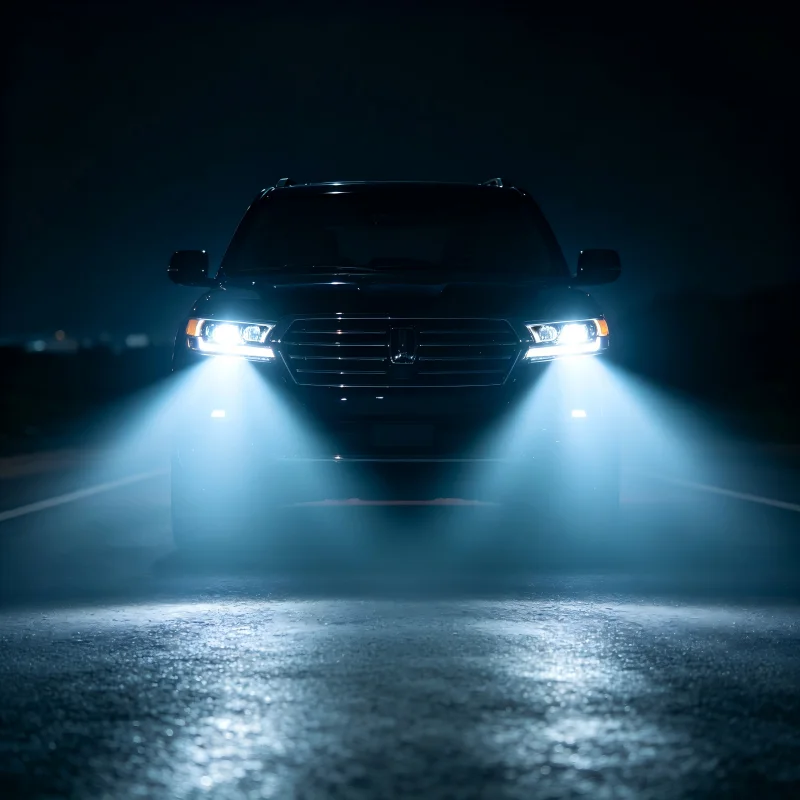
The Real Question Behind “What Is the Brightest Light Bulb”
The brightest light bulb is not the one with the highest lumen claim. It is the bulb that places the most usable light on the road without scattering glare into oncoming traffic. Those two goals often pull in opposite directions, which is why spec sheets mislead so many buyers.
Search interest in what is the brightest light bulb you can buy spikes every autumn, when daylight shortens and commutes happen in darkness. The intent behind that search is rarely academic. People want a fix for a specific frustration: they cannot see far enough, or they cannot see clearly enough, or both. Treating the query as a shopping question rather than a visibility problem is where most guides go off track.
What Forum Threads Reveal That Spec Sheets Hide
Spend an evening reading owner discussions on automotive and home improvement forums, and a pattern emerges. The most common complaint about high-output bulbs is not insufficient brightness. It is uneven brightness. Drivers report a blinding pool of light directly ahead of the bumper, followed by a dark stretch where the road should be visible, then another patch of light further out. The bulb is objectively brighter. The driving experience is worse.
Installers describe the same phenomenon from the other side. A customer buys the highest-lumen kit on the market, installs it, and returns a week later complaining about being flashed by other drivers. The bulb is doing exactly what its geometry dictates. The housing was never designed for that light source shape, so the beam scatters upward and outward instead of forward.
There is a quieter complaint too, one that rarely appears in reviews written during the first month. Output fades. A bulb that impressed the owner in October looks noticeably dimmer by the following spring. Heat is usually the cause. When an LED runs hot, its light output degrades permanently, and no amount of brightness at purchase compensates for a design that cannot manage thermal load.
A Different Way to Judge Brightness: Usable Light at Distance
Professionals who evaluate lighting for a living rarely talk about lumens at the bulb. They talk about illuminance at a target, measured in lux, at a defined distance. That number captures everything that matters: how much light the bulb produces, how efficiently the housing focuses it, and how much survives the trip down the road.
| Evaluation Method | What It Measures | What It Misses |
|---|---|---|
| Chip lumen rating | Theoretical maximum of the LED | Optical and thermal losses, beam shape |
| Bulb lumen rating | Light leaving the bulb | Where that light ends up |
| Lux at 25 feet | Actual illumination on a surface | Spread and cutoff quality |
| Beam pattern capture | Shape, width, and cutoff | Absolute intensity |
The practical takeaway is simple. When comparing options, ask for lux measurements at a fixed distance and a photograph of the beam pattern against a wall. Any serious manufacturer can supply both. A brand that can only quote chip lumens is telling you something about its testing process.
Color Temperature: The Overrated Variable
Buyers frequently ask what is the brightest light bulb color, assuming that a particular Kelvin rating unlocks more light. It does not. Kelvin describes the appearance of white light, not its quantity. A 3000K bulb and a 6500K bulb with identical lumen output emit the same amount of light.
What color temperature does affect is perceived clarity and contrast. Cooler light in the 5000K to 6000K range tends to sharpen the edges of lane markings and roadside objects. Warmer light in the 2700K to 3000K range feels easier on the eyes over long periods and cuts through fog and heavy rain with less backscatter. Neither is universally superior. The right choice depends on where the bulb will be used and what the driver values more, contrast or comfort.
There is a marketing angle to this as well. Bulbs pushed toward 8000K and beyond look dramatic in photographs but deliver less usable light, because pushing the color that far blue reduces luminous efficacy. Extremely blue light also performs poorly in wet conditions, where shorter wavelengths scatter more readily.
Questions Buyers Ask by Application
The generic brightness question splits into several specific ones once you look at where the bulb will go. Each application has its own constraints.
- What is the brightest light bulb for home use? Standard fixtures cap out well below automotive or industrial levels. The practical ceiling for a residential socket is usually a 150 to 200 watt equivalent LED, and going higher risks exceeding the fixture’s heat rating.
- What is the brightest light bulb for a bathroom? Vanity lighting rewards even distribution over raw intensity. A pair of moderate-output bulbs at 4000K typically outperforms a single very bright bulb that creates hard shadows across the face.
- What is the brightest light bulb for a ceiling fan? Fan fixtures impose strict wattage limits and often use small bases. Buyers should check the fixture rating first, then choose the highest-output bulb that stays within it.
- What is the brightest light bulb you can get for a vehicle? Here the ceiling is set by beam pattern rather than output. Beyond a certain point, additional light becomes glare rather than visibility.
- What is the brightest light bulb uk buyers can legally fit? Road lighting rules differ from market to market, so buyers in the UK should confirm that a retrofit meets local requirements before purchasing.
The common thread is that every application has a limiting factor, and it is rarely the bulb’s maximum output.
Where GTR Fits Into This Picture
GTR Lighting builds products for buyers who have already worked through the obvious questions and want engineering rather than slogans. The company operates a 30,000 square meter manufacturing facility and supplies lighting solutions to more than 80 partners worldwide, including OEM and ODM programs with full customization.
What that scale provides is testing infrastructure. Every product line goes through thermal cycling, long-duration output monitoring, and beam verification in both reflector and projector housings. The results are published as lux measurements and beam photographs rather than chip-level lumen figures, because those are the numbers that predict how a bulb will actually perform.
For distributors and brand owners, the same facility supports private label programs, custom chip configurations, and vehicle-specific fitments. The engineering team works directly with partners on beam targets and thermal requirements rather than simply shipping a catalog item.
Frequently Asked Questions
What is the brightest light bulb available right now?
Availability depends on the category. In automotive retrofits, the highest-output street-oriented options sit in the 4,000 to 5,000 usable lumen range per bulb. In residential lighting, 300 watt equivalent utility LEDs reach roughly 5,000 lumens. Higher figures usually indicate chip-level ratings rather than real output.
Is daylight or soft white brighter?
Neither. Brightness comes from lumens, not color. Daylight bulbs at 5000K and soft white bulbs at 2700K can produce identical output. Daylight simply appears cooler and often reads as more intense to the eye.
Why do my new bulbs seem dimmer after a few months?
Heat degradation is the usual cause. LEDs lose output permanently when they run above their thermal design limits. Bulbs with undersized heat sinks or blocked cooling paths fade fastest, which is why thermal design matters more than purchase-time brightness.
Do I need the brightest bulb, or just a better beam pattern?
For most drivers, beam pattern delivers more improvement than raw output. A moderate-output bulb with correct emitter geometry often outperforms a very bright bulb that scatters light outside the useful zone.
Can I trust lumen claims on marketplace listings?
Treat any figure above roughly 6,000 lumens per automotive bulb with suspicion. Independent testing repeatedly shows that advertised numbers are measured at the chip and bear little relation to light reaching the road.
A Better Question to Ask
Instead of asking what the brightest light bulb is, ask what the most usable light bulb is for your specific housing, vehicle, or room. That reframing leads to better decisions and fewer returns. It also leads to questions that a serious manufacturer can actually answer with data.
If you are sourcing lighting for distribution, fleet use, or a private label program, the conversation should start with beam targets and thermal requirements, not lumen figures. GTR works with partners at that level every day.
Visit www.rhgtr.in to review technical documentation, request beam pattern data, or discuss a custom manufacturing program with our engineering team.