
LED projector headlights represent the single most significant advancement in automotive lighting since the introduction of the halogen bulb. But understanding why they matter—and how to separate genuine innovation from marketing hype—requires looking beyond the brightness numbers.
Automotive lighting has undergone a quiet revolution over the past decade. The shift from halogen to LED, and from reflector to projector optics, has fundamentally changed how drivers see the road at night. Yet many drivers and fleet operators still treat headlights as a commodity—something to replace when broken, rather than a critical safety system worth understanding.
This guide examines the technology, the market dynamics, and the practical considerations that separate exceptional LED projector headlights from the rest. Based on our years of manufacturing expertise in automotive lighting, we will walk through what actually matters when upgrading or sourcing these systems.
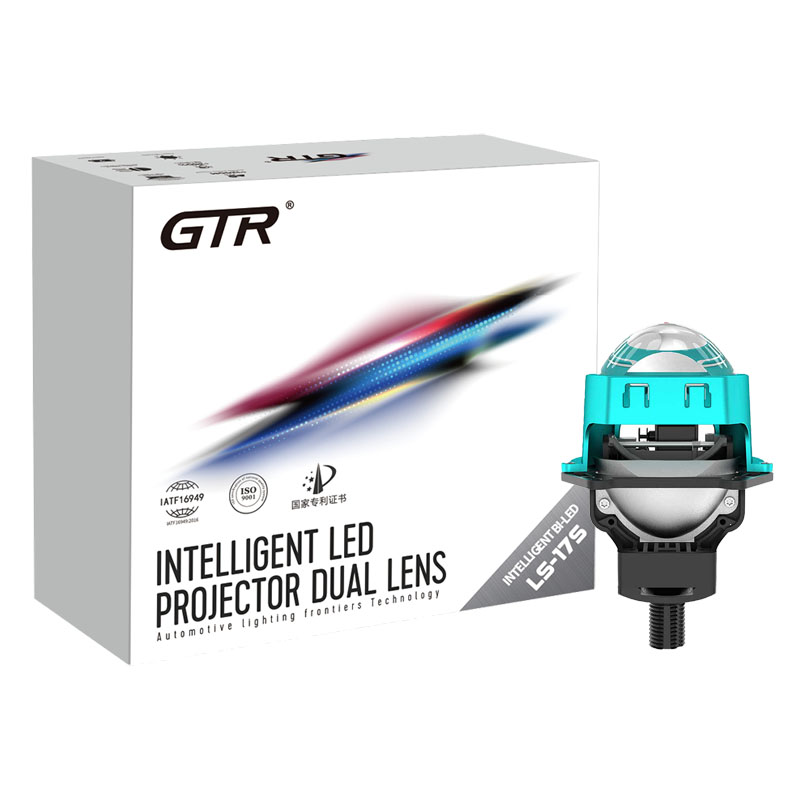
The Three Generations of Automotive Headlights
To understand where LED projector headlights fit, it helps to see the full picture.
First Generation: Halogen Reflectors
Halogen bulbs in reflector housings defined automotive lighting for decades. The design is simple: a bulb sits at the focal point of a chrome-lined reflective bowl, and light bounces forward in a broad, scattered pattern. It worked. It was cheap. It also produced uneven illumination, limited down-road visibility, and significant glare for oncoming traffic.
Despite these limitations, halogen reflectors remain common on entry-level vehicles today. They get the job done, but they do not excel at anything.
Second Generation: Projector Housings with Halogen or HID
Projector headlights introduced a fundamentally different approach. Instead of a reflective bowl, they use a lens system paired with a cutoff shield—a small metal plate that creates a sharp upper edge to the low-beam pattern. This design focuses light precisely where it is needed and prevents upward scatter that blinds other drivers.
Premium vehicles adopted projector housings with HID (high-intensity discharge) bulbs throughout the 2000s and 2010s. The beam quality was superior to halogen reflectors. But HID systems had their own issues: warm-up time, complex ballasts, and bulbs that degraded over time.
Third Generation: LED Projector Headlights
LED projector headlights combine the optical precision of projector housings with the efficiency, longevity, and instant-on capability of LED light sources. A peer-reviewed study published in 2025 measured luminance intensities across halogen, HID, and LED sources in both projector and reflector configurations. The findings were unambiguous: LED light sources consistently outperform HID and halogen sources, making LEDs the preferred choice for projector headlights.
The same study also issued a critical warning: due to the design characteristics and distinct beam intensities of reflector headlights, the researchers advise against using LED sources in these configurations. In other words, putting an LED bulb in a reflector housing may actually produce worse results than sticking with halogen or HID.
How LED Projector Headlights Actually Work
The technology is more sophisticated than most people realize.
An LED projector headlight consists of several components working in harmony:
- The LED light source — one or more LED chips that produce the raw light output
- The elliptical reflector — a precision-shaped reflective surface that gathers light from the LED and directs it toward the lens
- The cutoff shield — a metal plate that blocks upward-scattered light, creating the sharp horizontal line characteristic of projector beams
- The projector lens — a convex lens that focuses the light into a concentrated, uniform beam
The cutoff shield is the defining feature. It creates the flat-topped beam pattern that concentrates light on the road rather than in the eyes of oncoming drivers. This is why projector headlights provide superior visibility without excessive glare—a combination that reflector designs struggle to achieve.
Some modern systems take this further with Bi-LED projector modules, which integrate both low beam and high beam functions into a single projector unit. The beam pattern changes by moving an internal cutoff shield rather than switching between separate bulbs or optics. This approach saves space, simplifies installation, and delivers more consistent performance across both beam modes.
Projector vs. Reflector: What the Data Actually Says
The choice between projector and reflector headlights is not merely aesthetic—it has real implications for safety and performance.
| Characteristic | LED Projector Headlights | LED Reflector Headlights |
|---|---|---|
| Beam Pattern | Focused, sharp cutoff, uniform distribution | Wide, scattered, less defined edges |
| Glare Control | Excellent — cutoff shield prevents upward scatter | Moderate to poor — potential glare for oncoming traffic |
| Down-Road Visibility | Superior — concentrated hotspot with strong distance penetration | Moderate — more peripheral, less focused forward |
| Light Management | Active — lens and shield direct light precisely | Passive — reflective bowl gathers and casts light forward |
| Academic Recommendation | LED strongly preferred | Halogen or HID recommended; LED not advised |
| Typical Application | Premium vehicles, highway driving, safety-critical use | Entry-level vehicles, urban driving, budget constraints |
The academic consensus is clear. When researchers measured beam intensities using a photometer, LED sources in projector configurations delivered superior results across every metric. But the same researchers caution that reflector headlights simply are not designed for LED sources. The optical geometry does not align, and the results—uneven patterns, dark spots, and glare—reflect that mismatch.
For drivers and fleet operators, this means one thing: if you are upgrading to LED, projector housings are the only configuration that makes technical sense.
The Global Market Landscape
The numbers tell a story of rapid adoption. The global projector headlight market was valued at approximately USD 3.42 billion in 2024 and is projected to reach USD 5.86 billion by 2031, growing at a compound annual rate of 8.6%. The automotive projector headlamps market alone is forecast to increase by USD 3.72 billion between 2023 and 2028.
Several trends are driving this growth:
- Miniaturization and integration — advancements in lens design and LED packaging are enabling smaller, more compact projector units that fit into tighter spaces
- Increased safety awareness — both regulators and consumers are demanding better nighttime visibility
- Premium vehicle adoption — manufacturers are increasingly equipping new models with LED projector headlights as standard or optional equipment
- Aftermarket upgrades — drivers of older vehicles are seeking modern lighting performance without buying a new car
In markets like India, the shift is particularly pronounced. The India automotive LED lighting market is estimated at USD 0.65 billion in 2025 and is expected to reach USD 1.16 billion by 2030, growing at 12.38% CAGR. LED contribution now reaches nearly 64% of total lighting revenues for major manufacturers, reflecting a continued shift toward higher-value, technology-driven products.
For B2B buyers and distributors, this represents a significant opportunity—but also a risk. The rapid market growth has attracted suppliers of varying quality, and the gap between the best and worst products is vast.
What to Look For in Quality LED Projector Headlights
Not all LED projector headlights are created equal. Here is what separates genuine quality from marketing hype.
Beam Pattern Quality Above All
Lumen numbers are easy to advertise. Beam pattern quality requires testing. A quality LED projector headlight produces an extremely wide beam with a flat, razor-sharp cutoff line and a bright, focused hotspot. The light distribution should be smooth and even, without blotches, dark spots, or excessive foreground brightness that compromises distance vision.
High-quality projector headlight kits feature precision-engineered optics that properly focus light, creating a sharp cutoff pattern that illuminates the road without blinding other drivers.
Thermal Management Determines Longevity
LEDs generate heat. Without proper dissipation, they cook themselves to death. Quality LED projector headlights incorporate advanced heat management systems—typically aluminum heat sinks with cooling fans. The housing material matters too: 6063 aviation-grade die-cast aluminum alloy, for example, provides efficient heat dissipation that prolongs LED chip lifespan.
Poor thermal design is the number one cause of premature LED failure. A projector that looks beautiful but cannot manage heat is a failure waiting to happen.
Color Temperature and Consistency
The sweet spot for LED projector headlights is 5000K to 6000K. This range approximates natural daylight, reducing visual fatigue while providing excellent visibility. Lower temperatures look yellow and dated. Higher temperatures appear blue and may reduce visibility in wet conditions.
Consistency matters too. Quality LEDs maintain stable color temperature over their lifespan. Cheap LEDs often shift color as they heat up or age.
Certifications and Compliance
Reputable LED projector headlights carry certifications including IC, RoHS, FCC, and EPR_Germany_Packing for global compliance. For European markets, ECE R10 and R112 certifications are essential. These are not optional—they are minimum requirements for legal sale in many jurisdictions.
Real-World Performance: What the Tests Show
Independent testing reveals what specifications alone cannot. In projector-style housing tests, quality LED kits have delivered 762 lux on low beam and 810 lux on high beam—representing increases of 231% and 83% over halogen bulbs, respectively. The beam patterns in these tests featured strong central hotspots with excellent side-to-side fill, crisp cutoff lines, and even foreground lighting.
One automotive enthusiast who made the switch described the difference as “night and day. The beam was incredibly wide and perfectly even, with a cutoff line so sharp you could read a newspaper by it.” Another driver noted that after installing properly engineered projector LEDs, “the visibility range and brightness is out of this world.”
These are not isolated anecdotes. They reflect what the data shows: LED projector headlights, when engineered correctly, deliver transformational improvements in nighttime visibility.
The Future: Adaptive Driving Beam and Pixel Lighting
The evolution is not stopping at static projector headlights. Adaptive Driving Beam (ADB) systems represent the next frontier. These systems use high-resolution lenses and micro-LED technology to dynamically adjust the light pattern, avoiding dazzling oncoming traffic while still illuminating the surrounding area.
Pixelated Light Source (PLS) solutions are enabling individually addressable pixel dimming, higher brightness, and symbol projection. Some manufacturers are developing projection optical systems with pixelated micro-LEDs covering full fields of view of 40 degrees and 24 degrees.
For B2B buyers, this trend suggests that the market will continue to evolve toward higher-resolution, more intelligent lighting systems. Suppliers who invest in these capabilities today will be well-positioned for the future.
Frequently Asked Questions
Are LED projector headlights better than LED reflector headlights?
Yes, for most applications. Academic research using photometer measurements consistently demonstrates the superiority of LED light sources in projector configurations. Projector headlights use a lens and cutoff shield to produce a focused, sharp, and precisely controlled beam. Reflector headlights create a broader, more scattered pattern that may cause glare.
Can I put LED bulbs in my existing halogen projector headlights?
Technically yes, but results vary dramatically. Many LED retrofit bulbs produce poor beam patterns because the LED chip does not sit in the same position as the halogen filament. The optics are designed for a specific light source location. For best results, replace the entire projector housing with a purpose-built LED unit.
What is the difference between Bi-LED and standard LED projector headlights?
Bi-LED projector headlights integrate both low beam and high beam functions into a single projector unit. The beam pattern changes by moving an internal cutoff shield rather than switching between separate bulbs. This saves space, simplifies installation, and delivers more consistent performance across both beam modes.
What color temperature is best for LED projector headlights?
5000K to 6000K is the optimal range. This produces pure white light that approximates natural daylight, reducing visual fatigue while providing excellent visibility. Lower temperatures appear yellow; higher temperatures appear blue and may reduce visibility in wet conditions.
How long should LED projector headlights last?
Quality LED projector headlights with proper thermal management should last 30,000 to 50,000 hours. Poor thermal design can reduce this to months or even weeks. Aluminum heat sinks and effective cooling are essential for longevity.
How do I know if LED projector headlights will fit my vehicle?
Check the housing size, mounting style, and electrical compatibility. Some vehicles require specific adapters or wiring modifications. Vehicle-specific projector headlights—engineered for particular makes and models—offer the best fit and performance. Universal products may seem convenient but often lead to compatibility issues.
Are LED projector headlights legal?
Yes, when properly certified. Look for IC, RoHS, FCC, and EPR_Germany_Packing certifications for global compliance. For European markets, ECE R10 and R112 are essential. Always verify that the specific product meets the regulations in your target market.
The Bottom Line: Technology That Matters
LED projector headlights are not just brighter lights. They represent a fundamental improvement in how vehicles illuminate the road—one backed by academic research, market adoption, and real-world performance data. The technology works. The data proves it.
But the gap between good and great is wide. Engineering matters. Thermal management matters. Optical precision matters. And for B2B buyers and distributors, supplier quality matters more than ever.
GTR combines engineering expertise, certification compliance, and vehicle-specific design to deliver LED projector headlights that actually perform. Whether you are sourcing for distribution, fleet installation, or retail, GTR products meet the standards your customers expect—and the regulations your market demands.
Visit https://www.rhgtr.in to explore our complete range of LED projector headlights, request samples, or discuss customization options for your specific market needs.